Melbourne Party Hire for a Smooth Event Setup
A birthday in a backyard, a wedding on a rural property, and a corporate launch in a warehouse may look like completely different events. Operationally, they all come down to the same question: will the site be ready when guests arrive? Good party hire Melbourne planning answers that question early, before a missing table, wet-weather change, overloaded circuit, or tight delivery window turns into a show-day problem.
The right hire plan is not just a collection of chairs and decorations. It is a practical plan for how people will arrive, gather, eat, hear, move through the space, and leave comfortably. For larger or more technical events, it also needs to account for site access, power, structures, safety requirements, and pack-down.
Party hire Melbourne starts with the site
Start with the address, not the Pinterest board. A clear site picture makes every later decision easier. Is the event at a private home, venue, park, school, winery, warehouse, or open paddock? Is the ground level? Can a truck get close to the setup area? Are there stairs, narrow gates, low branches, soft ground, or limited parking?
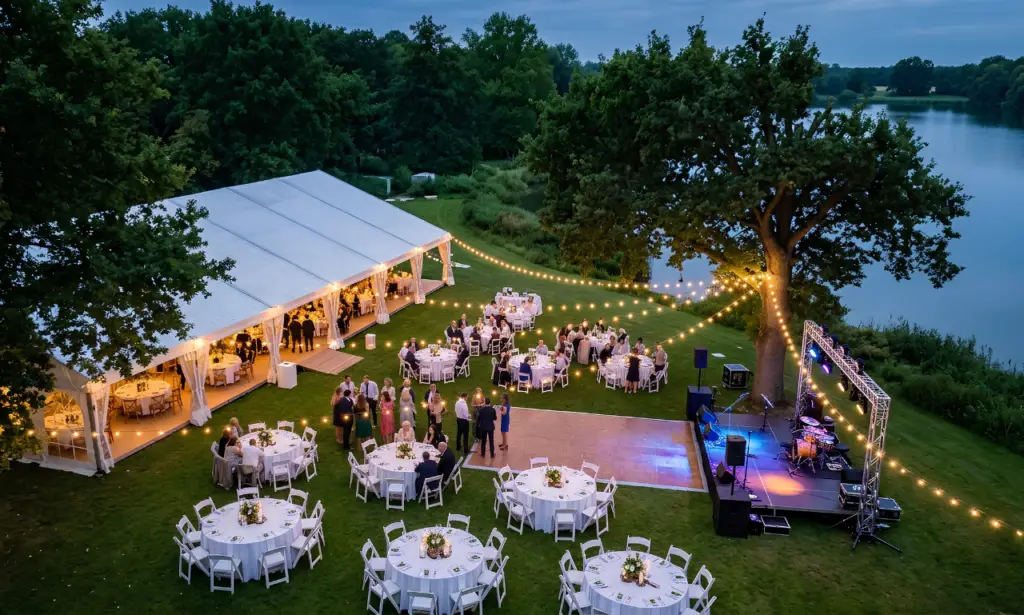
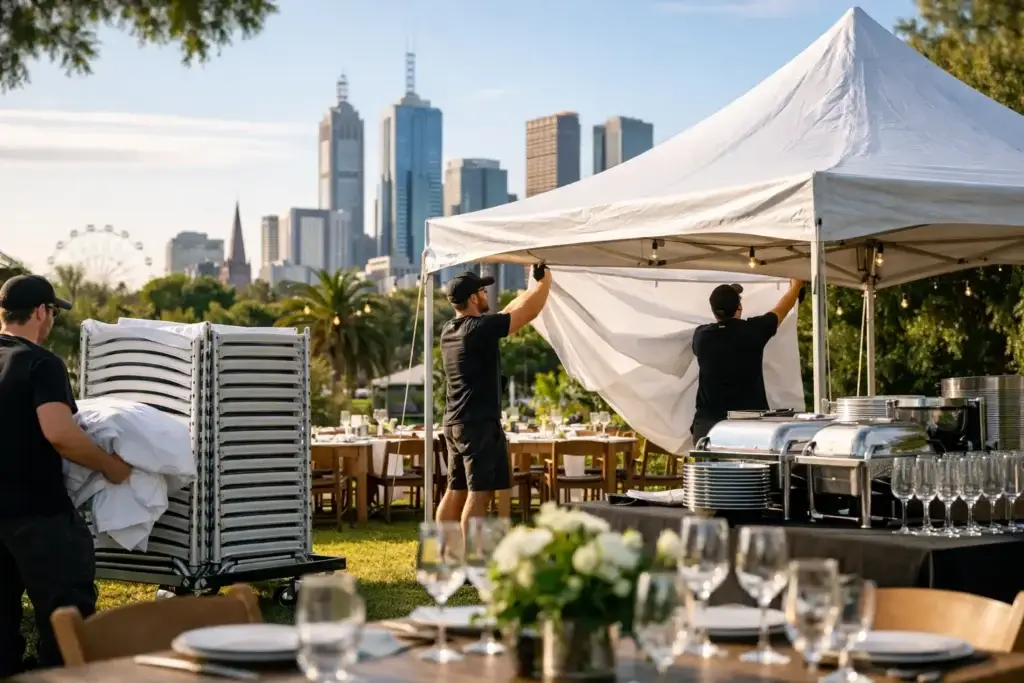
These details affect what can be delivered, where equipment can be placed, and how long installation will take. They also shape the equipment choice. A formal dinner on a flat indoor floor may need tables, chairs, linen, lighting, and a bar setup. The same guest count on grass in regional Victoria may need a marquee or tent, flooring considerations, heating, power distribution, and a longer setup window.
Weather is another site issue, not an afterthought. Melbourne can give an event planner sunshine, wind, and rain in the same afternoon. Shade, shelter, sidewalls, weighted structures, heaters, and a sensible wet-weather layout protect both guest comfort and the running order. It depends on the season, location, and event duration, but a backup plan is usually cheaper than a last-minute scramble.
Build the guest environment before the extras
Guest-facing hire should follow the way people will use the event. Work from the core environment outward: seating, tables, shelter, lighting, temperature, and service areas. Once those basics are right, styling pieces can do their job without getting in the way.
For a seated meal, table size and layout matter as much as chair style. Guests need enough room to sit, staff need space to serve, and aisles need to stay clear. A long communal table can create a strong shared atmosphere, while round tables may make conversation easier for mixed groups. Neither is automatically better. The venue shape, guest list, catering style, and desired flow should decide it.
For cocktail events, the balance shifts. Bar tables, lounges, stools, and casual seating give guests places to pause without filling the room with formal dining furniture. Keep food stations, bars, and entry points separate enough to avoid bottlenecks. If speeches or presentations are part of the plan, make sure sightlines and sound are considered before furniture is locked in.
Lighting deserves the same attention. Decorative lighting can make a space feel warm after sunset, but it is not always enough for catering, pathways, exits, or a band area. Functional light and atmosphere need to work together. This is especially relevant for backyard parties, outdoor weddings, and events that begin in daylight and finish late.
One booking process prevents gaps between suppliers
Hiring furniture from one business, a marquee from another, sound from a third, and power from a fourth can work. It also creates more delivery times, more handovers, and more chances for a gap in responsibility. When an item has to fit beneath a structure, draw power from a generator, or leave clear access for staging, every supplier needs the same site plan.
A coordinated hire approach brings party equipment and production requirements into one conversation. That means the table layout can be checked against the marquee footprint, stage position, cable routes, speaker placement, and emergency access. It also means delivery, installation, testing, and collection can be planned as a single sequence rather than a series of separate arrivals.
Zero Three Party & Event Hire operates this way across private celebrations, weddings, corporate events, and larger live sites. The party hire side covers the environment guests see and use, while the event hire side supports the infrastructure behind it, including staging, rigging, sound, AV, and power systems. One coordinated booking desk gives organizers a clearer line of accountability from quote through pack-down.
That does not mean every party needs a production-scale setup. A simple backyard lunch may only require quality tables, chairs, umbrellas, and heating. But if the event includes amplified music, a raised stage, a temporary structure, a large guest count, or an isolated site, bringing technical planning into the conversation early can prevent expensive changes later.
What a useful hire quote should cover
A quote should do more than list equipment quantities. It should show how the event will be delivered. Before confirming, check the delivery date and time, installation scope, collection timing, site access assumptions, and any equipment that requires an operator or technician.
For structures, staging, generators, and electrical distribution, ask what information is needed before setup. Site dimensions, ground conditions, local requirements, access restrictions, and event schedules can all affect the final plan. Larger public, corporate, cultural, and festival events may also require permits, compliance coordination, load calculations, or formal documentation. These are not details to sort out on the morning of the event.
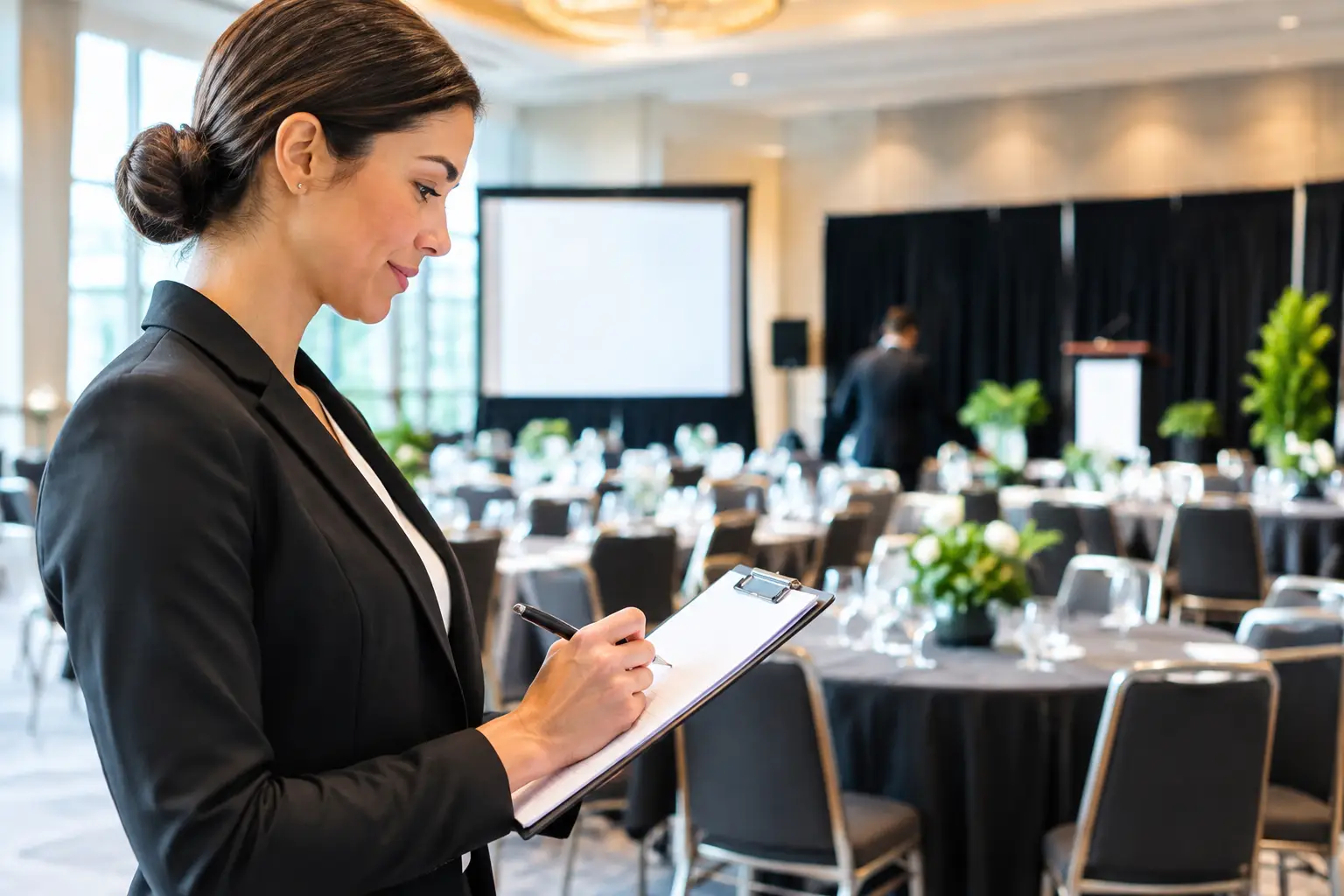
Be specific about the running order as well. If a wedding ceremony happens at 3 p.m. and the reception starts at 5 p.m., equipment may need to be installed well before guests arrive. If a product launch has media access before doors open, the presentation area, lighting, and AV need to be ready ahead of the first camera. A good schedule allows time to test, adjust, and clean the site before the pressure is on.
Allow enough time for the work nobody sees
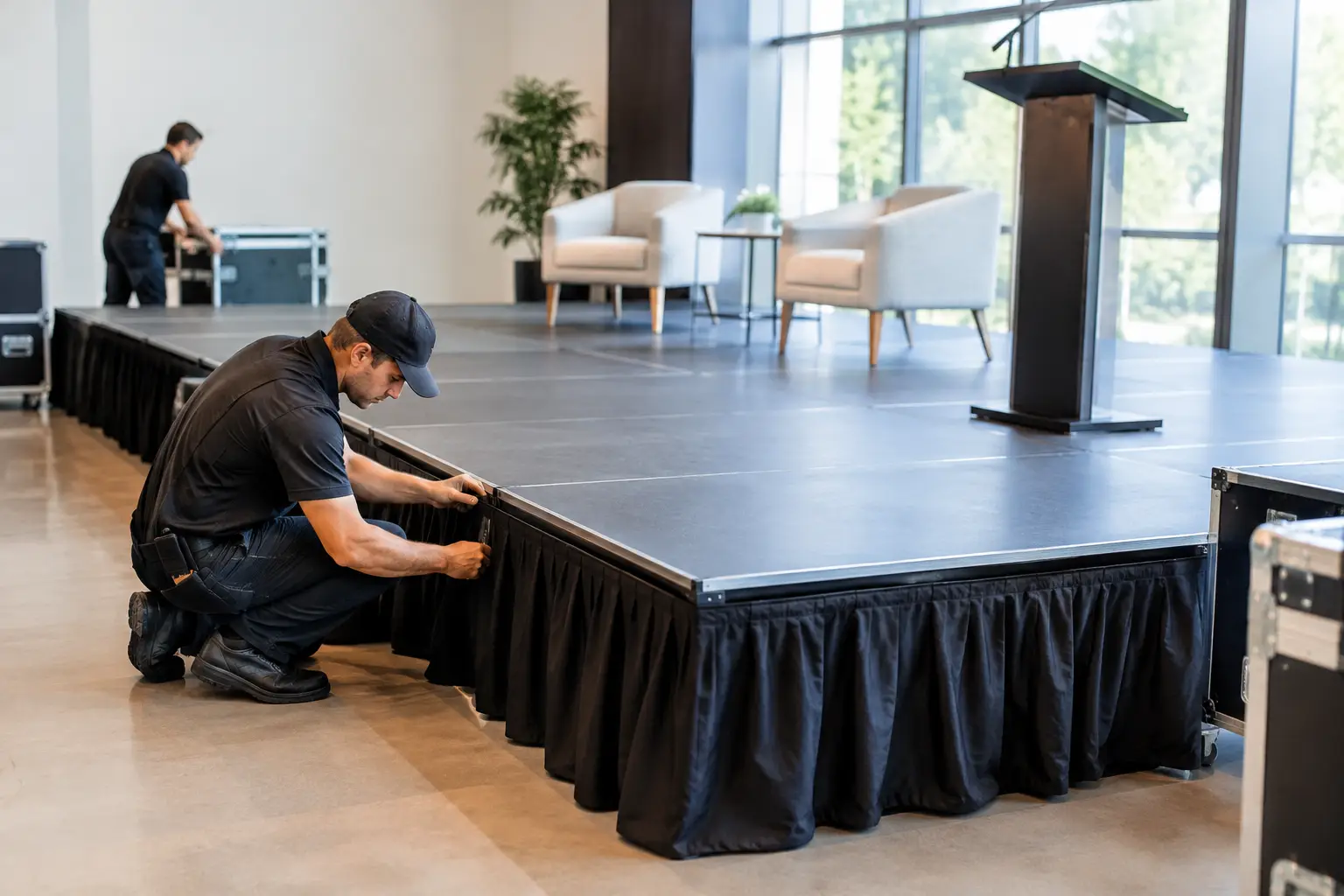
The visible result is the finished room, marquee, or stage. The invisible work is what makes it dependable: loading, transport, positioning, assembly, safety checks, cable management, power testing, and post-event collection.
Private hosts sometimes assume delivery can happen shortly before the party begins. That may suit a small furniture-only order at an accessible property, but it is not a safe assumption for every setup. Structures, technical equipment, difficult access, and large quantities need more time. The same applies after the event. Late collection may be useful when a venue needs to clear quickly, while next-day pack-down can make more sense for a private property where noise and access are limited.
Booking lead time matters most during peak wedding periods, school formal season, end-of-year corporate events, and major public-event weekends. Locking in the date early gives more choice in furniture, structures, and technical equipment. It also leaves room to review the plan if guest numbers or site conditions change.
A practical brief gets faster answers
When requesting hire, provide the date, suburb or regional location, guest count, event type, venue details, access notes, and start and finish times. Add a rough site plan or photos if you have them. Then identify anything that needs special attention, such as a sloped lawn, no onsite power, a narrow laneway, a noise limit, or a strict bump-in window.
You do not need to know every item before making contact. A clear brief is enough to start the right conversation. From there, equipment can be allocated around the actual event rather than guessed from a generic package.
The most useful question is not, “What can we hire?” It is, “What has to be in place for guests, staff, and performers to have a good night?” Tell the hire team the date, the site, and the outcome you need. The plan should make the rest feel straightforward.