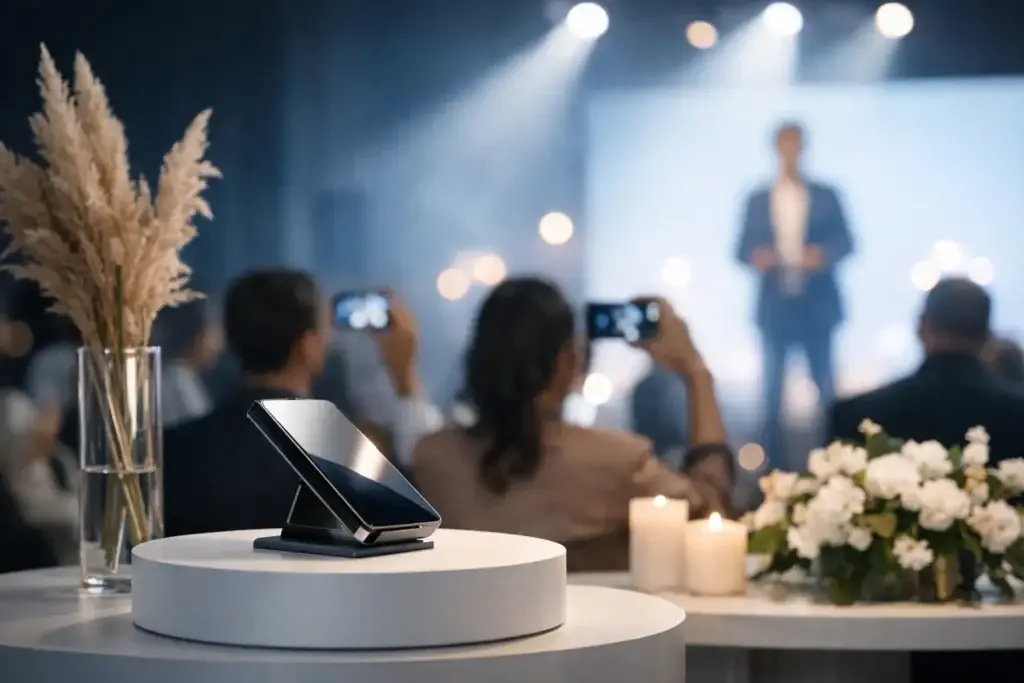
Product Launch Event Styling & Hire
A product can be excellent and still miss its moment if the room is working against it. Guests arrive through the wrong entrance, the hero display is lost in harsh light, the presentation screen is too small, or the reveal competes with a busy bar line. Product launch event styling is not just decoration around a brand message. It is the practical work of making every guest understand what matters, where to look, and what to do next.
For a consumer launch, a media preview, a dealer event, or an internal brand reveal, the strongest styling starts with the event job. Are you building anticipation before a reveal? Giving guests time with a physical product? Creating content that will travel beyond the room? The answer shapes furniture, structures, lighting, signage placement, staging, sound, and power from the beginning.
Start With the Product, Not the Pinterest Board
A mood board is useful, but it should not be the brief. Start with the product’s scale, finish, purpose, and audience. A compact beauty product needs a close-up environment with good mirror lighting and practical testing stations. A vehicle, industrial tool, or large technology installation needs access paths, load planning, clearance, and an audience sightline that still makes the product feel considered.
Ask what guests need to notice in the first ten seconds. It may be a color, a feature, a screen, a tactile material, or a live demonstration. Then decide what must stay out of their way. This is where styling becomes operational. A plinth can create focus, but it cannot block emergency access. A draped entry can build suspense, but it cannot hide poor wayfinding or make a packed arrival point feel tighter.
The best visual concept has one clear hero and a small number of supporting moments. When every surface carries branding, flowers, props, screens, and promotional copy, nothing gets remembered. Give the product room around it. Negative space is often doing more work than another branded item.
Build a Guest Journey That Supports the Launch
Guests experience a launch in sequence, not as a floor plan. Product launch event styling should account for that sequence from the first sightline to the final conversation.
Arrival sets the expectation. A clean entrance treatment, branded welcome point, and clear registration area tell guests they are in the right place without creating a queue that spills into the main experience. If the venue is large, directional signage needs to be part of the styling plan rather than an afterthought taped to a wall.
From there, create a natural progression toward the main moment. That might be a stage reveal, a product wall, a guided demonstration zone, or a series of hands-on stations. Keep service areas such as catering, cloakroom, and staff storage useful but visually quiet. Guests should be able to find a drink or ask for help without mistaking those areas for the feature.
After the reveal, the room needs to change jobs. This is where many launches lose momentum. The audience has watched the presentation, but now they need somewhere to talk, photograph the product, meet the team, or test it. Lounge clusters can slow the pace and encourage longer conversations. Cocktail tables keep a networking crowd mobile. Stools, benches, and charging points may be more useful than extra decor at a technology-focused event.
It depends on the audience. Media and content creators need clean camera angles, controlled light, and enough room to work without disrupting guests. Trade partners may need detailed demonstration areas and surfaces for brochures or devices. A consumer audience may respond better to interactive moments that feel informal and shareable.
Use Light, Furniture, and Structure With Purpose
Lighting is one of the fastest ways to make a launch feel intentional, but it has to serve the product. Colored uplighting can reinforce a campaign palette around the room while neutral front light keeps presenters and product details visible. If the product has a reflective finish, test it under show lighting before doors open. Glare on glass, chrome, screens, and glossy packaging can undo an otherwise strong setup.
Furniture should support both the brand feel and the expected behavior. Low lounges and coffee tables can create a premium, relaxed atmosphere, but they take up more floor area and can fragment a busy room. Bar tables suit faster networking and stand-up launches. For a longer presentation, seating needs a clear view of the stage, accessible aisles, and enough space for crew to move safely.
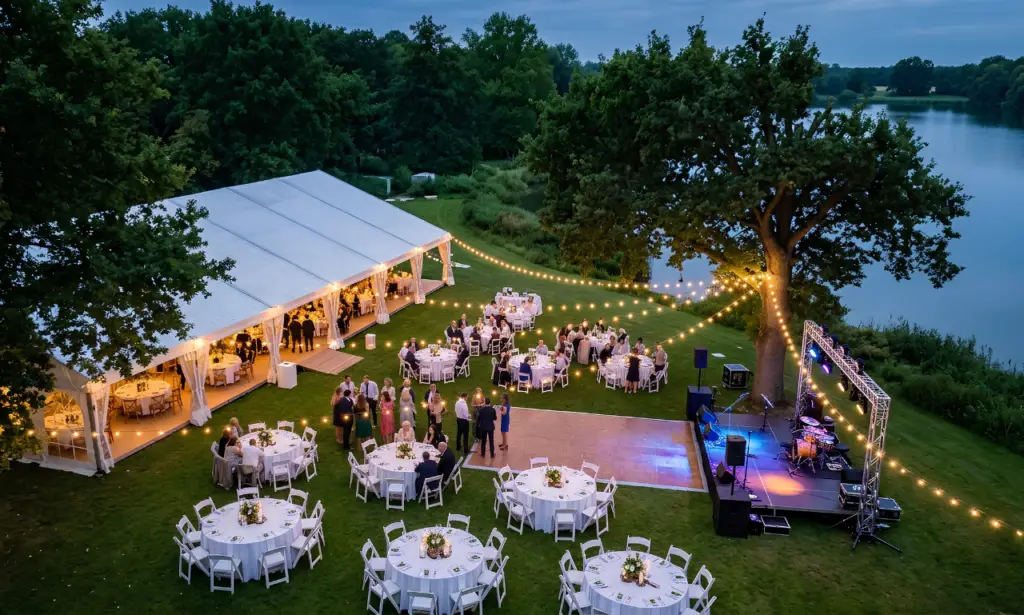
Structures matter most when the venue does not give you a finished event environment. Marquees, clear-span structures, drape, temporary walls, truss, and flooring can turn an open yard, warehouse, car park, or regional site into a controlled launch space. They also bring real planning requirements. Ground conditions, wind exposure, access for delivery vehicles, fire exits, emergency lighting, and venue restrictions should be reviewed before the visual design is locked in.
A dramatic overhead installation may look right in a render but require approved rigging points, engineering checks, or a different approach altogether. The practical answer is not always the most elaborate one. A well-lit product plinth, properly scaled stage, and clean backdrop will outperform a complicated installation that compromises sightlines, budget, or safety.
Plan the Reveal as a Production Moment
The reveal is where styling and production have to work as one. If the product is covered, brought onstage, lowered, rotated, or introduced through video, every element needs a tested cue. Music, audio playback, lighting changes, screens, presenter movement, and any physical reveal mechanism should be rehearsed in the actual room.
This is also where power planning becomes visible when it has not been done properly. Screens, sound systems, lighting, charging stations, product displays, catering equipment, and branded activations all draw power. On temporary sites, generator sizing, distribution, cable runs, protection, and backup planning need to happen well before show day. Cables must be managed safely without cutting across the guest experience.
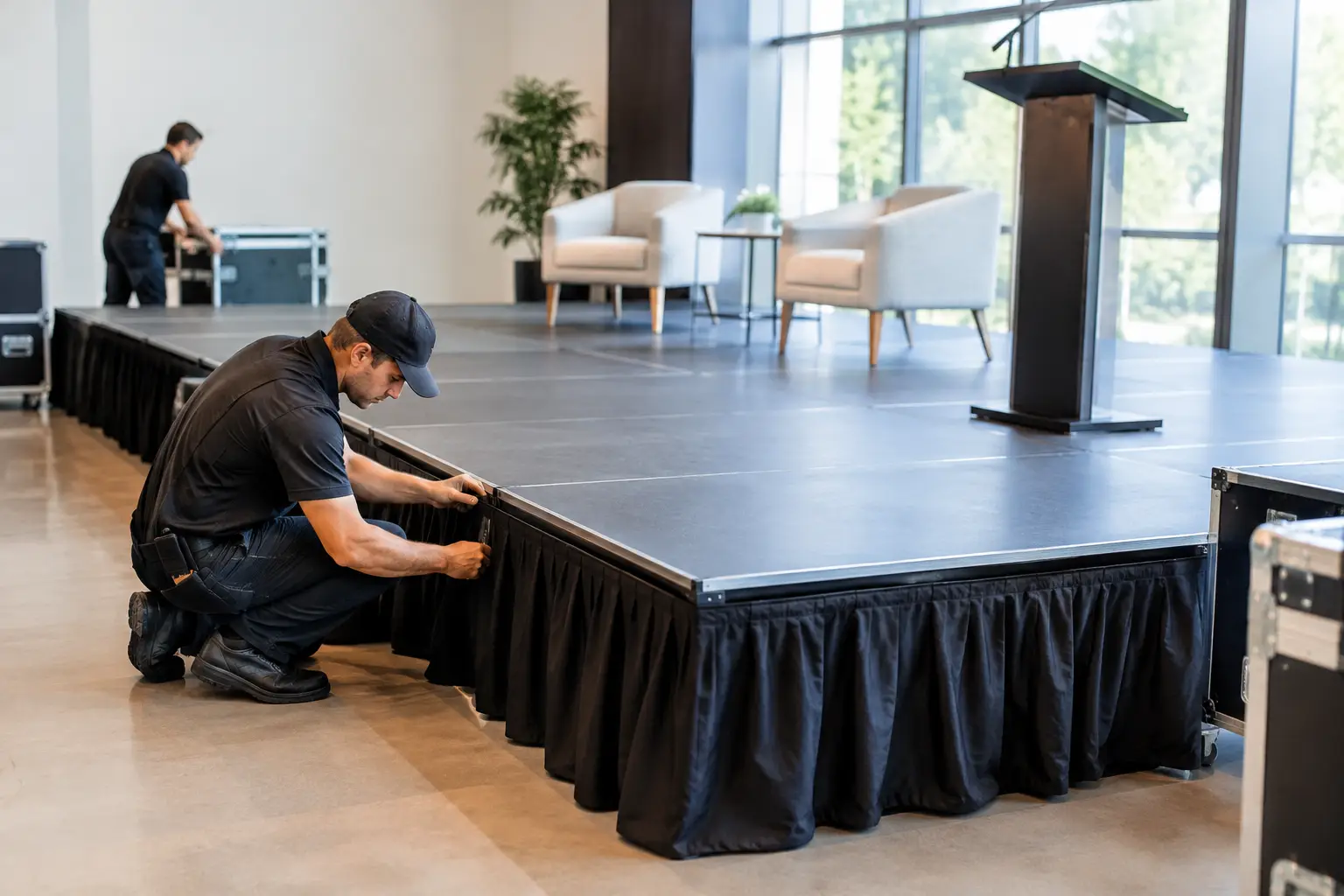
Do not treat the stage as a separate technical zone. Its finish, height, access steps, backdrop, lectern, furniture, and screen placement all affect how the launch looks in person and on camera. A low stage may feel intimate, but guests at the back may not see the product. A taller stage improves visibility but can make live demonstrations awkward. The right choice comes from audience numbers, room shape, camera needs, and what is being launched.
Give Content Capture a Place in the Plan
A launch often has two audiences: the people in the room and the people who see it afterward. Build for both without turning the event into a photo set at every turn.
Choose one or two controlled content moments. This could be a branded product interaction, a stepped-and-repeated media wall, or a hero display with deliberate lighting and enough circulation space. Check the backdrop for awkward joins, exposed weights, visible cables, and competing logos. Small details become obvious in photography.
If guests are expected to share content, make participation simple. The product should be reachable, the visual cue should be obvious, and staff should understand whether guests can touch, test, or photograph it. If the product is delicate, confidential, or not yet ready for public handling, use a separate display model or a managed demonstration format.
Coordinate Styling With the Site Team
The handoff between suppliers is where launch-day friction usually begins. Styling cannot be finalized independently from staging, AV, rigging, power, furniture delivery, venue access, and bump-out times. One coordinated plan reduces clashes over floor space, loading docks, install order, and responsibility when something changes.
At Zero Three Party & Event Hire, that means looking at the guest-facing environment and production-critical requirements together. A single booking process can cover furniture, structures, lighting, staging, sound, power, and on-site setup, with the practical details handled before crew arrives. That is especially useful when a brand team has a fixed creative direction but needs help turning it into a safe, workable site plan.
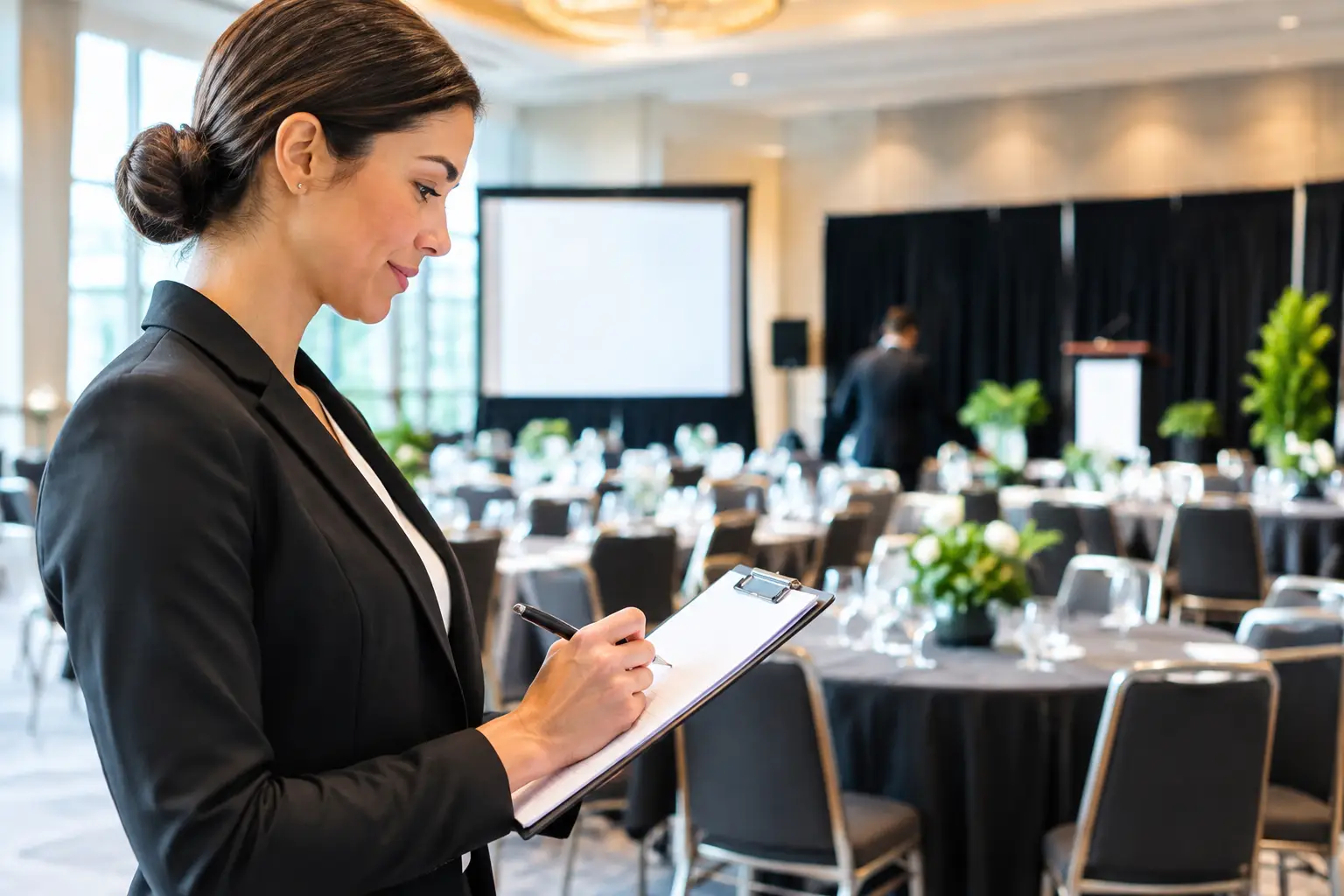
Allow time for a proper site check where the launch has moving parts. Measure access points. Confirm ceiling heights and rigging capability. Identify available power. Review loading times, noise limits, parking, weather exposure, and required permits. Then schedule installation in the right order: structure and flooring first where needed, followed by staging and technical infrastructure, then furniture, styling, and final product placement.
The final walkthrough should be practical. Stand where guests will stand. Sit in the back row. Check the hero product from the entry. Listen for sound coverage at the bar and demonstration zones. Test the registration flow. Look for trip hazards, bottlenecks, and visual distractions. If a guest has to ask where to go, the styling and layout are not finished yet.
A well-styled launch does not ask guests to work out the story for themselves. It gives the product a clear stage, makes the brand feel credible, and lets the event team focus on the people in the room when the doors open.