A band can be brilliant, but the show still falls flat if the stage is too small, the power is unreliable, or the crew cannot get equipment into position on time. Live band stage hire is not simply about placing a platform in front of guests. It is about creating a safe, workable performance area that fits the artists, the audience, the site, and the schedule.
For a wedding band in a marquee, the requirements may be straightforward. For a festival lineup, corporate launch, school formal, or community concert, staging becomes part of a larger production plan involving sound, lighting, power, access, weather protection, compliance, and bump-in timing. Getting those details sorted early makes show day far easier.
Start With the Band, Not the Stage Size
The first question is not, “How big is the stage?” It is, “What needs to fit on it?” A solo vocalist with a guitar needs a very different footprint from a six-piece covers band with drums, keyboards, horn players, monitor wedges, and backline cases.
Ask the band or their manager for a stage plot and technical rider if they have one. This shows where each musician stands, what equipment they bring, what they need supplied, and where power and audio connections need to land. It also reveals practical issues early, such as whether a drum riser is needed, whether the keyboard player needs extra room, or whether the guitarist has a large pedalboard that cannot sit safely at the front edge.
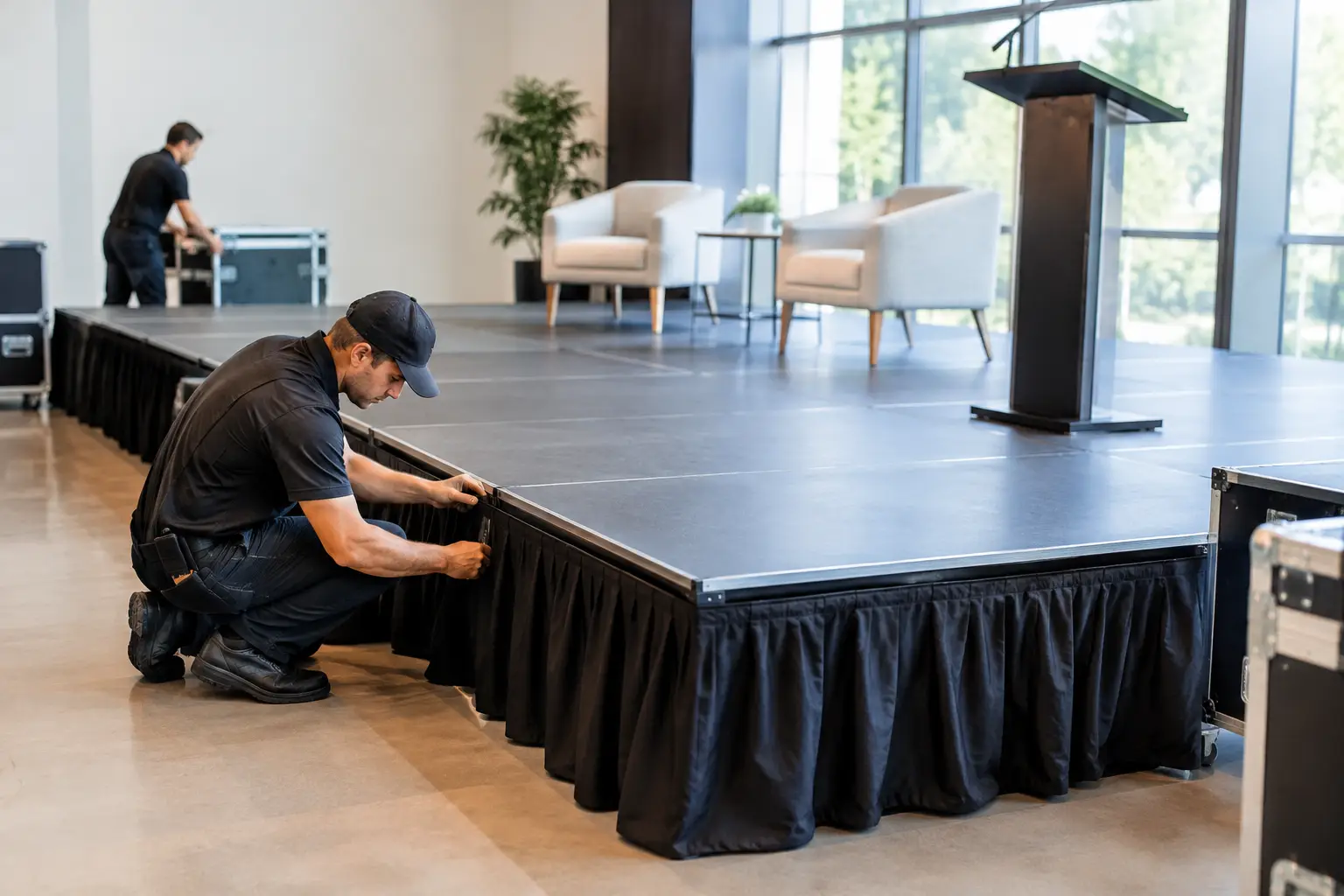
For many private events, a stage around 6m x 4m gives a standard five-piece band enough working room. A larger act, DJ-and-band combination, or event with multiple performers may need 8m x 6m or more. The right answer depends on the lineup, not a standard package.
A stage that is technically large enough can still feel cramped if speaker positions, monitor wedges, mic stands, set changes, and cable runs have not been considered. Give performers room to move. It improves the look of the show and reduces the chance of damaged gear or trip hazards.
Live Band Stage Hire Needs a Site Check
The venue or event site determines what can be installed safely and efficiently. Before confirming live band stage hire, check the ground surface, vehicle access, available space, overhead clearance, public pathways, and nearby power sources.
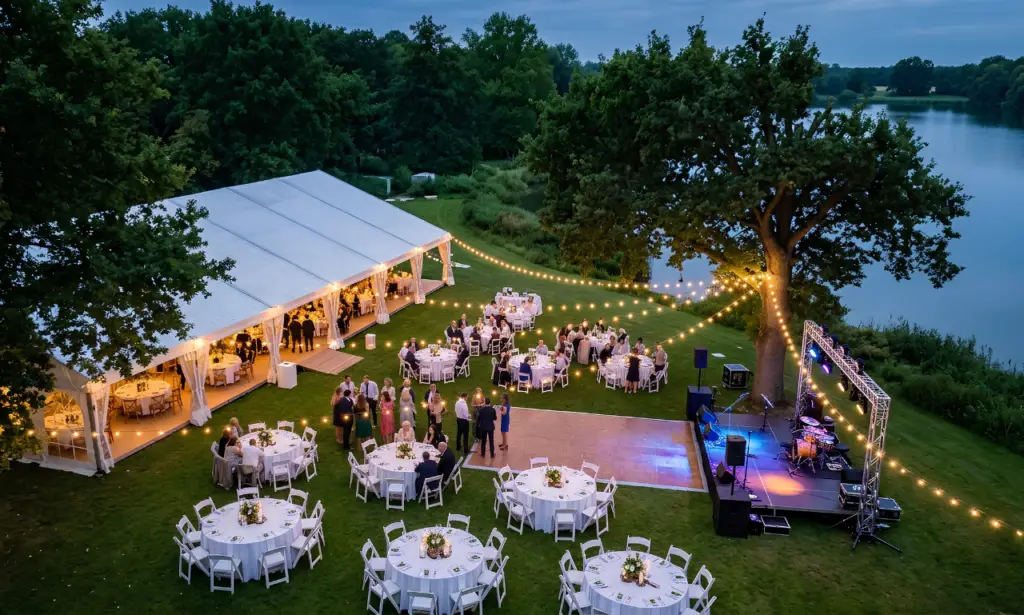
Flat, firm ground is the simplest starting point. Lawns, pavers, car parks, indoor floors, courtyards, and uneven regional sites can all work, but they require different planning. A sloped lawn may need leveling adjustments. Soft ground after rain may affect vehicle access and the load-bearing capacity of the surface. A stage set under trees or inside a marquee needs enough height for lighting, speakers, and performers to stand comfortably.
Access matters just as much as the final stage position. Staging, sound equipment, lighting, and band backline all need to travel from a vehicle to the performance area. A narrow side gate, long gravel path, flight of stairs, or lift with limited capacity can change the crew requirements and bump-in time.
This is where a site plan, photos, and honest dimensions save time. Tell the hire team where vehicles can park, when they can access the site, and whether the event space is upstairs, indoors, behind a building, or across a paddock. Surprises on delivery day are costly and avoidable.
Plan for Sound, Power, and Lighting Together
A stage is only one part of a live music setup. It needs to work with the sound system, power distribution, lighting, and cable management from the beginning.
Power Has to Be Calculated, Not Guessed
A live band may need power for instruments, amplifiers, keyboards, pedalboards, mixers, speakers, lighting, and sometimes refrigeration or catering equipment nearby. Plugging everything into the closest wall outlet is rarely a proper plan, particularly at outdoor events or temporary venues.
Power requirements should be calculated across the whole event site. That includes peak loads, separate circuits, cable distances, safety protection, and generator capacity where mains power is unavailable or insufficient. A generator that is too small can create voltage issues. One placed too close to guests can create unnecessary noise. One positioned without considering cable paths can turn a clean event layout into a hazard.
Keep event power separate where possible. The band should not lose sound because a food truck, coffee machine, or heater starts drawing heavily from the same supply.
Sound Coverage Changes With the Crowd
A 100-person cocktail event and a 1,000-person outdoor concert need different sound coverage. Speaker placement needs to suit the audience area without overwhelming guests sitting nearby, neighboring properties, or quieter spaces such as dining areas.
Consider local noise restrictions and venue curfews before booking the band. A stage facing the wrong direction can create problems that no amount of volume adjustment will fully solve. At some events, delay speakers may be needed to cover a long crowd area evenly. At others, a compact system with careful placement is the better fit.
Lighting Is About Safety as Well as Atmosphere
Stage lighting helps performers look professional, but it also helps them see their instruments, cue changes, and the edge of the stage. Access stairs, ramps, cable routes, and backstage areas need suitable lighting too.
For an evening event, do not treat lighting as an afterthought. A well-lit stage makes the performance feel intentional. More importantly, it gives the crew and musicians a safer space to work after sunset.
Do Not Forget Roof Cover and Weather Plans
Melbourne weather can change quickly. If the band is outdoors, a stage roof or covered performance area is often a sensible part of the plan. Musical instruments, amplifiers, microphones, and electrical equipment do not mix well with rain, strong wind, or direct afternoon sun.
A roof can protect equipment and performers from a passing shower, but it must be suited to the conditions and installed correctly. It is not a reason to ignore wind ratings, drainage, ground conditions, or safe electrical practice. Side walls may help in some conditions, but they can also affect airflow, sightlines, and sound. It depends on the location and forecast.
Have a clear wet-weather decision point. Know when the call will be made, who has authority to make it, and what the backup location is. For a wedding, that may be a relocated dance floor or covered courtyard. For a public event, it may involve a revised performance schedule or a separate sheltered structure.
Build Enough Time Into Bump-In and Soundcheck
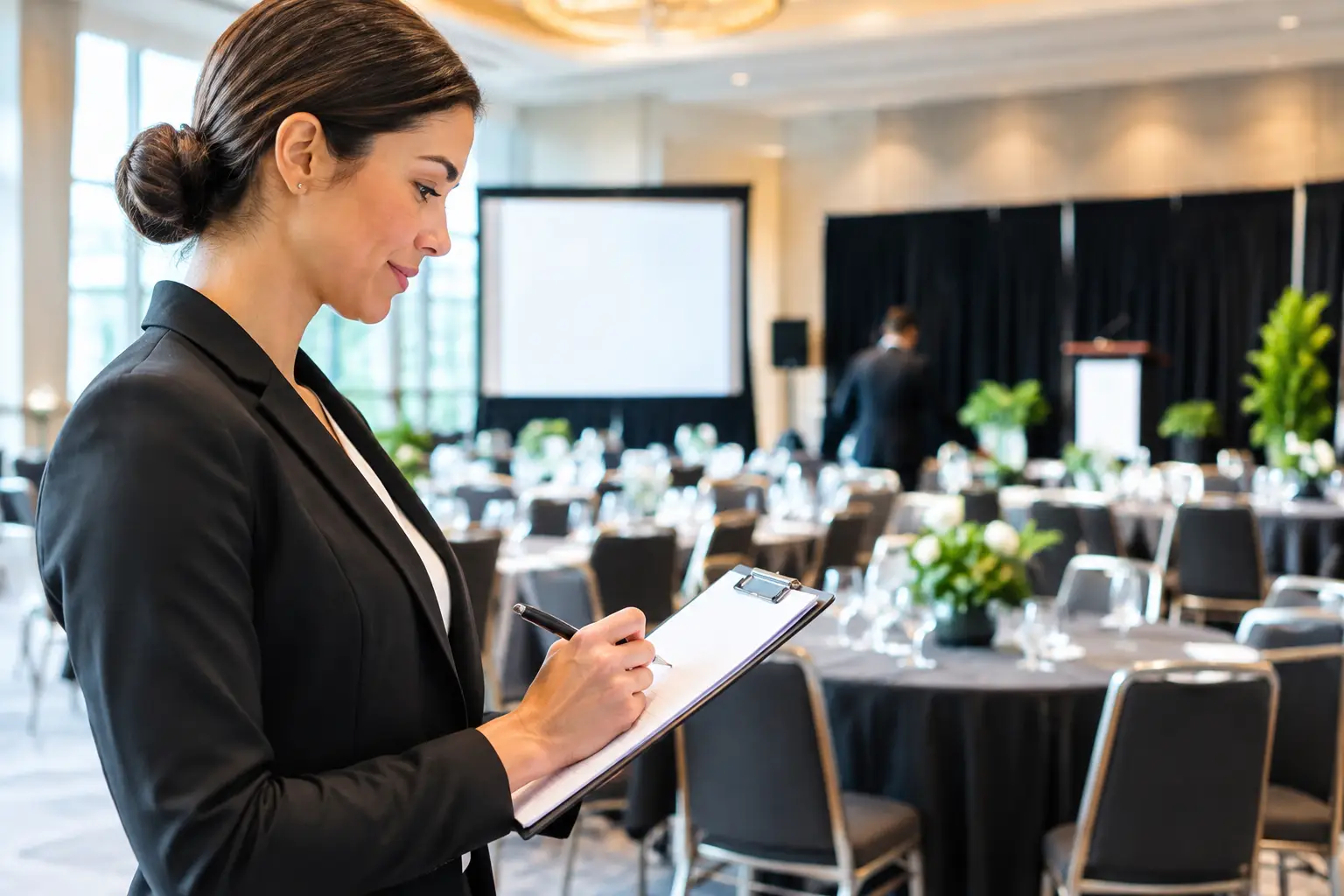
The audience sees the finished stage. The crew sees delivery windows, assembly time, cable runs, soundcheck, safety checks, and artist arrivals. All of it needs room in the run sheet.
A simple band setup may be ready in a few hours. A larger stage with audio, lighting, roof cover, and multiple acts needs considerably more time. Festival-style events may require a full build day, especially if the site has restricted access or other suppliers are working in the same area.
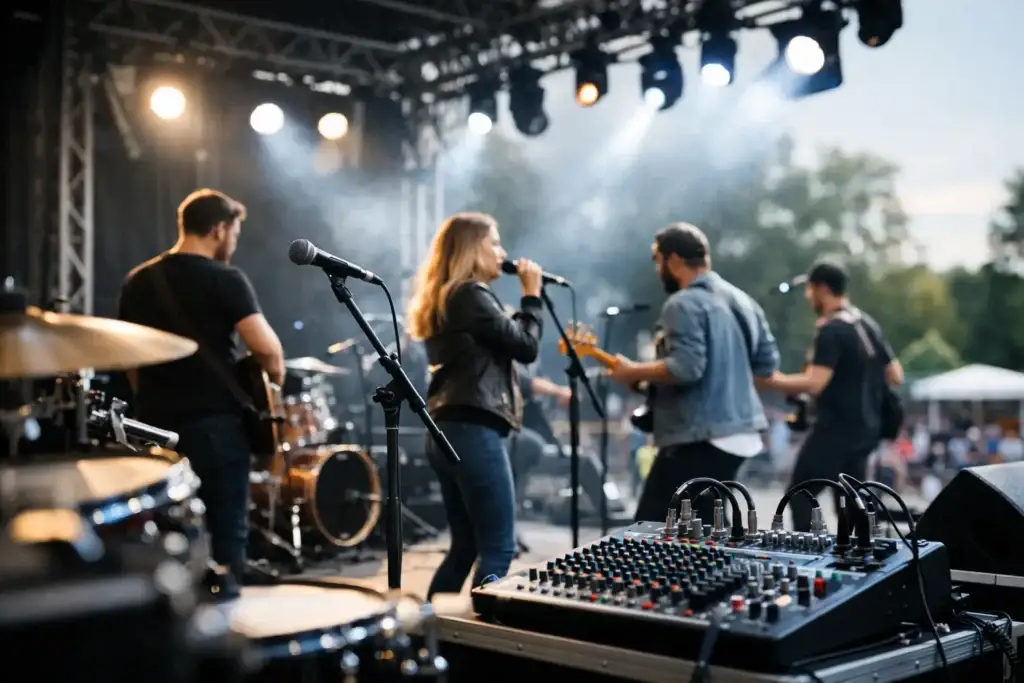
Soundcheck should happen before guests arrive wherever possible. It gives the audio team time to set levels, check microphones, identify noisy power circuits, and make sure every performer can hear what they need through monitors or in-ear systems.
Also plan the pack-down. Late finishes, venue curfews, and limited vehicle access can make collection more complicated than delivery. A coordinated schedule keeps guests clear of work zones and gets the site returned properly after the event.
One Coordinated Production Plan Reduces Friction
When staging, furniture, marquee hire, lighting, sound, generators, and delivery all come from separate suppliers, small communication gaps can become big show-day problems. A stage may arrive before the marquee is ready. The power plan may not account for the audio system. Chairs may block cable routes. No one may be responsible for the final site layout.
Zero Three Party & Event Hire coordinates guest-facing hire and production-critical infrastructure through one booking process. That means staging can be planned alongside the marquee, furniture, sound, power, lighting, access, and event schedule rather than treated as an isolated item.
The best setup is not always the largest stage or the biggest sound system. It is the one that gives the band enough room, keeps the audience comfortable, suits the venue, and can be installed safely within the available time.
Tell the crew the date, location, band lineup, guest numbers, and site conditions early. A few practical details at the start can be the difference between a stressful setup and a stage that is ready before the first note is played.