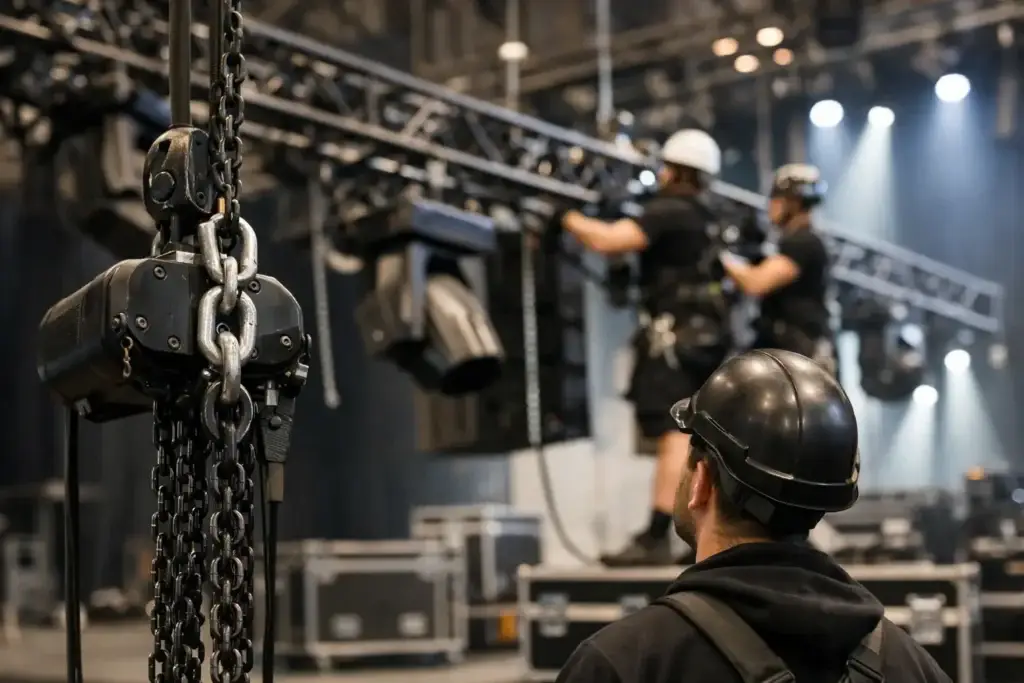
A lighting bar, speaker array, floral installation, or branded banner can transform a venue. It can also become the part of the event that needs the most planning. Event rigging hire Melbourne is not simply about getting equipment overhead. It is about knowing what the venue can carry, how the system will be supported, who installs it, and how it integrates with staging, power, AV, access, and bump-out.
For a small wedding, that may mean a discreet lighting truss above the dance floor. For a corporate launch, it may involve screens, audio, branded signage, and lighting positions that need to be installed before guests arrive. For a festival, the scope can include ground-support structures, production truss, cable routes, generators, and a site plan that works under real operating conditions.
The right approach starts well before delivery day. Tell your hire team the date, venue, event format, and what needs to hang. The earlier those details are clear, the easier it is to design a setup that looks right and works safely.
What Event Rigging Hire in Melbourne Covers
Rigging is the controlled support of production equipment or event elements above ground level. Depending on the site and event brief, this can involve truss, hoists, chain motors, rated slings, base plates, towers, lighting bars, and ground-support systems. It may also involve approved venue rigging points where a venue has an existing ceiling grid and permits their use.
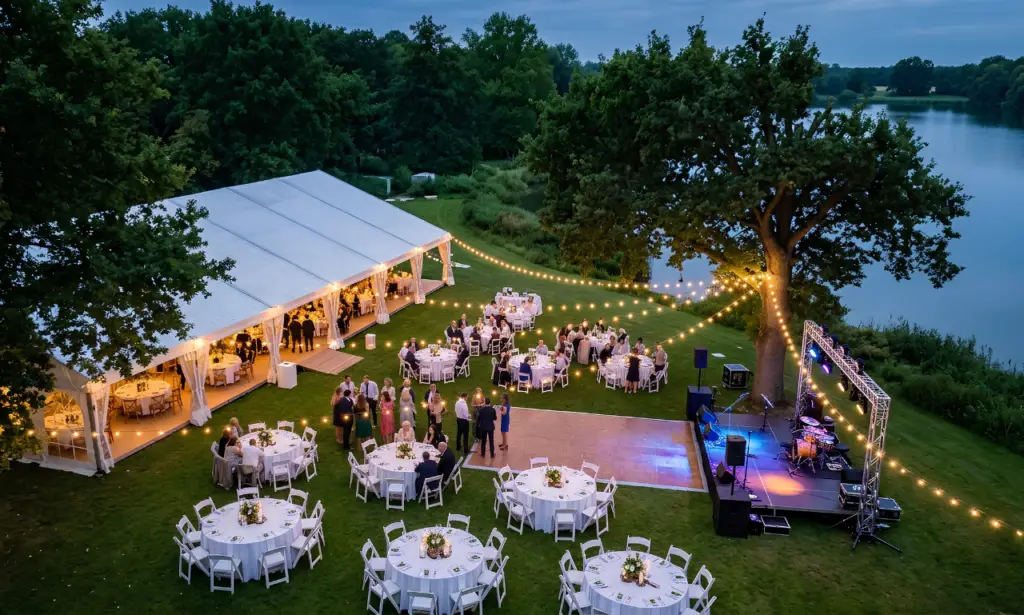
Not every overhead feature is a rigging job, and not every rigging job uses the same method. A lightweight styling element may be better supported from a freestanding frame. A venue with low ceilings may suit lighting stands or uplighting instead of overhead fixtures. Outdoor events often need a purpose-built ground-support solution because there is no roof structure to use.
That distinction matters. Choosing equipment because it looks similar to a reference image can create extra cost, restricted sightlines, or a design that cannot be approved at the venue. A practical rigging plan considers the visual goal, but it begins with the structure and the load.
Start With the Load, Not the Look
Every item suspended above guests, crew, or performers has a weight. That includes the obvious items, such as speakers and lighting fixtures, as well as clamps, cabling, adapters, motors, safety bonds, truss sections, and decorative components. The total load needs to be understood before equipment is allocated.
A good brief identifies what will be flown, its approximate quantity, and where it needs to sit. It also identifies anything supplied by another vendor. For example, a client may hire staging and truss from one supplier while an AV provider brings video screens and speakers. Those components still need to be assessed as one system, not treated as separate jobs.
Load calculations and engineering requirements depend on the setup. A simple freestanding goalpost truss for lightweight signage is very different from a flown PA system in a ballroom or a large outdoor lighting grid. Venue documentation, structural drawings, approved rigging-point schedules, and engineer input may be needed before the final design is confirmed.
This is where shortcut decisions cause problems. Do not assume a ceiling beam, tree, marquee frame, balcony rail, or existing hook can be used as a rigging point. If it has not been assessed and approved for that purpose, it is not a rigging point.
Site Information That Prevents Delays
The fastest way to receive an accurate rigging plan is to provide clear site information early. Photos are helpful, but they do not replace measurements or venue documentation. Your production team needs enough detail to plan equipment, labor, transport, and access realistically.
For most events, the essential details are:
- venue name, room or event-site location, and confirmed event date
- ceiling height, usable floor area, and any known rigging-point information
- a run sheet showing bump-in, rehearsal, guest entry, and bump-out times
- a list of equipment or styling elements that need to be suspended
- loading-dock access, lift dimensions, stairs, vehicle restrictions, and curfews
Outdoor sites need another layer of planning. Ground conditions, wind exposure, underground services, fencing, emergency access, public movement, and wet-weather contingencies all affect the solution. A system that works on a level hardstand may require different bases, ballast, or placement on grass, uneven ground, or a public reserve.
Venue Rules, Permits, and Responsibility
Melbourne venues often have their own production rules. Some require an approved rigging plot, specified contractors, proof of competency, insurance documents, or advance sign-off from the venue technical manager. Others only allow work during set bump-in windows. These requirements are not red tape for its own sake. They protect the building, the people working beneath the system, and the event schedule.
Responsibility should be clear from the start. If the venue supplies rigging points, confirm who approves their use and who installs the motors or hardware. If a third-party AV provider is attaching equipment to the system, confirm who supplies the weights, connection details, and final load information. If scenic elements or florals are being added late, check whether they change the approved plan.
One coordinated booking desk reduces the chance of those details being missed. Zero Three Party & Event Hire can coordinate event infrastructure alongside staging, power, lighting, furniture, marquees, and guest-area equipment, so the overhead plan is considered alongside the whole site rather than in isolation.
Rigging Must Work With the Rest of Production
The best rigging design is not necessarily the biggest one. It is the one that supports the show while leaving enough room for guests, operators, sightlines, access paths, and emergency egress.
Consider a corporate dinner with a central stage. A truss structure needs to sit high enough to avoid obstructing the room, but low enough for effective lighting angles. It must not block projector lines, interfere with sprinklers, or force guests to walk through cable paths. If tables, bars, or a dance floor are added after the technical layout is drawn, positions may need to change.
Power planning is closely connected. Lighting and AV equipment require calculated, distributed power with safe cable management. Outdoor systems may need generators, protection from weather, and cable routes that avoid public areas. A polished rigging result loses value quickly if power is an afterthought or if the install creates a trip hazard below.
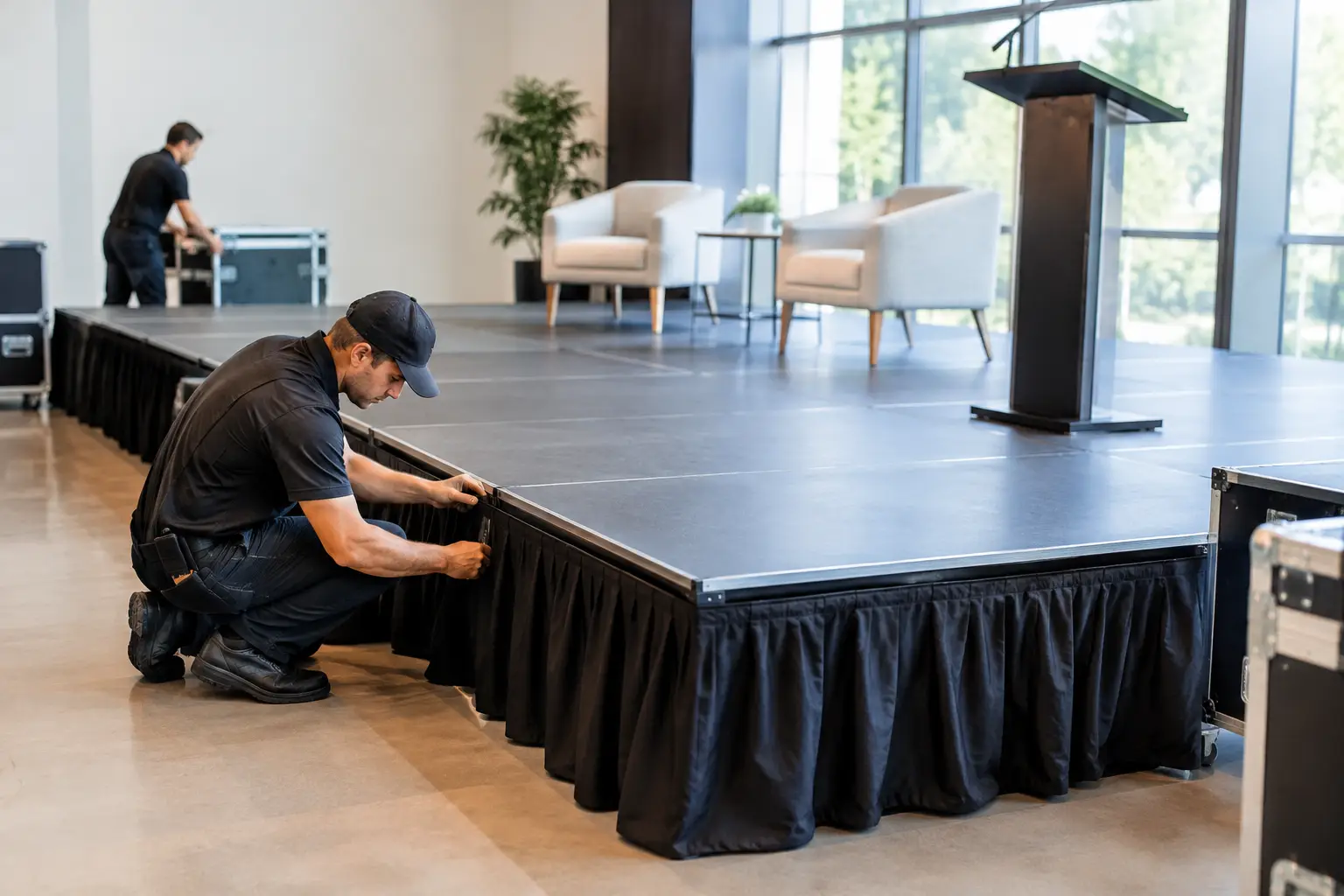
Staging matters too. Speaker positions, screen heights, stage roof clearance, drape lines, and performer access all influence where truss and support structures can go. When staging, power, AV, and party hire are planned together, crews spend less time resolving conflicts on site.
Allow Enough Time for Bump-In and Testing
Rigging work should not be scheduled as a last-minute decorating task. Installation takes time, particularly where access equipment, structural checks, venue inductions, multiple suppliers, or a detailed lighting focus are involved. Pack-down also needs a realistic window. Equipment should be lowered, disconnected, and removed methodically after guests leave.
The required time depends on the complexity of the system. A simple frame may be installed efficiently within a standard delivery window. A multi-point indoor install or festival structure can require a dedicated crew, staged delivery, safety checks, and testing before production equipment is added.
Build the schedule around the critical path. Confirm when the room or site becomes available, when trucks can access it, when rigging must be complete, and when AV, styling, caterers, and furniture crews need to enter. If there is a rehearsal or soundcheck, the system should be installed early enough for that work to happen without pressure.
Questions Worth Asking Before You Book
A capable supplier should be comfortable discussing the practical details, not just the equipment list. Ask whether the proposed system is flown from approved points or ground-supported, whether load details are required from other vendors, and what venue approvals must be obtained before installation.
Also ask who is responsible for delivery, installation, testing, on-site support, and collection. For events with changing schedules, clarify how late additions are handled. A new LED screen, heavier floral feature, or added speaker may alter the plan, even if it seems like a small change.
Price matters, but compare scopes carefully. A lower equipment figure may exclude installation labor, transport, engineering, venue paperwork, access equipment, ballast, or after-hours collection. A complete quote makes it easier to see what is actually covered and avoids show-day surprises.
A good rigging plan should feel quiet once the event opens. Guests notice the lighting, sound, styling, and atmosphere, not the calculations, checks, and coordination that made it possible. Share the brief early, keep supplier responsibilities clear, and give the crew enough time to build it properly. That is how an overhead feature becomes part of a smooth event rather than a late production problem.