A truss point that looks straightforward on a venue drawing can become the most consequential detail of the entire event. It may carry lighting, PA, LED walls, scenic pieces, drape, motors, and the people working beneath it. That is why rigging certification requirements should be addressed during planning, not after the equipment is already on site.
For event organizers, the practical question is rarely, “Does every person touching a shackle need the same certificate?” The better question is: who is qualified to design, approve, install, inspect, and operate this specific system? The answer changes with the venue, the load, the equipment, local rules, and whether cranes or powered lifting are involved.
There Is No Single Rigging Certificate for Every Event
In the United States, there is no one universal card that makes someone qualified for every type of entertainment rigging. OSHA rules, local building and fire requirements, venue policies, union agreements, equipment manufacturer instructions, and insurer conditions can all apply. A theater fly system, a ballroom ceiling point, an outdoor stage roof, and a crane-supported festival build each create different obligations.
That does not mean the standard is vague. It means responsibility must match the work.
A basic event setup might involve a small ground-supported truss with pre-engineered components and no overhead audience exposure. A trained event crew following the manufacturer’s assembly instructions may be appropriate. A flown PA system or a custom scenic installation, by contrast, calls for experienced entertainment riggers, documented load information, and venue approval. Where loads are unusual, structural capacity is unclear, or temporary structures are being altered, an engineer may need to review the plan.
Credentials can help a client or producer verify experience, but they are only one part of competence. Training records, practical experience, equipment familiarity, site-specific planning, and the ability to identify hazards matter just as much.
What “Qualified” and “Competent” Mean on Site
These terms are often used interchangeably. They should not be.
A qualified person has the knowledge, training, or demonstrated ability to solve problems related to the rigging work. In event production, that may be the person calculating loads, selecting hardware, determining bridle angles, or approving attachment methods.
A competent person has the authority to identify hazards and take corrective action. That could mean stopping an installation because a point is not where the drawing says it is, the supplied hardware is damaged, weather conditions have changed, or a crew is about to work below an unsecured load.
One experienced professional can sometimes meet both definitions. On a larger production, those responsibilities may be divided among a lead rigger, production manager, structural engineer, venue representative, and equipment supplier. The key is that names and responsibilities are clear before load-in begins.
For organizers, ask who has authority to stop work and who signs off on the final installation. If no one can answer, the rigging plan is not ready.
Rigging Certification Requirements by Type of Work
The level of documentation and credentialing should rise with the consequence of failure. A sensible approach starts by separating the work into categories.
Ground-Supported Truss and Small Event Structures
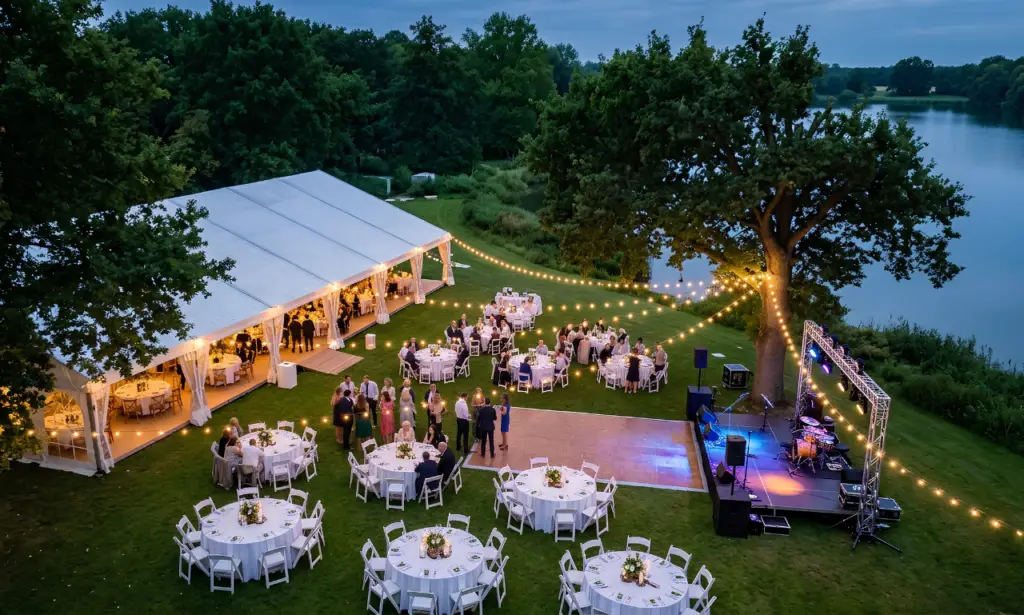
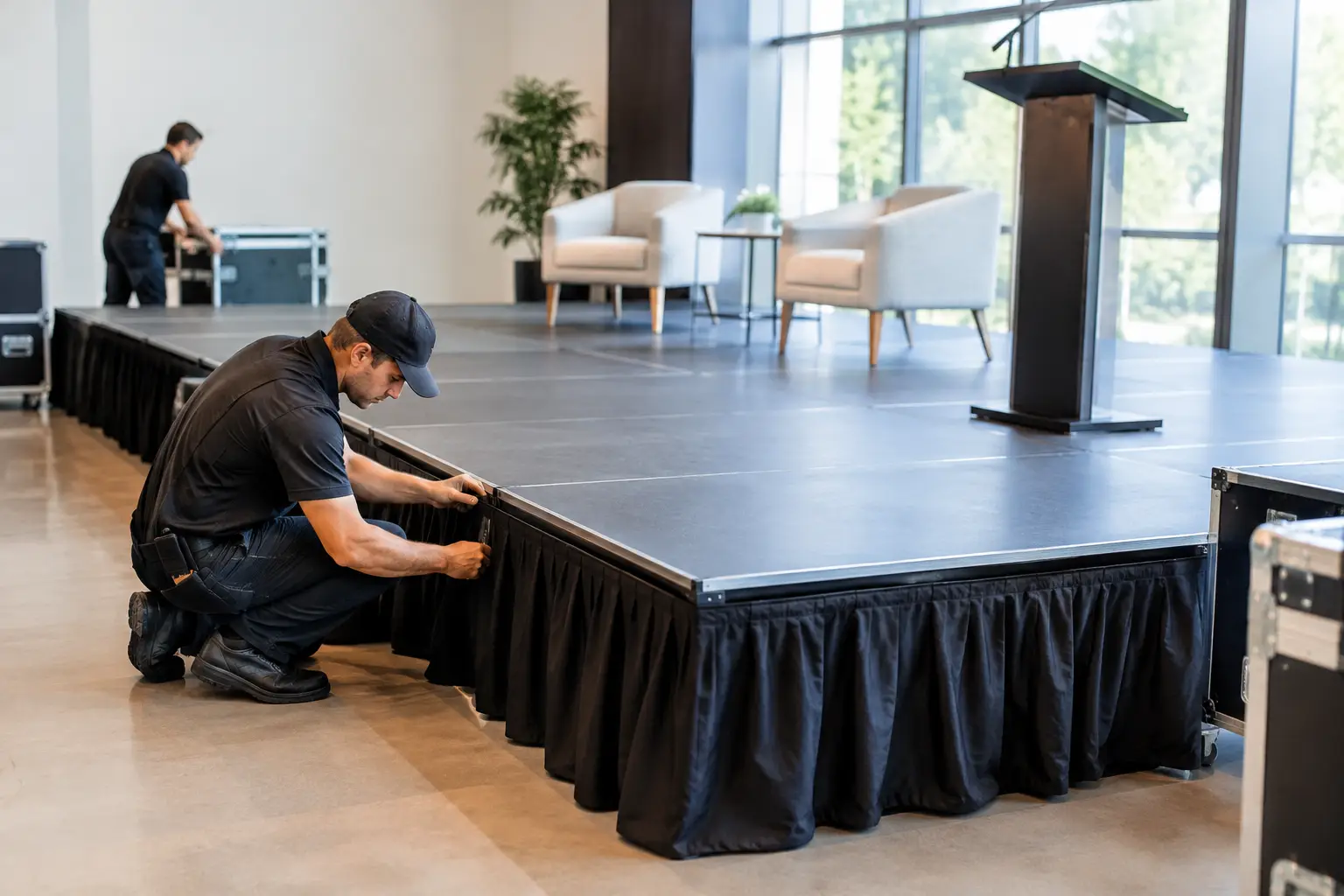
Ground-supported systems are not automatically low risk. They still need correct assembly, ballast, bracing, load limits, and consideration of wind if they are outdoors. Crews should be trained on the specific truss and roof system being installed, understand manufacturer manuals, and inspect components before use.
For a backyard celebration, school event, or product launch, this may be the right solution because it avoids relying on an unknown ceiling structure. It can also make load paths more visible and easier to manage. The trade-off is floor space, sightline impact, and the need for proper base dimensions and ballast.
Venue Points and Flown Production Equipment
When equipment is suspended from a building, the venue’s point-load schedule is the starting point. Do not assume a ceiling grid, decorative beam, sprinkler line, or exposed steel member is an approved rigging point. A venue should identify rated points, their allowable loads, any restrictions on bridle use, and the approved personnel who may access them.
Flown systems usually require a qualified entertainment rigger, a current plot showing each point and load, and a clear approval process. Venues may also require their in-house rigger to perform or supervise all overhead work. That is common, and it should be built into the budget and schedule rather than treated as a last-minute add-on.
Outdoor Roof Systems, Towers, and Festival Builds
Outdoor production adds wind, rain, uneven ground, public access, and changing site conditions. Here, certification requirements often sit alongside engineering documents, manufacturer specifications, weather action plans, ballast calculations, and local permits.
A roof system can be structurally capable on paper and still unsafe if the ground bearing, ballast placement, lifting sequence, or wind-management plan is wrong. Larger festival structures may need stamped engineering, site inspections, and coordination with the authority having jurisdiction. If a system is modified from its standard configuration, treat that as an engineering question, not a crew improvisation exercise.
Cranes, Hoists, and Powered Lifting
Cranes bring their own regulatory requirements. Operator certification, qualified signalpersons, documented lift planning, exclusion zones, and communication protocols may be required depending on the equipment and work environment. A crane lift is not simply a faster way to get truss in the air.
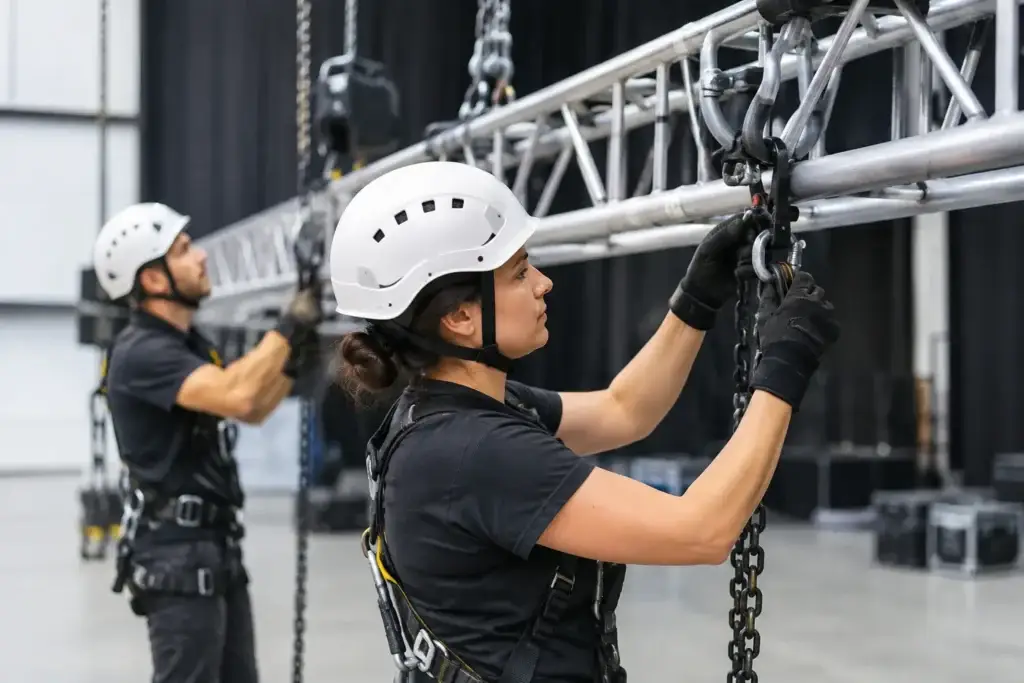
Powered chain hoists also require trained operators, inspections, appropriate controls, and a plan for safely lifting and holding the intended load. The crew needs to understand load distribution, motor capacity, secondary suspension where required, and how the system behaves if one point is not sharing load as intended.
Credentials That May Be Requested
Entertainment Technology Certification Program credentials are widely recognized in the live-events industry and can be a meaningful indicator of tested knowledge for entertainment rigging roles. Some clients, venues, and production employers specifically request certified riggers, particularly for complex overhead systems.
Other training may include manufacturer-specific instruction, fall-protection training, lift or aerial-work-platform training, OSHA outreach courses, first aid, and rescue planning. These are valuable, but none should be used as a shortcut around the actual rigging plan.
A certificate earned years ago does not prove that a person has seen your venue, understands the current equipment, or has reviewed the latest load information. Ask for relevant qualifications, then confirm the work method is right for the job.
Documents to Have Before Load-In
A smooth rigging call starts with paperwork that is useful, not paperwork created to satisfy a folder. The production team should be able to produce the venue point plot or structure layout, equipment list, load schedule, and contact details for the responsible rigger and venue representative.
For more involved installs, add engineering documents, equipment inspection records, lift plans, rescue plans for work at height, weather procedures, and permits as needed. The final package depends on the scale of the event. A simple ballroom lighting package does not need the same documentation as a touring festival roof, but both need clear accountability.
Load calculations deserve special attention. Weight is only one factor. Bridle angles can substantially increase forces on points and hardware. Dynamic loads, uneven distribution, motor behavior, cable weight, and future additions all need to be considered. “We have done this before” is not a calculation.
The Inspection and Sign-Off Process
Certification is not a substitute for inspection. Hardware should be checked before it goes up, while the system is being built, and again before the space opens to guests. Look for damaged truss, distorted shackles, worn slings, missing pins, incorrect fasteners, compromised hoist chains, and anything that differs from the approved design.
The work area also matters. Establish exclusion zones during lifts. Keep unassigned personnel out from under suspended loads. Confirm communications before a pick begins. If conditions change, pause and reassess instead of pushing through to protect the schedule.
After installation, the responsible rigger or designated authority should verify that the installed system matches the approved plan. That final check is where an event moves from “assembled” to ready for operation.
How to Brief Your Rigging Supplier
Tell your supplier the date, venue, room or site dimensions, ceiling height, event schedule, and what needs to be flown. Include the intended lighting, audio, video, scenic, branding, and drape elements early. A complete brief allows the team to identify whether you need ground support, venue points, a custom temporary structure, or engineering input.
Also share venue rules before quoting. Some spaces have fixed rigging crews, restricted load-in windows, limited point capacity, or requirements for advance document review. A coordinated supplier can plan staging, power, sound, structures, and rigging together, which prevents one department from creating a problem for another.
The safest rigging plan is usually the one that was designed early enough to be simple. Bring the right people into the conversation before the ceiling is full, the schedule is tight, and the only remaining option is a compromise nobody should accept.