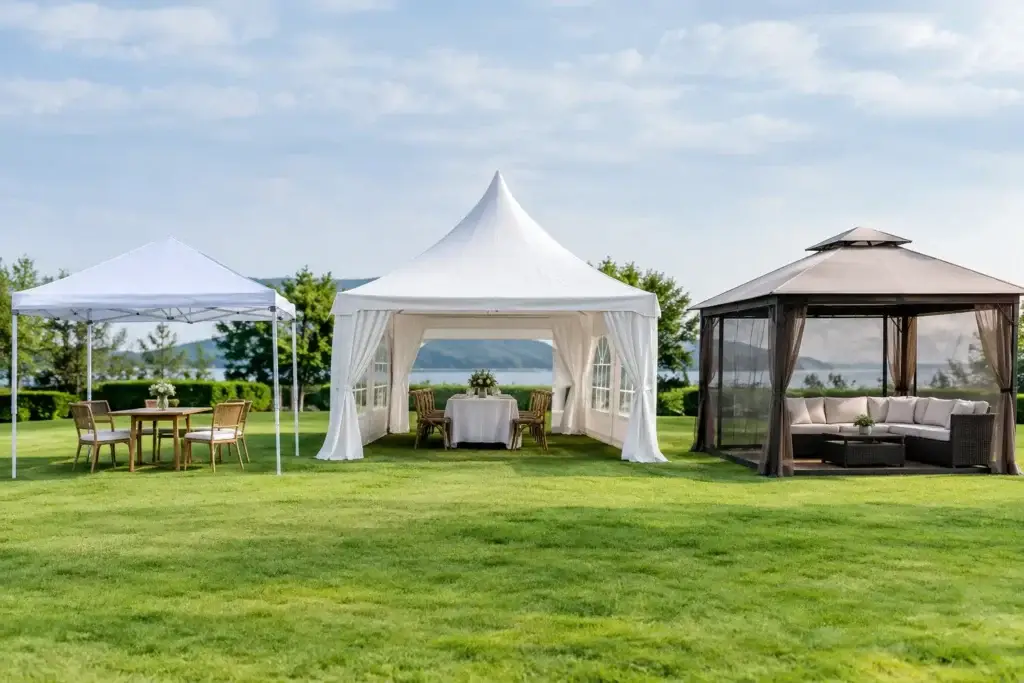
A marquee gazebo comparison starts with one practical question: what must the structure do once guests arrive? A small canopy can keep sun off the drinks table. A properly planned marquee can create a weather-protected dining room, ceremony space, registration area, backstage zone, or full event footprint. They may look similar in a product photo, but their role on site is very different.
Choosing the cheaper or smaller option because the forecast looks clear is a common planning mistake. Guest movement, evening temperature, wind exposure, ground conditions, lighting, furniture layout, and delivery access all affect the answer. Start with the event plan, then match the cover to it.
Marquee Gazebo Comparison: The Core Difference
A gazebo is usually a compact, freestanding shade structure with a light frame and fabric roof. It is useful for small, short-duration setups: a backyard bar, catering station, market stall, welcome point, or a handful of standing guests. Many gazebos are designed for fast setup on a level, accessible surface.
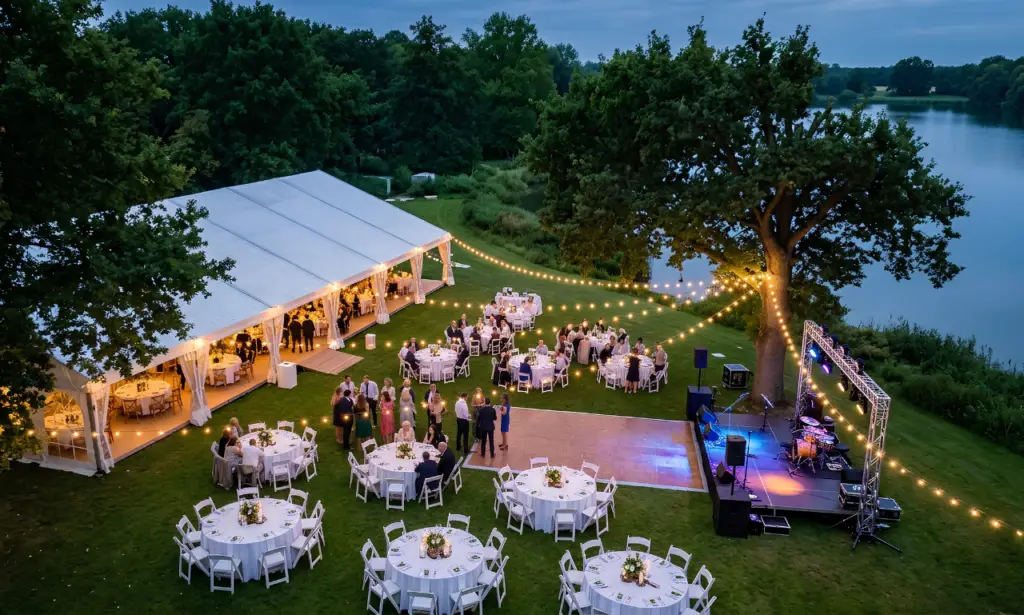
A marquee is a larger temporary structure designed to define an event space. It can cover guest seating, a dance floor, a ceremony, a product display, or operational areas that need to stay usable through changing conditions. Marquees can be configured in bays, fitted with sidewalls, weighted or anchored to suit the site, and planned around lighting, heating, flooring, staging, and power.
That does not mean every event needs a marquee. For a casual afternoon gathering with 15 guests and a solid indoor fallback, a gazebo may be exactly right. If 80 people need to dine outdoors through the evening, the structure needs to do more than provide shade. It needs to support the event schedule.
Think in usable space, not roof size
The footprint on a brochure is only the starting point. Tables, chairs, service aisles, gift tables, speakers, heaters, and entrances all consume space. A structure that technically fits the guest count can still feel cramped once the layout is installed.
For seated events, allow room for people to pull chairs back and for staff to move between tables. For standing receptions, consider where guests will naturally gather around food, drinks, entertainment, or a product display. A gazebo may suit one defined function. A marquee is generally the better choice when several functions must happen under the same roof.
When a Gazebo Is the Right Call
Gazebos work best when the event has a simple purpose, a small footprint, and low production demands. They are practical for a shaded check-in point at a school event, a backyard buffet, a pop-up information station, or shelter over a DJ controller where the main guest area is elsewhere.
They are also useful as secondary cover. A wedding reception may use a marquee for dining while a gazebo covers the bar queue. A community event may use several gazebos to create separate first aid, merchandise, and volunteer areas. In these cases, their compact size is an advantage because they can be positioned where a larger structure would not fit.
The trade-off is exposure. A basic gazebo has less scope for enclosed walls, formal lighting runs, wide guest circulation, or temperature control. It may be unsuitable for a windy reserve, an overnight setup, a site with difficult ground conditions, or an event where rain would stop key activities. Do not treat it as a smaller version of a fully planned marquee.
When a Marquee Is Worth It
A marquee earns its place when weather protection, guest comfort, or event presentation matters. Weddings, corporate dinners, festivals, school formals, launches, and milestone parties often need a controlled area rather than a patch of shade. The marquee becomes the room. Everything else is designed around it.
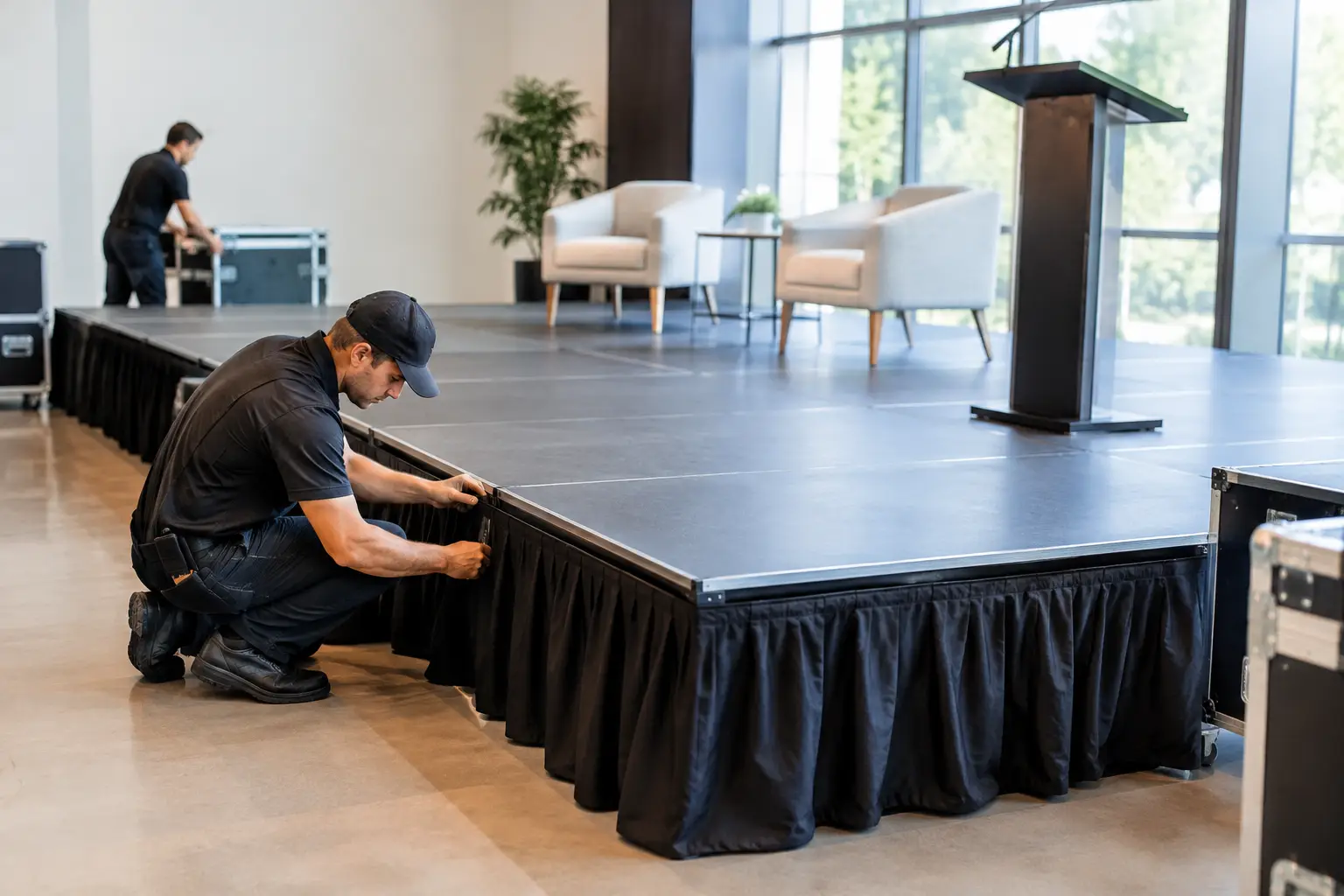
Sidewalls can reduce wind and rain intrusion. Lighting can be planned for dining, speeches, pathways, and pack-down. Heating may be needed for a cool evening, while fans or open sides can help on a warm day. Flooring can improve comfort on grass or uneven ground, particularly for formal footwear, accessibility, and service carts.
A marquee also gives an event more flexibility. If rain changes the ceremony plan, an open-sided structure can become a ceremony space. If the night cools down, walls can be added or closed according to the setup. That flexibility has a cost, but it can prevent last-minute compromises that affect guests and suppliers alike.
The site can decide the structure
Before selecting any cover, check the site rather than guessing from photos. Measure the usable area, including access gates, paths, trees, roof overhangs, power lines, slopes, and neighboring property boundaries. Ask whether the structure will be on grass, concrete, decking, gravel, or a sports field.
Anchoring is a serious consideration. Some sites allow stakes into grass; others require weighted systems because the surface cannot be penetrated. The required ballast can affect delivery vehicles, labor, placement options, and budget. Public sites and larger events may also require permits, site plans, engineering information, or compliance coordination.
This is where a quick site conversation saves time. Tell the hire team the date, location, guest number, event hours, and what is happening under the cover. Clear information early produces a safer layout and avoids discovering on delivery day that the preferred structure cannot reach the planned position.
Weather Planning Is More Than Checking Rain
Rain is the obvious concern, but wind often creates the bigger operational issue. Wind direction, exposed paddocks, waterfront locations, and gaps between buildings can change how a structure performs. Sidewalls may improve protection from light rain, yet they also change wind loading and ventilation. They need to be selected and installed as part of the overall plan, not treated as an afterthought.
Temperature matters too. A marquee full of seated guests can become cold quickly after sunset, particularly when the ground is damp. Heating requires safe placement, clearances, fuel or electrical planning, and ventilation. If you are adding fairy lights, catering equipment, a band, AV, heaters, and refrigeration, power demand needs to be calculated rather than assumed.
A single extension cord is not an event power plan. Identify every item that needs electricity and where it will sit. This protects the guest experience and helps prevent overloaded circuits, cable hazards, and avoidable interruptions during speeches or service.
Match the Structure to the Event Layout
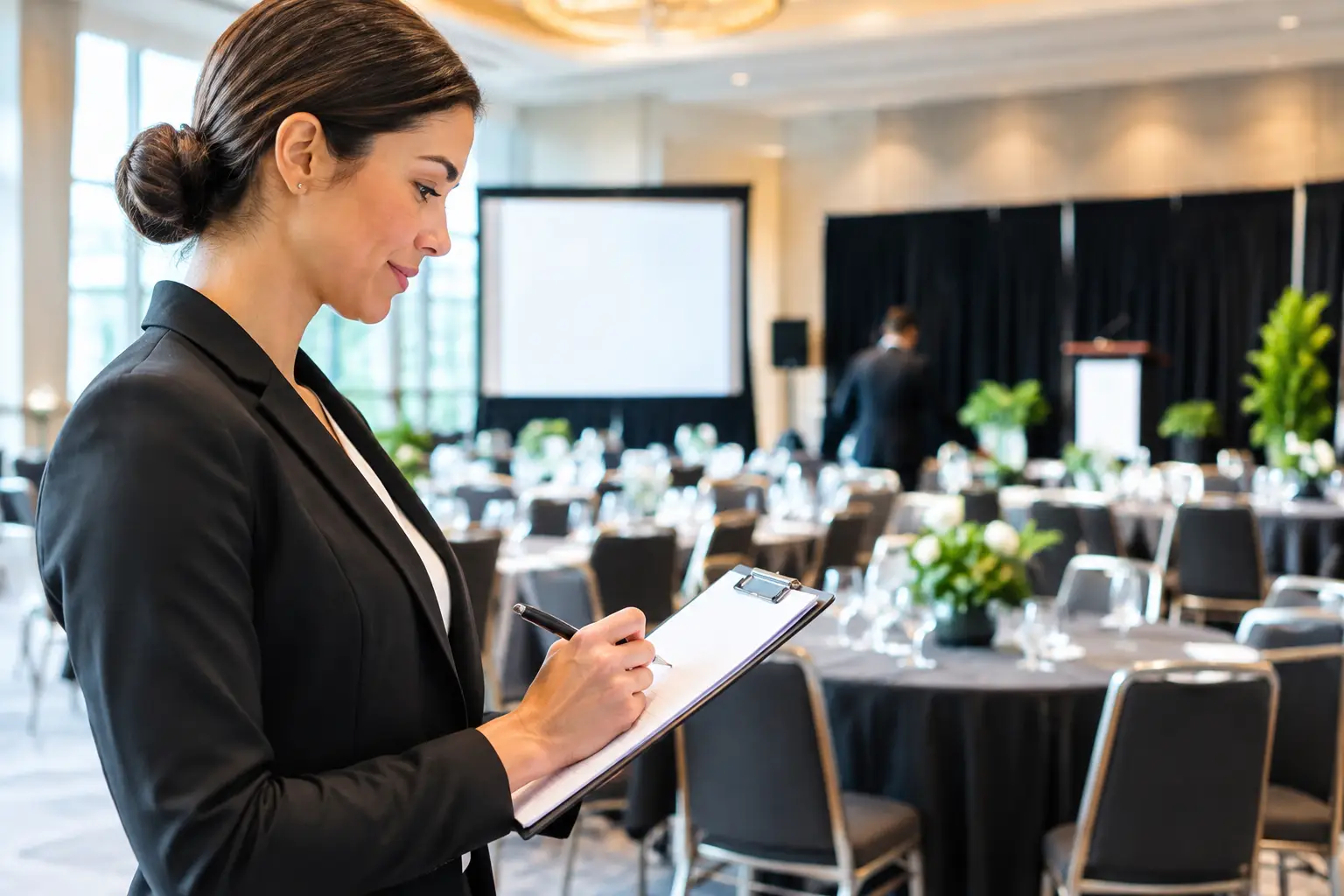
The best marquee or gazebo decision is made alongside the layout. For a wedding, decide where guests enter, where drinks are served, how the ceremony transitions to reception, and where suppliers load in. For a corporate event, map registration, branded areas, presentations, catering, and guest flow. For a festival, separate public areas from production, storage, first aid, and back-of-house operations.
Keep clear pathways between the structure and restrooms, parking, catering, and emergency access. Position doors and open sides with the arrival experience in mind, but do not sacrifice weather protection for a perfect photo angle. Consider noise as well. A generator, kitchen, or band may need to be close enough for practical operation but far enough from dining and speeches.
At Zero Three Party & Event Hire, this is treated as one coordinated setup rather than a string of separate rentals. The structure, furniture, lighting, staging, and power requirements should work together from the first quote through installation and collection.
Questions to Settle Before You Book
You do not need a technical background to make a sound decision, but you do need clear answers. Confirm the guest count at the busiest point, whether people are seated or standing, the event hours, and the site surface. Decide what happens if rain or wind arrives, and identify any equipment that needs power.
Also confirm who is responsible for access, permits, venue approvals, and clearing the area before installation. A marquee crew cannot safely install over hidden irrigation, unstable ground, or a space blocked by cars and garden furniture. The more complete the brief, the smoother the delivery schedule and setup day will be.
Price should reflect the complete job, not only the roof. Delivery distance, installation time, anchoring method, walls, flooring, lighting, heating, and pack-down can all change the final scope. A lower equipment price is not always lower risk if it leaves major details unresolved.
The right cover should make the event feel easier for guests and simpler for the people running it. Choose a gazebo when you need focused, lightweight shade. Choose a marquee when the structure must carry the event through weather, service, and the full guest experience. Plan it early, give the crew the real site details, and let the setup support the day rather than become another problem to manage.