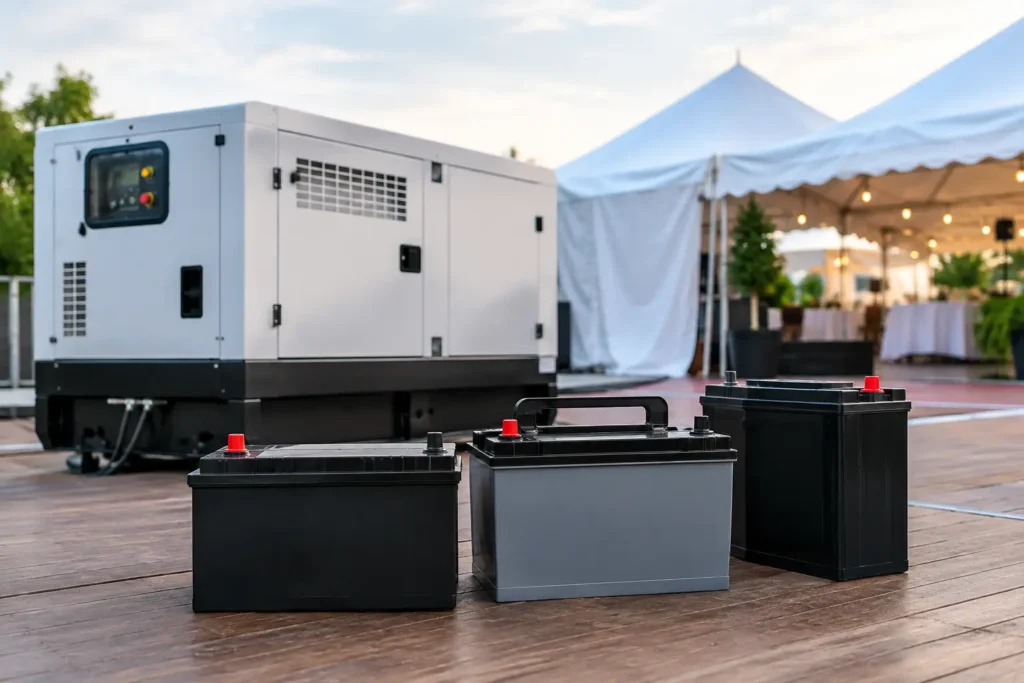
A ceremony can be silent for all the right reasons, then lose its microphone, catering refrigeration, and lighting because power was treated as a last-minute add-on. A proper generator battery comparison starts with the event load, not with whichever unit looks easiest to transport. The right power plan protects the guest experience, gives suppliers what they need to work, and leaves room for the unexpected.
For many events, the choice is not strictly generator or battery. Battery systems are excellent for quiet, low-to-medium demand and short peak periods. Generators carry larger, sustained loads. A hybrid setup can use both, keeping sensitive or low-load equipment on batteries while a generator supports the heavy work.
Generator Battery Comparison: What Are You Actually Comparing?
In event hire, “battery” usually means a portable battery power station or battery energy storage system with an inverter. It stores electricity ahead of time and supplies AC power on site. A generator produces electricity while it runs, most often from fuel. Both can power an event, but they behave very differently under load.
A battery system is quiet at the point of use. That makes it a strong fit near a ceremony, in a gallery-style activation, inside a marquee where ventilation is limited, or for a small dinner where generator noise would be intrusive. There are no fuel refills during service and no engine exhaust at the unit. The limitation is stored capacity. Once the available energy is used, it must be recharged or swapped.
A generator is built for endurance and higher output. It is usually the better choice for a production-heavy program, commercial kitchen equipment, large lighting packages, HVAC, refrigeration, staging, or a long festival day. It needs correct placement, ventilation, fuel management, cable protection, and a plan for noise. Those are manageable details when they are planned early.
The comparison is therefore not about which option is more modern. It is about matching the system to what the event will draw, how long it will run, where it will sit, and what happens if the schedule changes.
Start With the Load, Then Add Run Time
The most common power mistake is adding up a few appliance labels and assuming the result is enough. Some equipment has a high startup draw. Others run continuously. A coffee machine may pull hard in short bursts, while refrigeration, lighting, and networking equipment can draw steadily for hours. Sound equipment also benefits from clean, stable power and sensible circuit separation.
A useful event power calculation accounts for four things:
- Running load: the power equipment uses while operating normally.
- Startup or surge load: the brief extra demand when motors, compressors, or certain appliances start.
- Operating hours: how long each item will actually be switched on.
- Headroom: spare capacity for changes, peaks, and equipment that was not on the first supplier list.
Watts describe the rate at which equipment uses power. Watt-hours, often shown as Wh or kWh, describe stored energy over time. That distinction matters. A battery may have enough output rating to run an item, yet not enough stored energy to run it for the whole event.
For example, a battery system may comfortably supply a small PA, a laptop, a pair of LED uplights, and ceremony microphones for several hours. Add a fridge, espresso machine, electric heaters, and a catering hot box, and the same system can be depleted quickly or overloaded. A larger generator may be the practical answer, even if most of the day’s program is quiet.
Avoid sizing a generator exactly to the calculated load. Running a unit at its limit leaves little margin for startup demand and makes an outage more likely. Oversizing has a trade-off too: it can add cost, take more space, and create unnecessary noise or fuel use. The right size comes from a real equipment schedule, not a guess.
Ask Every Supplier for Power Details
Your venue, caterer, AV team, lighting supplier, band, DJ, and marquee provider can all affect the final power requirement. Ask what they are bringing, its rated load, whether it needs a dedicated circuit, and when it needs to be powered. Get these answers before delivery day.
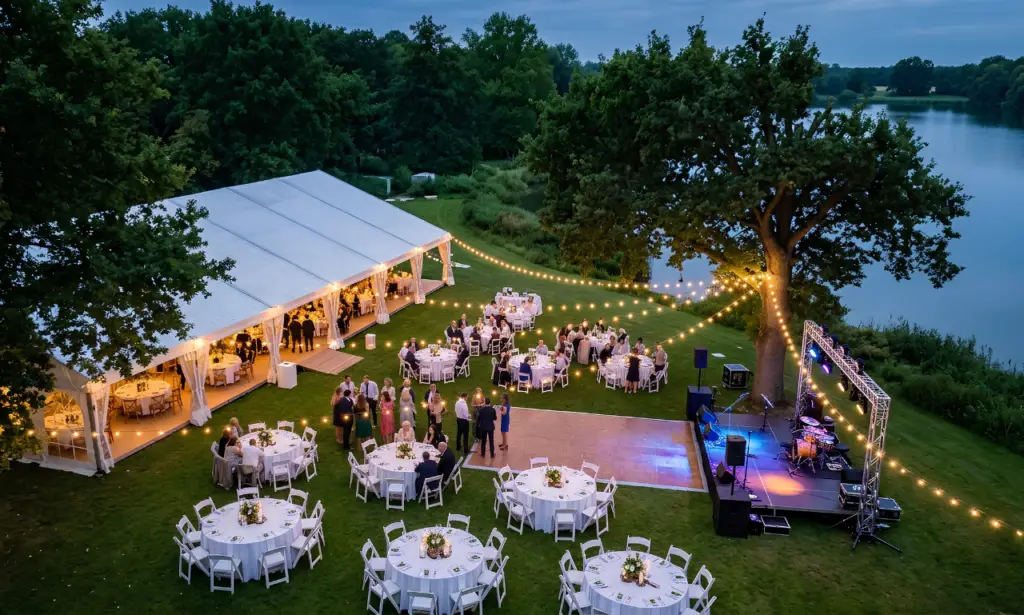
This matters most on blank-canvas sites. A marquee in a field is not simply a marquee. Once you add feature lighting, a bar, refrigeration, heating, music, catering, restroom trailers, and charging stations, it becomes a temporary venue with real infrastructure needs.
Where Batteries Make the Most Sense
Battery power is a practical choice when quiet operation carries real value. Think intimate ceremonies, speeches in noise-sensitive locations, mobile brand activations, short pop-up events, or temporary power for registration desks and point-of-sale equipment. It can also be a smart way to avoid running long cables from a distant generator for a small isolated load.
Batteries are particularly useful as a dedicated supply for low-draw, critical equipment. Separating ceremony audio or a control desk from high-demand catering gear helps prevent a compressor or heater cycling on from affecting the show. For events with an established mains connection, a battery may also provide short-term support or backup for selected equipment rather than replacing the whole site supply.
But quiet does not mean maintenance-free. The unit still needs to be charged, protected from weather, positioned safely, and monitored against its expected run time. Battery output, battery capacity, outlet configuration, and charging method all need to suit the job.
When a Generator Is the Clearer Choice
Generators earn their place when demand is heavy, sustained, or variable. A large wedding reception, outdoor concert, school formal, corporate launch, or community festival often has several loads operating at once, with peaks that are hard to predict precisely. A correctly sized generator provides the continuous supply those events need.
Placement is central to generator planning. The unit should be accessible for delivery and service, away from guest areas where possible, and positioned so exhaust, heat, and operating noise do not compromise the event. Cable runs need protection where guests, staff, or vehicles cross them. Outdoor conditions, ground surface, security, and any venue or council requirements also need to be checked before installation.
Do not assume an existing outlet at a venue is sufficient just because it is nearby. It may be shared with the building, limited to a small circuit, unavailable during certain hours, or unsuitable for the event’s combined load. A site inspection and load plan remove that uncertainty.
Hybrid Power Often Solves the Real Problem
A hybrid setup can be the most polished option for events that need both capacity and discretion. The generator handles the main infrastructure: catering, major lighting, refrigeration, and high-demand production. Battery units support sensitive or quiet-zone equipment such as ceremony audio, a welcome area, or a remote bar terminal.
This approach can reduce the need for very long cable runs, protect key equipment from unrelated load changes, and keep generator noise farther from the moments guests remember. It is not automatically necessary for every event. For a simple backyard party with a modest sound system and lighting package, a single well-planned power source is often better than adding complexity.
The decision comes down to the site layout and the event’s priorities. If the ceremony is 500 feet from the catering area, separate power zones may make operational sense. If everything sits under one small tent, the simpler plan may be the safer plan.
Safety and Reliability Are Part of the Equipment Choice
Power planning is not just about whether the lights turn on. It includes tested equipment, appropriate distribution, protected cables, safe placement, and a crew that understands the site. Wet weather, uneven ground, vehicle access, and public foot traffic change the setup requirements quickly.
Critical loads deserve special attention. If a program depends on sound, site lighting, medical equipment, refrigeration, or production control, identify it early and decide how it will be protected. That may mean a separate circuit, battery backup, a second power source, or a staged shutdown plan if conditions change.
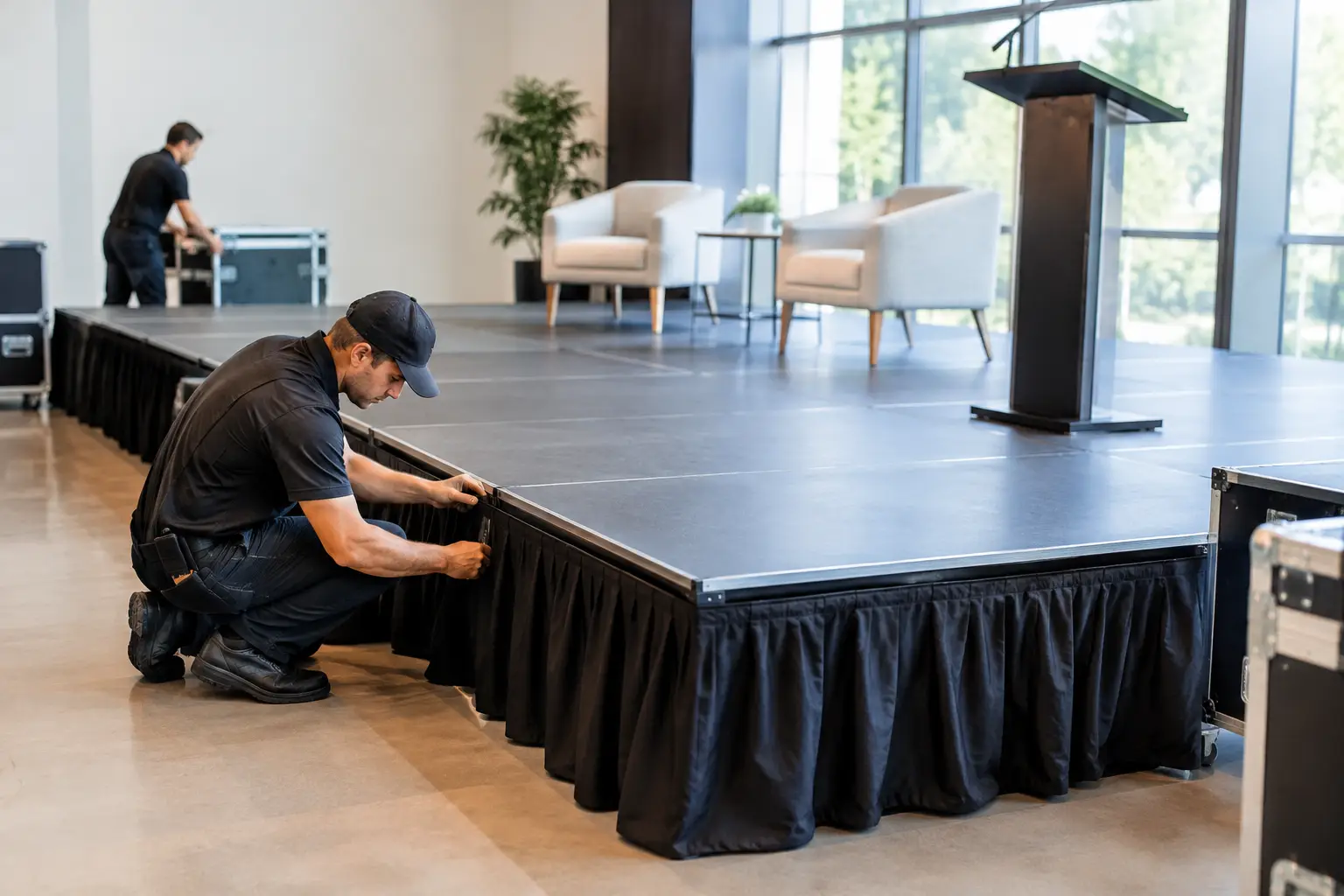
For events with permits, public attendance, or complex site requirements, power should be coordinated alongside staging, structures, AV, and access planning. Zero Three Party & Event Hire approaches this as one site plan, so equipment placement and power distribution work with the rest of the build rather than becoming a delivery-day problem.
Give Your Power Plan Enough Lead Time
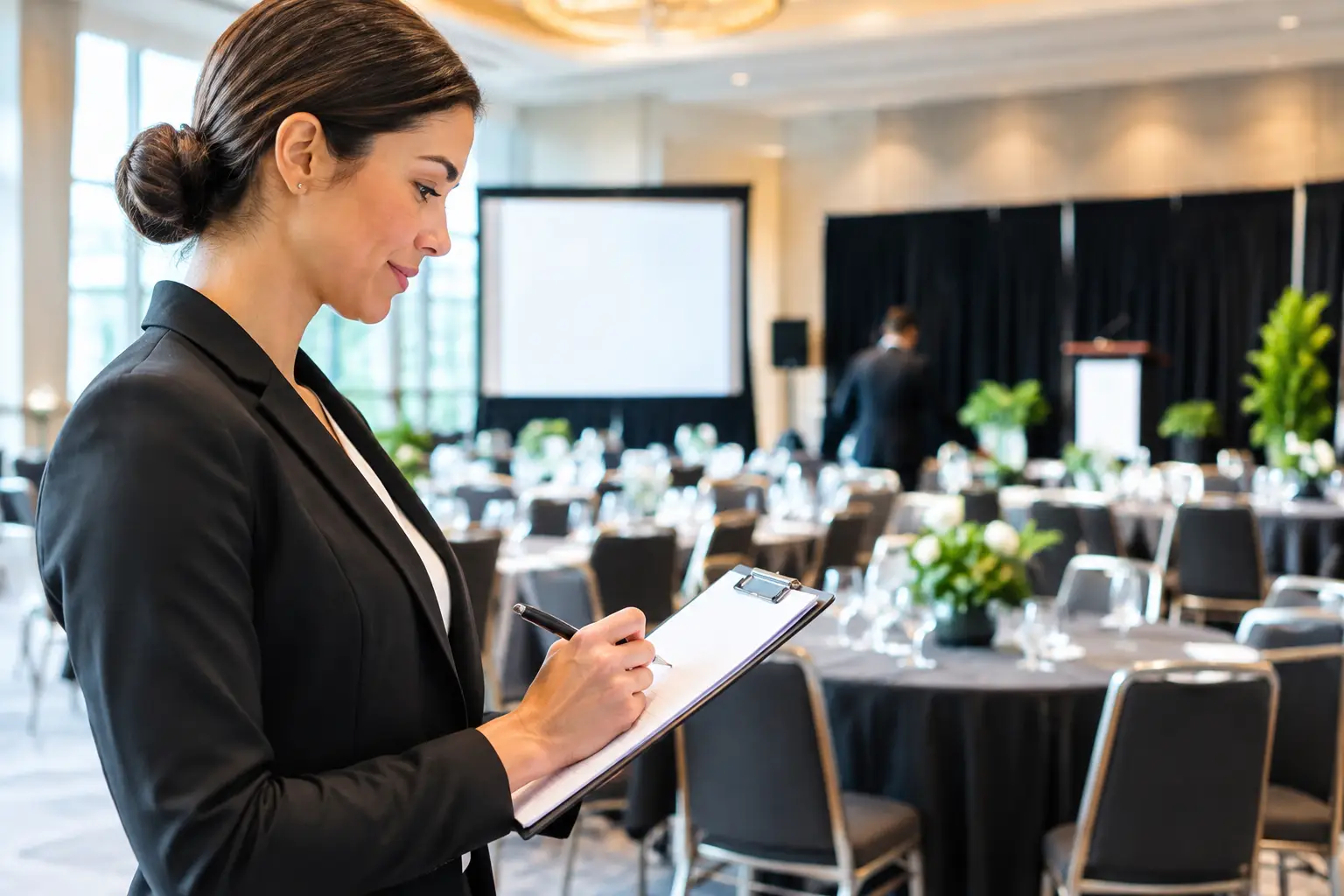
Tell your hire team the date, location, guest count, event hours, and every supplier coming to site. Include the less obvious details: heaters, coffee machines, food trucks, refrigeration, decorative lighting, screens, and charging needs. A clear equipment schedule allows the power system to be sized before crews arrive.
The best choice is the one that stays out of the way once guests arrive. Choose battery power when silence and modest, predictable demand lead the brief. Choose a generator when the event needs sustained capacity. Use both when the site has separate needs that should not compete. Plan that decision early, and power becomes one less thing anyone has to think about on the day.