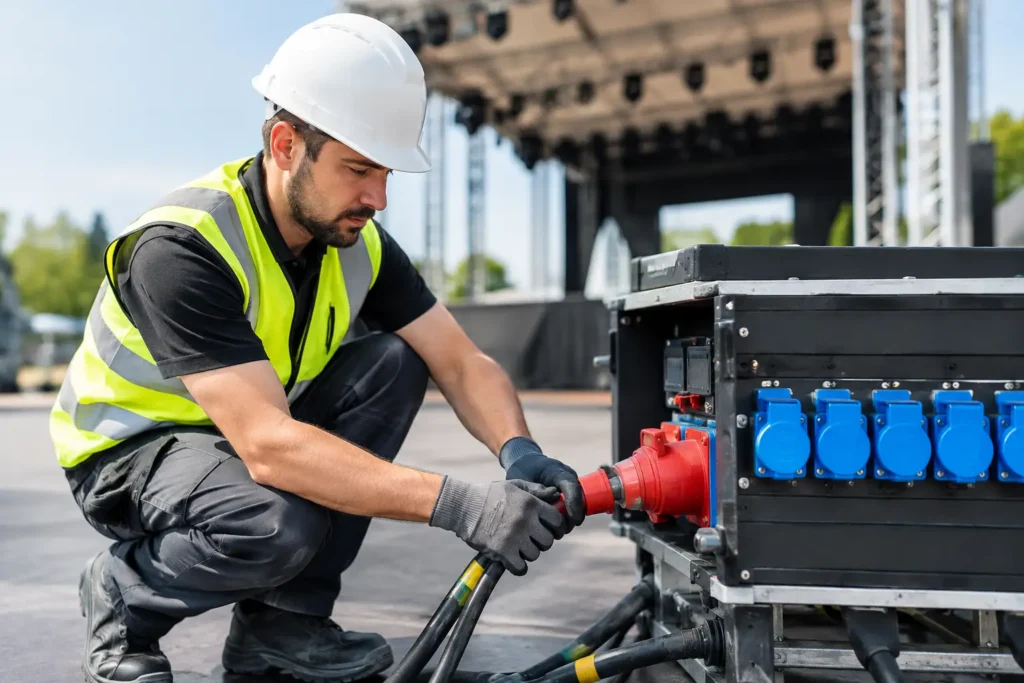
A beautiful event can still stop cold when a circuit trips, a generator is placed too close to a tent, or a cable route creates a trip hazard. Power is not a last-minute add-on. This event power compliance guide helps organizers plan temporary electricity with the same care they give to guest flow, staging, weather cover, and permits.
For a backyard party, the answer may be a properly assessed household supply and a few protected circuits. For a wedding marquee, corporate launch, school formal, or festival site, the answer may be distribution boards, generators, certified electrical work, and a crew responsible for monitoring the system. The right approach depends on the venue, load, audience size, operating hours, and local authority requirements.
Start With the Site, Not the Equipment
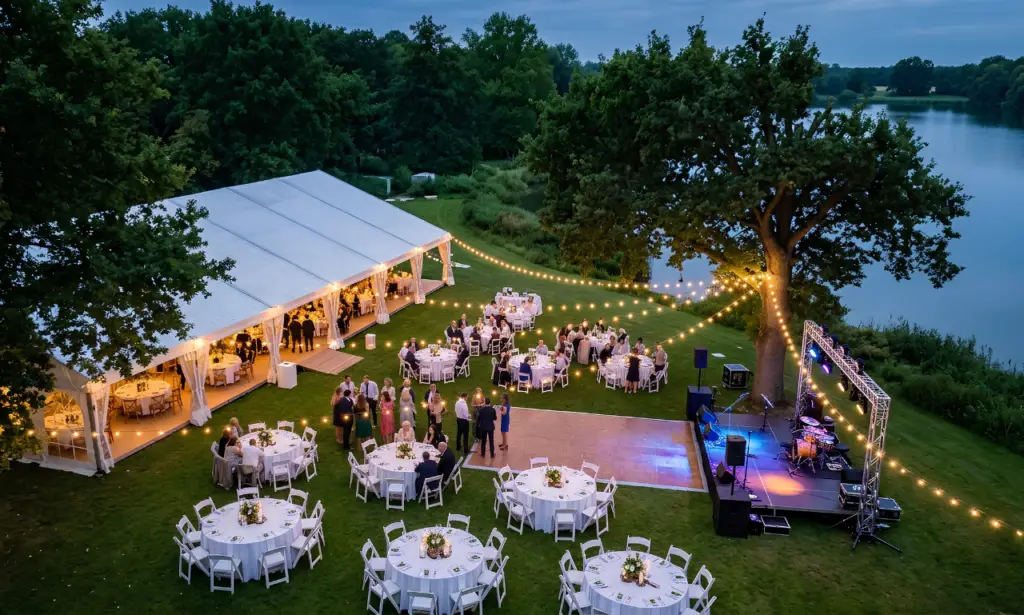
Temporary power planning starts with a site walk, or at minimum a detailed site plan. Identify where the power source will sit, where equipment will operate, where guests and vehicles will move, and where water may collect. A power plan that works on an empty site can become unsafe once tables, food vendors, staging, fencing, and hundreds of people arrive.
Ask the venue what electrical supply is available and what else is connected to it. A wall outlet near the bar is not automatically suitable for catering equipment, heaters, sound, lighting, and refrigeration. Older buildings and private homes often have limits that are not obvious until the system is under load.
Outdoor sites need extra attention. Ground conditions, rain exposure, vehicle access, noise limits, and distance from neighboring properties can all affect generator placement and cable routing. If the event is in a park, street, public reserve, or council-managed site, permit conditions may specify where equipment can go and what documentation is required.
Build a Real Load Schedule
A load schedule is the working document behind safe event power. It records each item that needs electricity, its expected consumption, where it will be located, and whether it needs dedicated supply. It prevents the common mistake of treating every appliance as if it draws the same amount of power.
Start with production equipment such as PA systems, LED screens, stage lighting, DJ equipment, and AV control. Then add guest-facing requirements: catering appliances, coffee machines, refrigeration, mobile bars, heaters, marquee lighting, chargers, and vendor equipment. Do not forget site services such as box offices, toilets, security lighting, pumps, and communications.
Some equipment has a high startup draw. Refrigeration compressors, pumps, certain motors, and catering appliances can pull more power when starting than their normal running figures suggest. Equipment used intermittently also matters. A coffee machine, urn, and catering hot box may appear manageable individually, then overload a shared circuit when they run at the same time.
Allow sensible capacity above the calculated operating load. The exact margin depends on the equipment mix and the confidence of the information supplied, but a system should not be planned to run at its absolute limit. Spare capacity gives the crew room to handle startup demand, small additions, and real-world use without nuisance tripping.
Separate critical circuits
Not every circuit carries the same consequence. Emergency lighting, medical or accessibility equipment, site communications, payment systems, and essential refrigeration may need separation from entertainment or convenience loads. A fault in a decorative lighting circuit should not take down the entire event.
This is where experienced production planning earns its place. The goal is not simply to provide enough power. It is to distribute it so a single issue is contained, traceable, and quick to resolve.
Use Suitable Temporary Power Equipment
Temporary power equipment must suit the setting and the duty it will perform. That means appropriately rated distribution equipment, weather-resistant connections where conditions demand them, correctly sized leads, and protection devices selected and installed by qualified people.
Extension cords are not a power strategy. Long runs can create voltage drop, especially when undersized cables feed equipment with significant demand. Coiled cable drums can also overheat under load. If a cable run crosses access paths or reaches a remote marquee, it needs to be designed for that distance and protected for the environment.
Ground fault protection is a central safety control for temporary installations, particularly outdoors or around catering, bars, and wet weather exposure. Exact requirements differ by jurisdiction and site, so work with a licensed electrical contractor and follow the rules enforced by the authority having jurisdiction. Never bypass a protective device because it trips. Find the cause.
Equipment also needs current inspection and testing where required. Damaged plugs, taped cables, cracked housings, and loose connections are not minor presentation issues. They can create shock, fire, and outage risks. Check hire equipment before deployment and remove questionable items from service.
Plan Generator Safety Beyond Capacity
Generator selection is about more than kilowatts. A correctly sized generator must also be placed, fueled, ventilated, secured, and managed properly. It should be positioned away from guest areas, air intakes, tent openings, and food service wherever possible. Exhaust fumes and heat need a safe path away from people.
Noise is another practical consideration. A generator placed beside a ceremony area, keynote stage, or dining zone can undermine the event even if the power supply is technically adequate. Distance, acoustic treatment, and site layout all help, but they need to be considered before equipment arrives.
Fuel management needs a clear procedure. Refueling should be done by trained personnel, with ignition sources controlled and spill response materials available. Do not assume a generator will run for the full event simply because it is full at load-in. Runtime changes with demand, and a system feeding a busy evening service may consume more fuel than expected.
For larger events, consider whether backup power is warranted. It depends on the cost of interruption and the nature of the event. A short outage during a private birthday may be inconvenient. An outage during a ticketed concert, broadcast activation, or event with critical operations can have a much bigger impact.
Protect Cables, People, and Access Routes
Most temporary-power problems are visible on the ground. Cables laid across pathways, under unstable mats, through doorways, or near water quickly become a safety and operational issue. Plan cable routes before furniture, flooring, and décor are installed. Once the site is dressed, access becomes harder and shortcuts become more tempting.
Use purpose-built cable ramps or covers where cables must cross pedestrian or vehicle routes. Secure cables so they cannot creep into walkways, and keep connections elevated and protected from water where appropriate. Do not run leads through emergency exits, fire lanes, or areas that need clear accessible access.
Cable protection should be checked throughout the event, not only at setup. Guests move furniture. Vendors add equipment. Rain changes conditions. A simple pre-opening inspection and periodic site walk can catch issues before they become an incident.
Coordinate Compliance Before Load-In
Compliance is a coordination task. Depending on the event and location, it may involve venue rules, electrical certification, public-event permits, fire safety requirements, council conditions, engineering documentation, and insurance requirements. Leave time for this work before trucks are booked.
Bring the electrical plan into the wider event conversation. The tent provider needs to know cable entry points. The staging team needs to know where distribution will sit. Catering needs confirmed circuits and operating limits. Security needs to understand generator exclusion zones. The event manager needs a clear escalation path if something trips or fails.
For complex sites, nominate one person to approve power changes. Last-minute additions are normal in events, but they should not be plugged in wherever an outlet is available. A single decision-maker can check capacity, routing, safety, and compliance before a new load is added.
Test Before Guests Arrive
The best time to find a problem is during commissioning, not when the speeches begin. After installation, test the system under realistic load. Run the AV, switch on lighting, operate catering equipment, test refrigeration, and confirm that each area receives the supply it was promised.
Label distribution points and circuits clearly enough that the event team can identify what they control. Keep access to boards clear, and make sure only authorized people can reset or alter electrical equipment. A crew member who knows the layout can resolve a minor issue quickly. An unplanned reset by a vendor can create a larger one.
Zero Three Party & Event Hire approaches power as part of the full event build, not as an isolated generator drop. When staging, tents, furniture, lighting, AV, and power are coordinated from the same plan, there are fewer handoffs and fewer surprises on site.
Treat temporary power as an active part of your event plan. Confirm the loads, map the routes, assign responsibility, and test the setup early. Then your guests can focus on the event, while the infrastructure does its job quietly in the background.