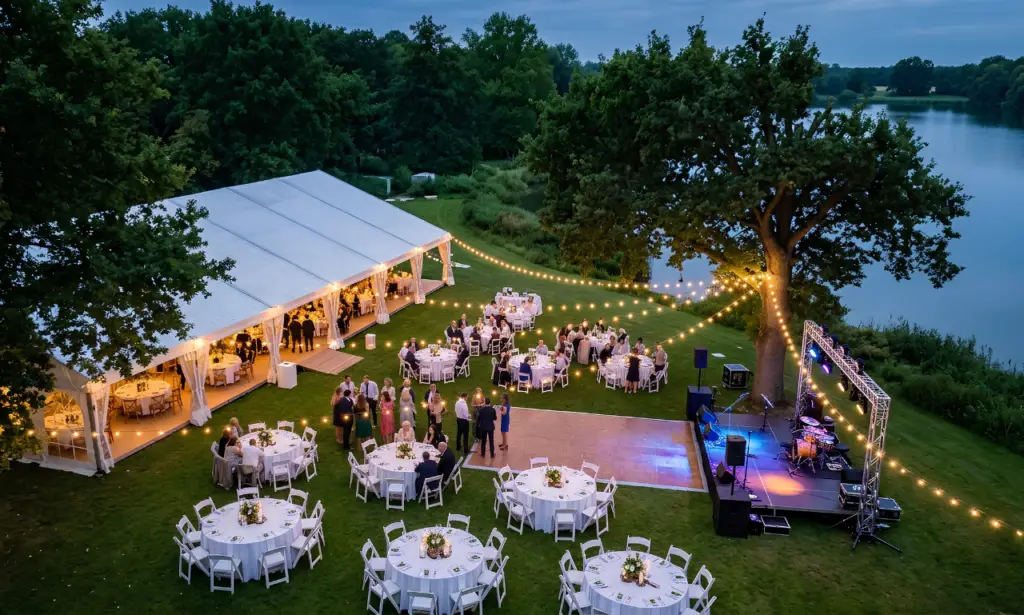
A beautiful venue can still fail at the first switch-on. The band arrives, caterers plug in ovens, the bar starts chilling drinks, lighting comes up, and suddenly a circuit trips. This event power guide is built to prevent that moment. It gives organizers a clear way to plan electricity before equipment is delivered, guests arrive, or a show schedule depends on it.
Power is not just a generator parked behind a marquee. It is the calculation, distribution, cable routing, protection, testing, and on-site responsibility that keep an event running. For a backyard celebration, that may mean confirming what one household circuit can safely handle. For a festival or corporate launch, it can mean multiple generators, temporary distribution boards, qualified electrical work, backup capacity, and a crew watching the site all day.
Start With the Event, Not the Generator
The first question is not, “What generator size do I need?” Start with what needs power, where it will sit, and when it will operate. A ceremony may need a small PA system, battery chargers, and a microphone. A reception can add catering equipment, refrigeration, heaters, decorative lighting, DJ equipment, and a photo booth. An outdoor product launch may also require video walls, staging, site lighting, wireless systems, and production control.
Ask each supplier for the actual electrical requirement of their equipment. “Standard outlet” is not enough detail when several items are sharing the same supply. Get the voltage, amperage or wattage, plug type, starting load, and expected operating hours. Motor-driven equipment such as refrigerators, freezers, pumps, and some HVAC units can draw more power when starting than when running.
Build the schedule into the plan as well. A coffee machine and a PA may be needed all day. Stage lighting may be required only after sunset. Catering equipment can create the highest demand during food preparation, then drop back once service begins. Mapping these peaks helps avoid oversizing everything, but only where loads are properly managed and someone is accountable for the switching schedule.
Event Power Guide: Calculate the Real Load
A power calculation turns a wish list into a workable site plan. The basic math is straightforward: watts divided by volts equals amps. In practice, the work is about allowing for real-world conditions, equipment startup, circuit separation, and a sensible safety margin.
Do not plan a generator to run at its absolute limit. Equipment loads vary, temporary cables introduce considerations, and the event may add a last-minute item such as extra lighting, a food truck, or a second bar fridge. Allowing headroom gives the system room to operate reliably rather than forcing every component to work at capacity.
It also matters how the load is divided. A single high-demand catering appliance should not share a circuit with the audio system. If it trips, the result is not only a kitchen problem. The speeches or performance can stop with it. Keep production-critical equipment on dedicated, protected circuits wherever possible. Separate catering, bar, guest lighting, site services, and show production into clearly labeled distribution paths.
For larger events, balance loads across available phases. An unbalanced supply can create nuisance tripping, poor equipment performance, or unnecessary stress on the system. This is not a guesswork job. A competent temporary-power provider should prepare the load calculation and confirm the distribution arrangement before installation.
Choose the Right Power Source
Mains power is often the simplest option when the venue has enough verified capacity in the right location. It can be quieter and more economical than a generator, but a wall outlet is not proof of available event capacity. Older buildings, shared venues, and private homes can have limits that only become obvious under load.
A site inspection should confirm the supply rating, outlet types, circuit allocation, distance to the event area, and whether other building systems will be running at the same time. A venue may have power for its normal operations but not for a full catered wedding with entertainment and outdoor lighting.
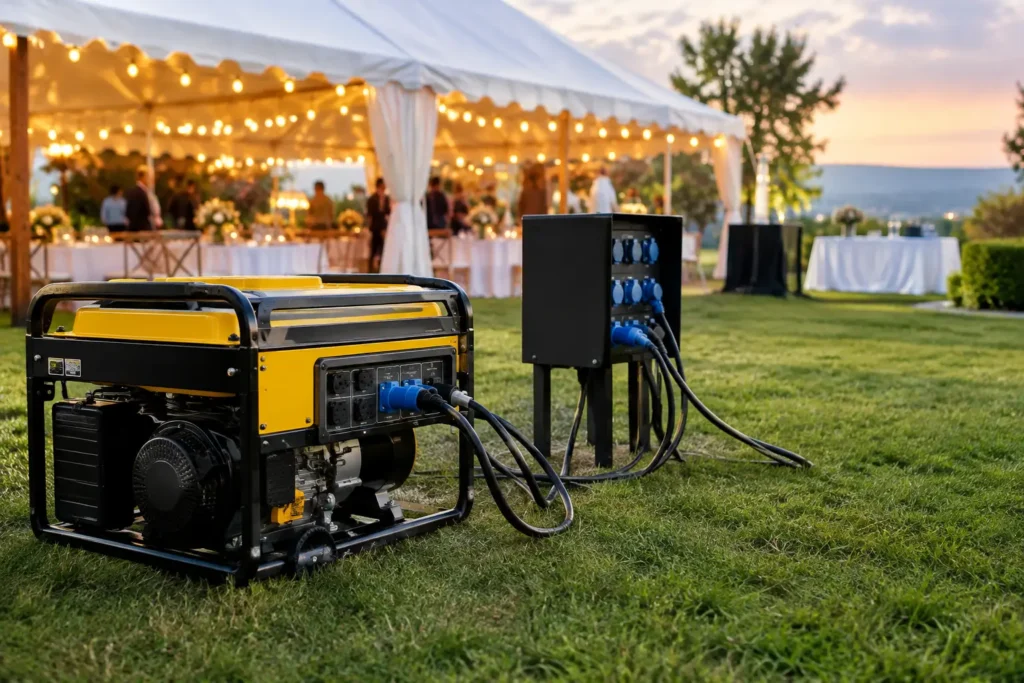
Generators are the answer where mains power is unavailable, insufficient, or too far from the event footprint. Size selection depends on the calculated load, required phases, power quality, noise restrictions, runtime, access, and fuel plan. A generator that is technically large enough but placed too close to guests, speeches, or a quiet ceremony can still be the wrong choice.
Placement needs as much thought as capacity. Generators require stable ground, ventilation, safe separation from public areas, protected fuel handling, and access for delivery and refueling. They should also be located so cable runs are practical without creating trip hazards or blocking vehicle routes. At a remote site, factor in wet ground, slopes, dust, changing weather, and how a service vehicle will reach the unit after setup.
Battery power can be useful for small, quiet applications such as ceremony audio, low-load lighting, or short activations. It is not automatically a replacement for a generator. Battery systems have defined output and runtime limits, and high-draw catering or production equipment can exceed them quickly. Match the technology to the load instead of choosing it for the label.
Plan Distribution Before Cables Hit the Ground
A clean power plan shows the route from source to each load. It identifies distribution boards, circuit ratings, cable paths, connection points, cable protection, and isolation points. This makes setup faster and gives every supplier a clear answer when they ask where to plug in.
Temporary cables should never become an afterthought. A cable across an entry path, dance floor edge, or vehicle route needs appropriate protection and a route that does not invite guests to step over it. Where possible, run power around the perimeter of the event rather than through the middle of it. Keep connectors off wet ground and protect equipment from rain, spills, and physical damage.
Labeling matters once multiple crews are on site. The caterer should know which outlets are theirs. The audiovisual team should know which supply is dedicated to the stage. Event staff should know which circuits are not to be used for phone chargers or last-minute additions. Small labels prevent expensive assumptions.
For public events, the installation may also require compliance documentation, inspection coordination, and permit support. Requirements differ by venue and jurisdiction, so confirm the process early. Waiting until bump-in to ask whether temporary power needs sign-off can put the whole schedule under pressure.
Protect the Show With Backup Planning
Not every event needs a full redundant generator, but every event needs a response plan. The right level of backup depends on what happens if power is lost. A casual daytime party may be able to pause while a circuit is reset. A ticketed performance, broadcast, gala dinner, or large outdoor festival may need immediate continuity for critical systems.
First, identify what is critical. Emergency and egress lighting, essential communications, safety systems, production control, refrigeration, and key audio can each have different priorities. Then decide whether the response is a spare generator, a separate supply, battery backup, redundant distribution, spare cables, an on-call technician, or simply a tested manual recovery process.
Weather is part of backup planning. Rain can affect cable routes and connection points. Heat can increase cooling demand. Wind can change the position of temporary structures and expose equipment. Put protection in place before the forecast turns, not after guests are already on site.
A show-day technician is particularly valuable when the event has multiple suppliers and a changing program. Someone needs the authority to approve additional loads, monitor the system, respond to faults, and stop unsafe changes. “Can we just plug this in?” is one of the most expensive questions at an event when nobody owns the answer.
A Practical Pre-Event Power Check
Before delivery day, confirm these points with the venue, event manager, and technical suppliers:
- Every electrical item has been listed with its load and plug requirement.
- Mains capacity has been verified or generator capacity has been calculated with headroom.
- Catering, bar, production, lighting, and guest services have separate circuits where needed.
- Cable routes, generator location, access, noise limits, and weather protection are approved.
- Required permits, inspections, and compliance documents are underway.
- The team knows who can authorize changes and respond if a circuit trips.
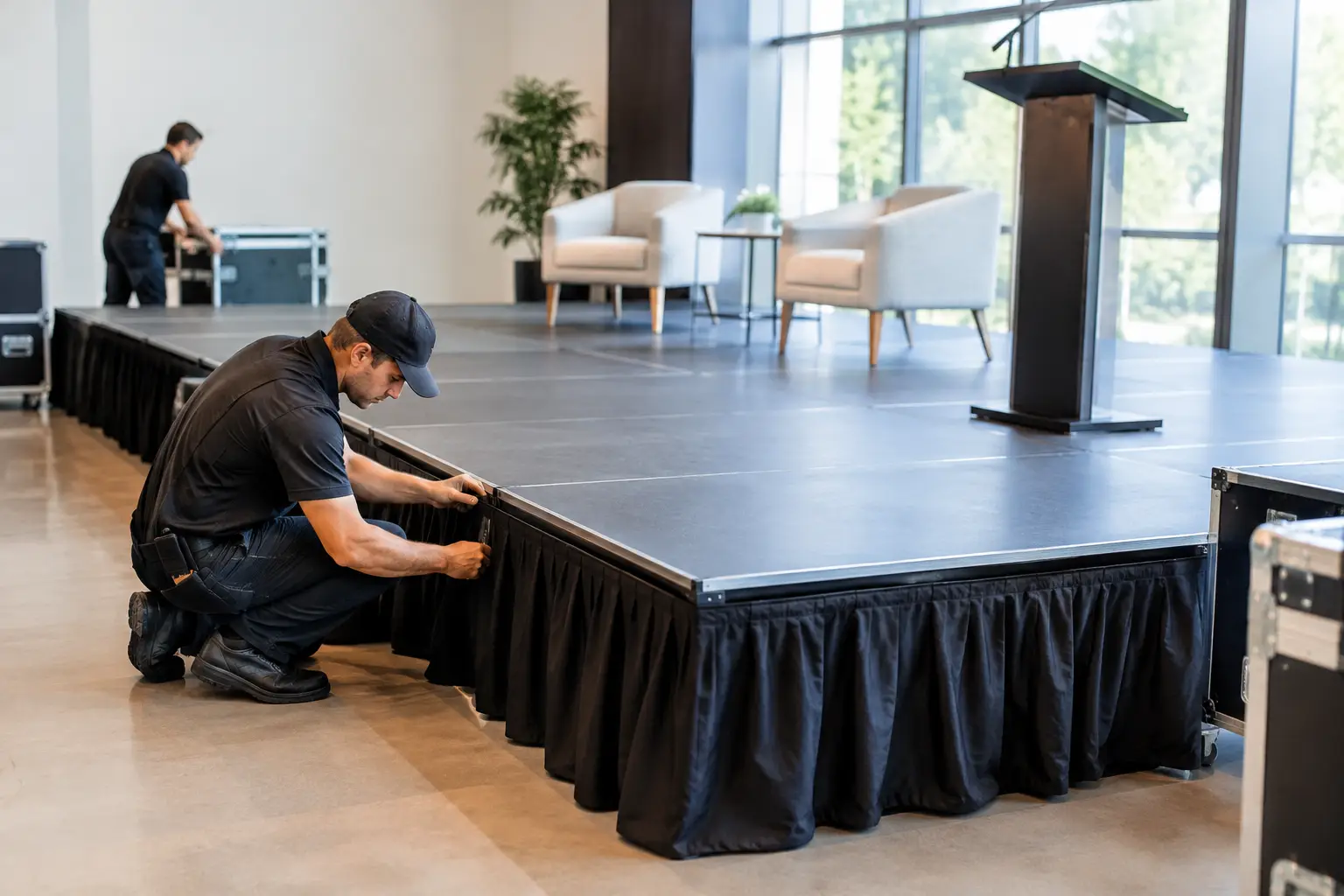
This check is short, but it catches the issues that usually become urgent on show day. It also makes one coordinated supplier model easier to manage: furniture and marquees can be placed around cable routes, staging can be designed around distribution points, and lighting can be allocated without competing with catering for the same supply.
Good event power is rarely noticed by guests. That is the point. The lights stay on, food service keeps moving, speeches are heard, and the final song finishes without a scramble behind the scenes. Plan early, calculate properly, and put one capable team in charge of the details that keep the event working.