A beautiful venue can still fail the guest experience if the vows disappear into wind, speeches bounce off glass, or the DJ has to push volume past a comfortable level. Event acoustics planning is the work that prevents those problems before trucks arrive, furniture is placed, and the first guest walks through the door.
For a backyard birthday, that may mean choosing the right location for one speaker and keeping music away from the neighbor’s bedroom window. For a wedding, gala, conference, or festival, it can involve stage orientation, speaker coverage, generator placement, delay systems, noise restrictions, and a soundcheck schedule. The scale changes. The principle does not: every person should hear what they came to hear without the sound becoming a problem somewhere else.
Start Event Acoustics Planning With the Site
Acoustics are shaped by the space long before a microphone is switched on. An open paddock behaves very differently from a ballroom, a clear-span marquee, a heritage hall, or a courtyard surrounded by hard walls.
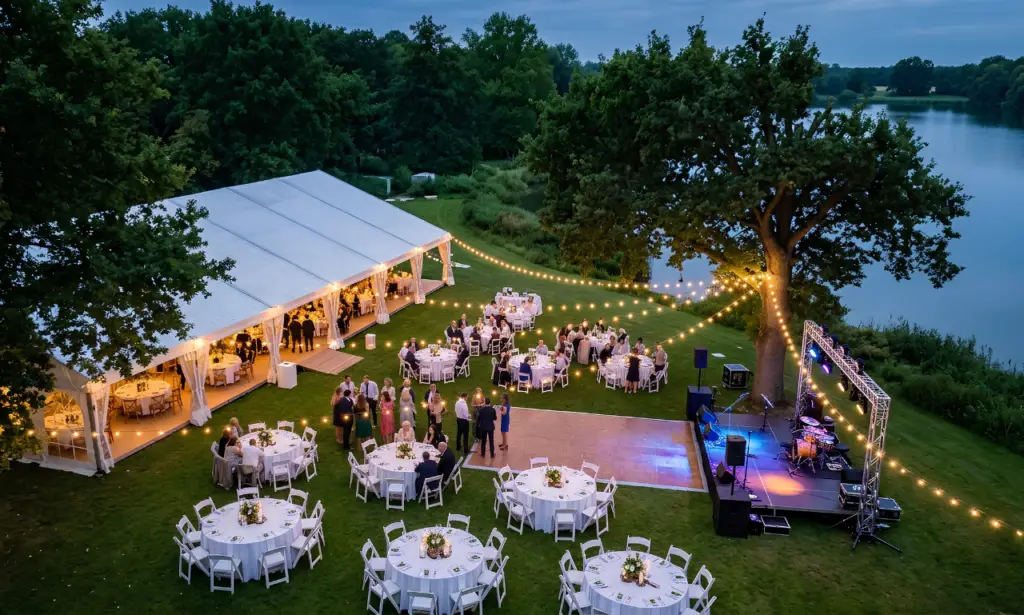
Outdoor events lose sound quickly, especially speech. Wind can carry audio away from the audience or push it toward nearby homes. Traffic, aircraft, generators, crowds, and weather all add background noise. Speakers need to face the audience, not the street, neighboring property, or catering area. The stage location should support that decision rather than fight it.
Indoor spaces bring a different set of issues. Concrete, glass, tile, and exposed ceilings reflect sound. This creates reverberation, where a spoken word continues bouncing around the room after it has been said. Turning the system louder rarely fixes it. It usually makes the room feel harsher and makes speech less clear.
Marquees sit between the two. They offer some containment, but fabric walls do not provide the same control as a solid building. A full marquee with sidewalls, flooring, guests, and furnishings will sound different from an empty structure during setup. Plan for a final adjustment once the room is dressed and occupied.
Walk the site before locking the layout
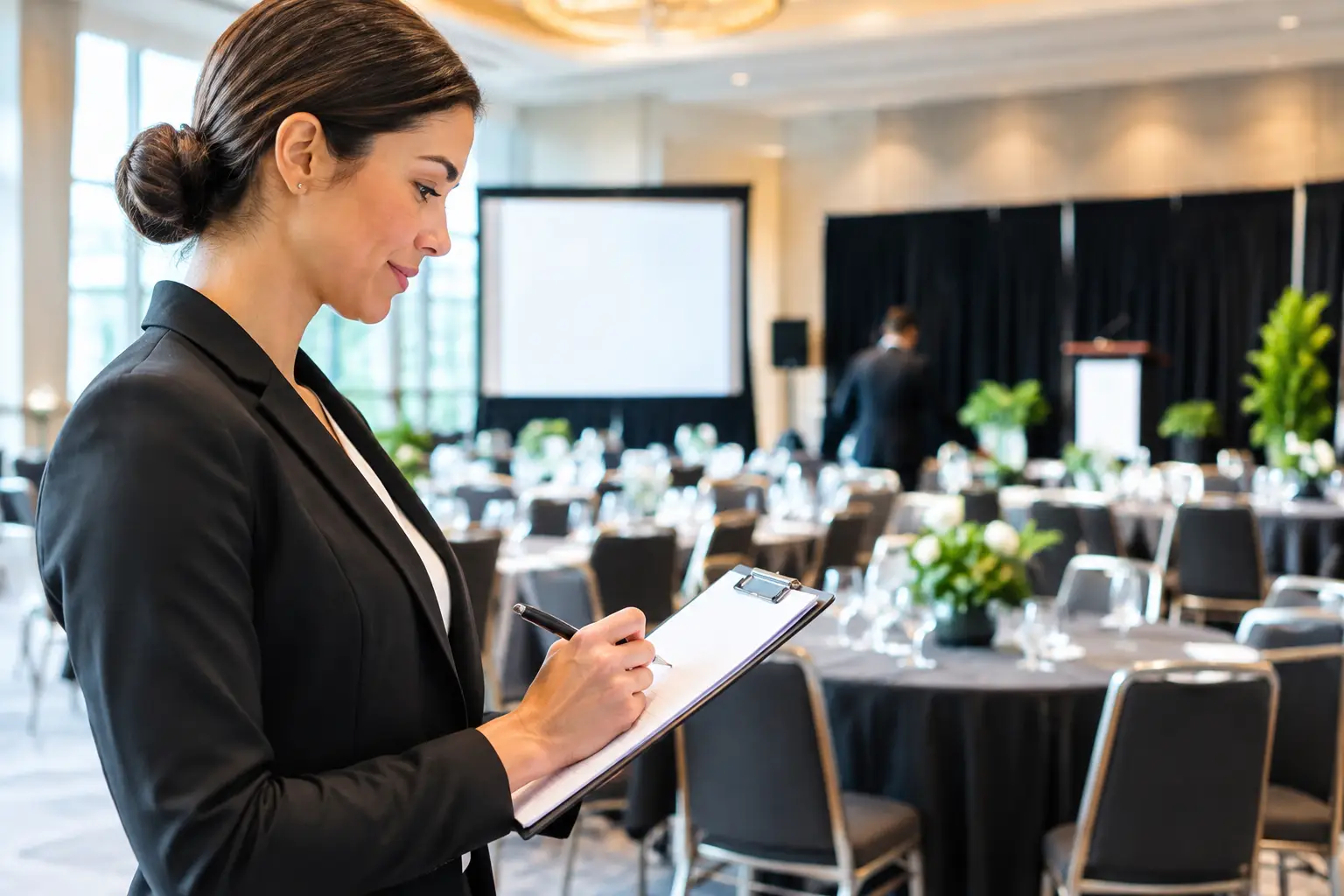
A site visit is the fastest way to identify acoustic problems that do not show up on a basic floor plan. Listen for road noise, nearby construction, ventilation systems, water features, and adjoining venues. Check where power is available, where cables can run safely, and where guests will enter, gather, and eat.
It also helps to ask direct questions early. Is there a venue noise limit? Is amplified sound allowed after a certain hour? Does the council require a permit or noise management plan? Are there residents, livestock, classrooms, or medical facilities nearby? These details affect equipment selection, event timing, and the orientation of the whole site.
Plan for Speech First, Then Music
Guests will forgive a dance floor that is slightly quieter than expected. They will not enjoy missing the ceremony, award announcement, safety briefing, or best person’s speech. Speech intelligibility should lead the sound plan whenever an event includes spoken moments.
That means using microphones suited to the job. A handheld wireless microphone is reliable for speeches when people will pass it between presenters. A lapel or headset microphone can work well for a celebrant, host, or presenter who needs both hands free, but it must be fitted correctly and tested with their clothing. A lectern microphone is useful for formal presentations, provided speakers stay in position.
Speaker placement matters just as much. Put speakers in front of microphones where practical. This reduces the chance of feedback, the sharp squeal that occurs when a microphone picks up and re-amplifies its own signal. Aim speakers toward seated guests rather than blasting the room from one end.
For a long room or a wide audience area, one large pair of speakers may create loud front tables and quiet back tables. Smaller distributed speakers can give more even coverage at a lower overall volume. It is often the better answer for dinners, conferences, ceremonies, and product launches where people need to talk as well as listen.
Music needs its own decision-making. A cocktail function needs background audio that supports conversation. A band or DJ set needs focused coverage and appropriate low-frequency output for the dance floor. Trying to make one setup serve both jobs without adjustment is where many events become too loud in the wrong places.
Match the System to the Audience and Program
A sound system should be sized around the audience area, program, and site conditions, not simply the guest count. One hundred guests seated closely in a quiet room need less coverage than one hundred guests spread through a windy outdoor venue.
Consider the event in sections. Where will speeches happen? Where will guests sit? Is there a bar or food service area that needs lower music levels? Will the program move from ceremony to dinner to dancing? A system can be designed so those zones are controlled separately rather than forcing the same volume across the whole event.
For larger formats, the production schedule matters too. Live music, multiple presenters, video playback, walk-on stings, and lighting cues all need an operator who understands the running order. Sound is not just equipment on stands. It is part of show control.
A useful production brief should cover at least these points:
- Event date, site address, guest count, and key contact
- Program times, including speeches, performances, and curfews
- Venue restrictions, permits, and nearby noise-sensitive areas
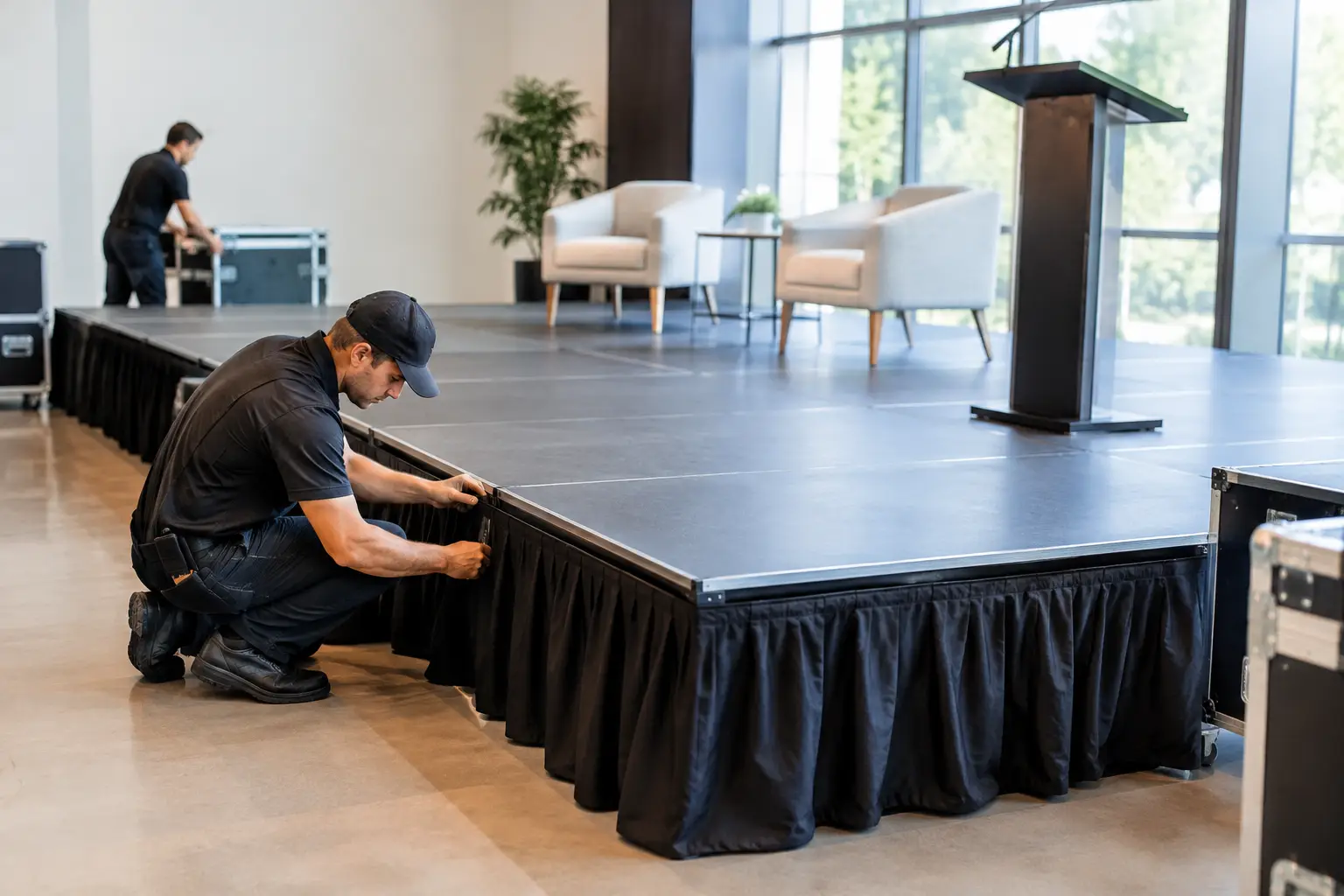
- Stage, seating, bar, catering, and dance-floor locations
- Microphone requirements for hosts, performers, and presenters
- Power access, backup requirements, and cable routes
This information lets the production team allocate the right equipment before delivery day. It also avoids the expensive last-minute request for extra microphones, longer cable runs, or a generator after the site is already built.
Do Not Treat Power as a Separate Problem
Sound depends on clean, reliable power. If audio, lighting, catering equipment, and heaters are all connected without a planned load calculation, breakers can trip during the most important part of the event. In the worst case, an overloaded or poorly distributed power setup creates a safety issue.
Temporary power should be planned alongside audio placement. Generators need appropriate capacity, safe cable distribution, and a position that limits both noise and exhaust exposure. Put a generator too close to a ceremony space and it becomes part of the soundtrack. Put it too far away without planning cable routes and you create access and trip hazards.
For events with critical speeches, live performance, or presentations, build in redundancy where the budget and risk justify it. That may mean spare wireless microphones, charged batteries, backup playback, or a contingency power option. A small backup plan can protect a major moment.
Control Volume Without Killing the Atmosphere
Noise management is not about making an event flat or quiet. It is about delivering energy where it belongs and reducing spill where it does not.
Speaker direction is the first control. Keep cabinets aimed at the audience and away from property boundaries. Use the lowest practical volume for clear speech, then increase only where the program calls for it. Subwoofers deserve particular attention because low frequencies travel farther and pass through structures more easily than high frequencies.
Some sites require sound monitoring throughout the event, especially for festivals, outdoor activations, and events near residences. If there is a formal limit, confirm how it is measured, where it is measured, and who is responsible for monitoring it. A limit at the venue boundary can produce a very different mix decision than a limit at front of house.
Timing is also part of noise control. Put speeches and high-energy entertainment into the approved windows. Plan the final set with curfews in mind. Let suppliers, performers, and event staff know the cutoff time before the event starts so no one is negotiating it in the final five minutes.
Test the Real Setup, Not Just the Gear
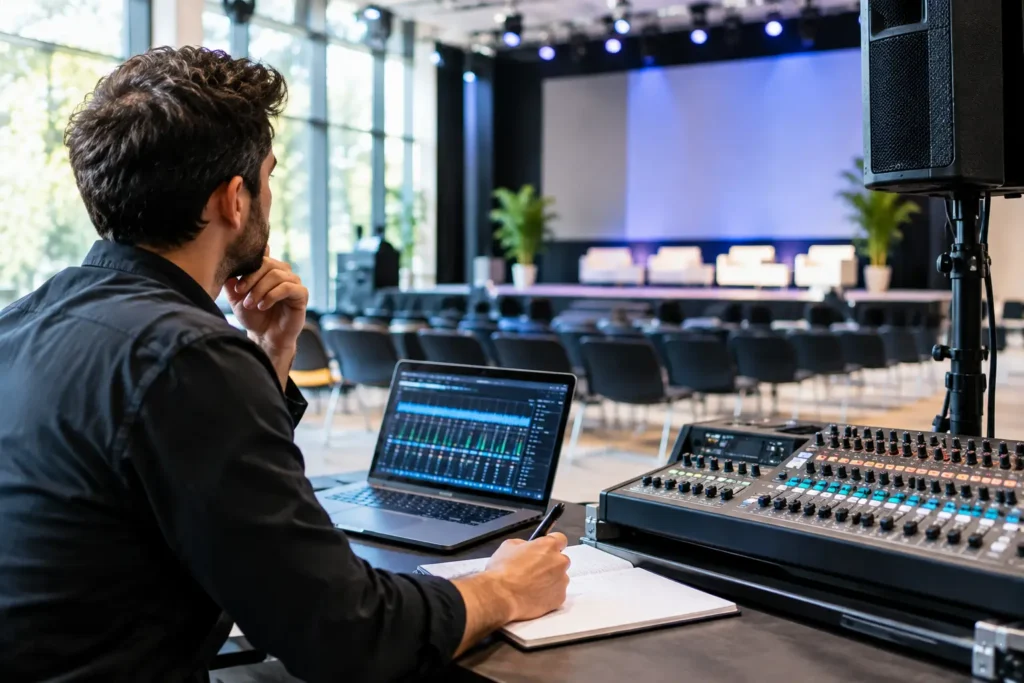
A proper soundcheck is more than confirming that speakers turn on. Test every microphone, playback source, and presentation device. Walk the guest area and listen from the front, center, sides, and rear. Check that the person at the back can understand speech without the person at the front feeling overwhelmed.
Then test under realistic conditions. Ask presenters to use their normal speaking volume. Play the actual walk-on tracks and video audio. If a band is involved, allow enough time for line checks and monitor adjustments. If there is a celebrant or MC, show them how to hold the microphone and where to stand.
The room will change once guests arrive. Bodies, tables, drape, and open doors all affect sound. A capable operator watches those changes and makes measured adjustments rather than chasing volume all night.
Good event acoustics planning gives guests a better time without drawing attention to the system itself. Tell your production partner the date, site, audience size, and program early. From there, the right layout, equipment, power plan, and on-site support can do their job quietly while the event gets remembered for the right reasons.