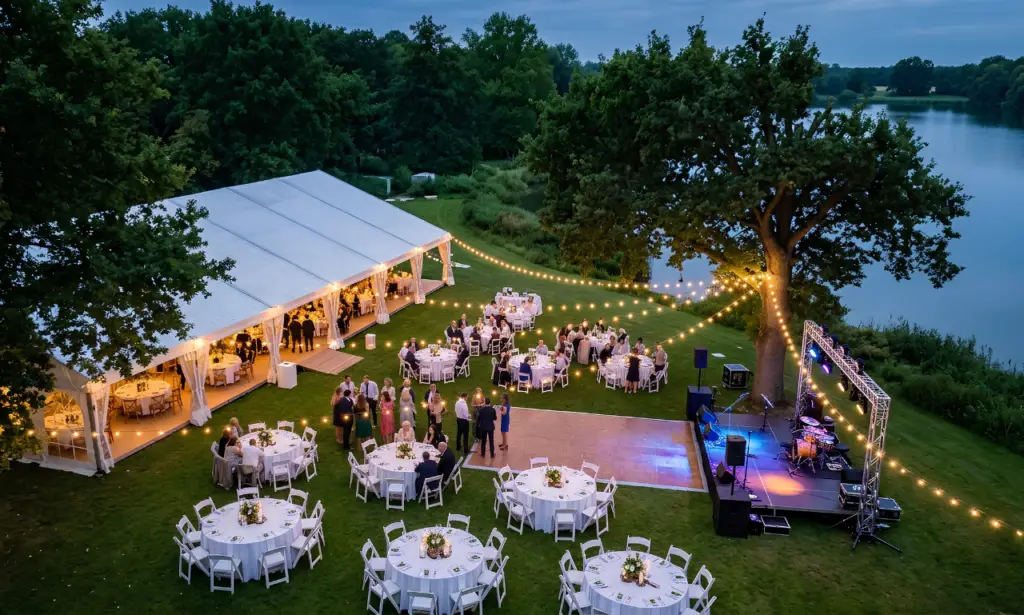
A wedding marquee setup can look effortless when guests arrive, but the smooth result starts well before the first chair is placed. The structure, floor plan, power, lighting, furniture, and weather plan all need to work as one system. Get those decisions right early and your wedding feels relaxed, polished, and ready for anything.
A marquee gives you freedom that a fixed venue cannot. You can host dinner in a family backyard, build a reception on a rural property, or create a full event site on an open block. That flexibility also means the site becomes the venue. Access, ground conditions, guest flow, amenities, and safety are all part of the job.
Start the Wedding Marquee Setup With the Site
Before choosing a marquee size or a table style, inspect the site properly. Photos help with early planning, but an on-site measure is the reliable way to identify issues before delivery day. A usable lawn is not always a suitable event footprint. Slopes, soft ground, low branches, overhead power lines, underground services, narrow gates, and drainage paths can all change the plan.
Measure the area needed for more than the marquee itself. Allow room for delivery vehicles, installation crews, catering access, restrooms, generators, and a clear guest entry. If the ceremony and reception are in separate locations on the property, plan the route between them as carefully as the spaces themselves. Guests in formal shoes should not be crossing uneven ground, loose gravel, or an unlit paddock after dark.
For a clear site assessment, confirm:
- the marquee footprint and required clearance around it
- vehicle access, turning space, and unloading distance
- ground type, slope, drainage, and any need for flooring
- overhead and underground hazards, including power and irrigation
- noise restrictions, neighbor considerations, and local permit requirements
A structure can be pegged into suitable grass, but not every surface allows that. Concrete, asphalt, pavers, and protected landscaping may require weighted ballast instead. This affects engineering, installation time, and available space, so it is not a detail to leave until the week of the wedding.
Choose a Size for the Event You Are Actually Hosting
The guest count is only the starting point. A marquee sized only for seated guests can feel crowded once you add a bar, dance floor, band or DJ, buffet or catering stations, cake table, gifts, and circulation space. The room needs to work at peak moments, not just when everyone is seated for dinner.
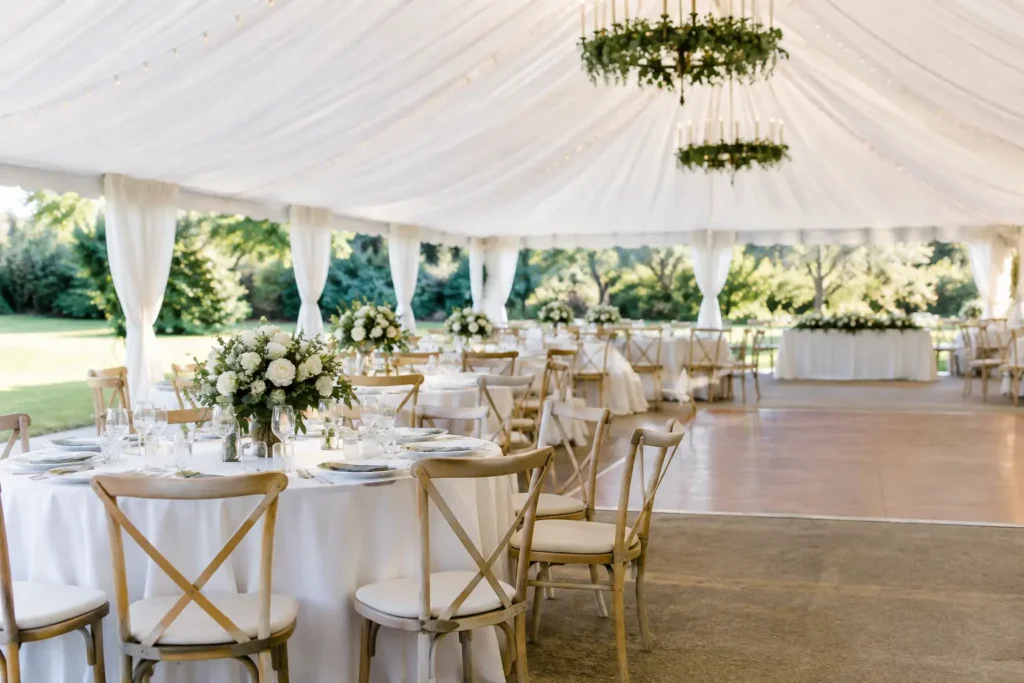
A cocktail-style reception can use a different layout from a formal plated dinner. Long banquet tables create a generous shared-table feel but need more linear room. Round tables can make conversation easier, though they need clear paths around each setting. If you are using a dance floor, decide whether it should be central to the room or placed to one side. Both can work, but the layout should prevent guests from bottlenecking at the bar or cutting through service areas.
Think about the day in phases. Where will guests gather after the ceremony? Where will wet-weather arrivals wait? Where will the wedding party stand for speeches? A smaller adjoining tent can be useful for catering, storage, or a bar queue, keeping the main marquee clear for guests.
Flooring, Walls, and Weather Protection Are Not Extras
Outdoor weddings need a weather plan that does not feel like a last-minute compromise. Sidewalls provide protection from wind and rain, while clear walls can retain views and daylight. The best approach depends on the season, site exposure, and whether the event runs into the evening.
Flooring is worth serious consideration, particularly on uneven or damp ground. It gives heels a stable surface, protects dresses and shoes, and creates a more finished indoor feel. It also helps when guests are moving between dining, dancing, and bar areas. For a relaxed backyard lunch, grass may be perfectly suitable. For a formal evening reception or a site that can become muddy after rain, flooring changes the experience substantially.
Heating and cooling should be planned with the structure, not added as an afterthought. Heaters need safe positioning, fuel management, ventilation, and suitable clearances. Fans can improve comfort in warm conditions, but they still need reliable power and should not interfere with styling, florals, or lightweight signage.
Build the Layout Around Guest Flow
Good event layouts are rarely noticed. Guests simply know where to go, where to sit, and where to find a drink without asking. That is the standard to aim for.
Set the entrance so guests are welcomed into the space rather than walking directly into a table edge or service queue. Keep aisles clear enough for guests, staff, and anyone with a stroller or mobility needs. Put the bar where it is easy to reach but does not dominate the room. Keep catering access away from the main guest entrance whenever possible.
Lighting should support the change from daytime celebration to evening reception. General overhead light makes the marquee usable. Festoon lighting, uplighting, table lamps, and feature lighting then shape the atmosphere. A beautiful lighting plan still needs practical coverage at entrances, restrooms, pathways, steps, and parking areas. If guests cannot safely see where they are walking, the event is not finished.
Plan Power Before You Book Equipment
Power is one of the most common pressure points at marquee weddings. A standard household outlet may handle a few low-load items, but it is rarely enough for a complete reception with catering equipment, refrigeration, sound, lighting, heating, and a DJ or band.
List every electrical item that will be on site, including items supplied by outside vendors. The caterer may need ovens, hot boxes, coffee machines, and refrigeration. The band may have its own sound system and lighting. Stylists may require power during setup. Once the total load is understood, the right distribution and generator plan can be selected.
Do not rely on extension cords running across lawns and paths. Power should be distributed safely, protected from weather, and routed away from guest traffic. Separate circuits can also prevent a catering appliance from taking out the music or lighting at the wrong moment. This is where production planning matters: the goal is not just enough power, but dependable power where each team needs it.
Coordinate Delivery, Setup, and Pack-Down
A marquee wedding runs better when suppliers work to one site schedule. The structure needs to be installed before furniture, lighting, styling, and many catering elements can move in. If the property has limited access, deliveries must be sequenced so trucks are not blocking each other or damaging the ground.
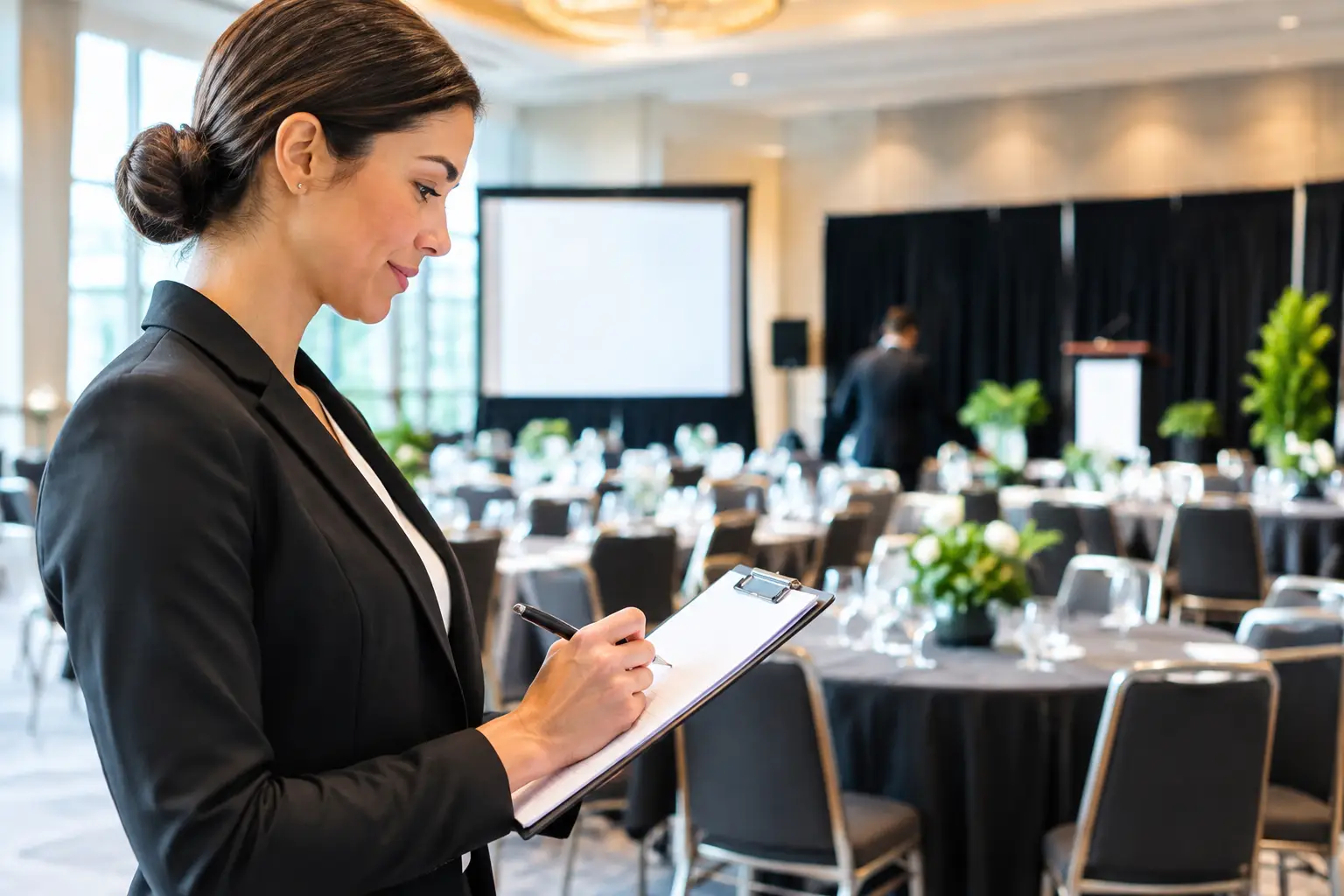
Share a simple run sheet with all suppliers. Include access times, contact names, site rules, parking instructions, and the order of setup. Confirm who is responsible for removing rubbish, securing loose items overnight, and meeting crews on arrival. If the wedding is at a private home, discuss where trucks can park and how the property will be protected during installation.
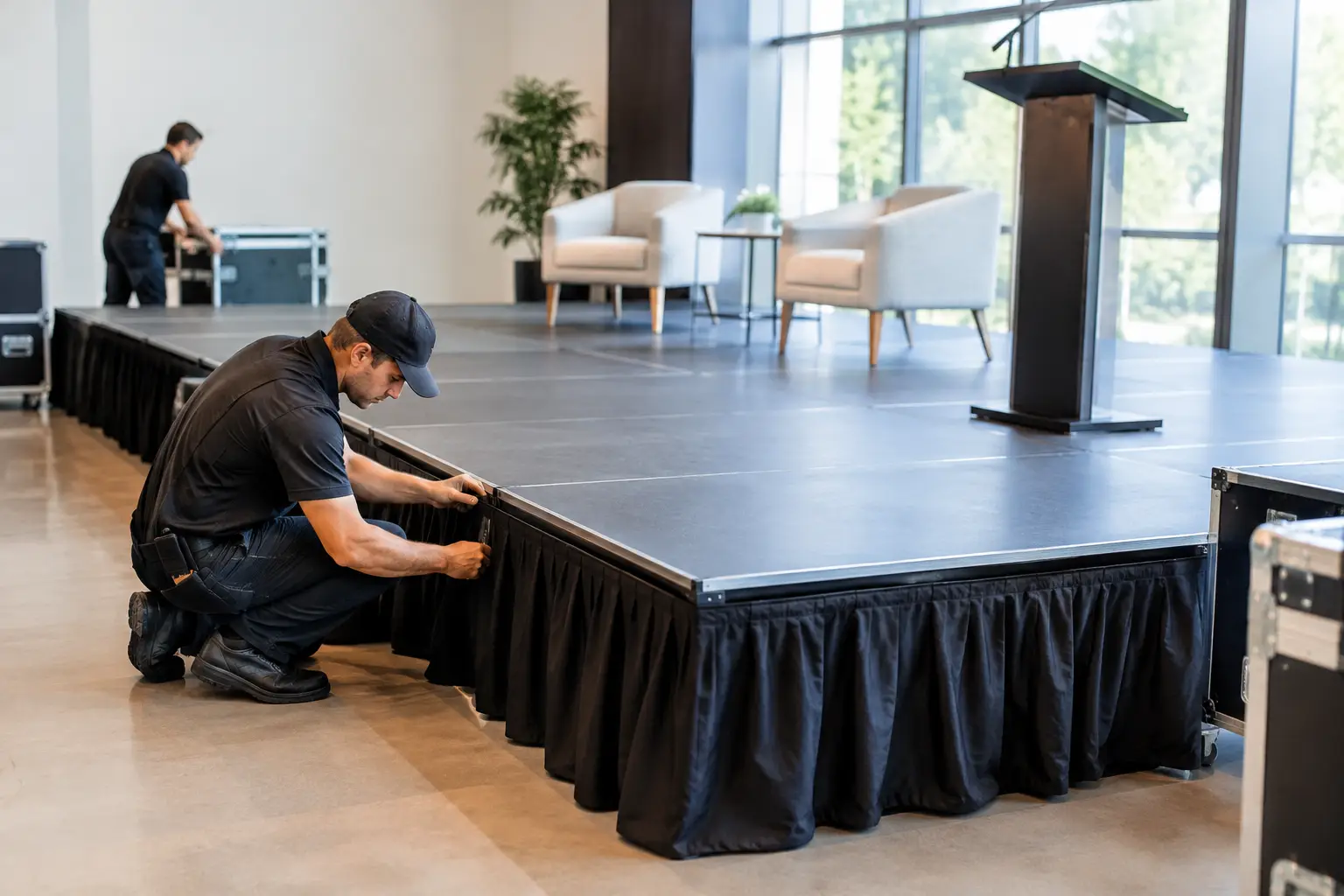
Zero Three Party & Event Hire can coordinate the guest-facing marquee environment alongside staging, power, lighting, and technical requirements through one booking process. That reduces handovers between vendors and gives you a clearer line of accountability from setup through collection.
Do Not Leave the Wet-Weather Plan to Chance
A wet-weather plan should be operational, not vague. “We will move inside” only works if the indoor space is large enough, furnished, lit, and accessible at the required time. If the ceremony is outdoors, decide in advance whether the marquee will hold both ceremony and reception, or whether a separate covered area is needed.
Check the forecast in the lead-up, but do not make critical structural decisions based on a forecast alone. Wind, rain, and temperature can shift quickly. Secure signage, florals, and lightweight décor. Keep walkways protected. Have umbrellas available for transitions, and make sure the wedding party knows the alternate ceremony position before guests arrive.
The best marquee weddings do not feel like temporary solutions. They feel considered because the practical work has been done early: the ground is stable, the layout makes sense, the power holds, and every guest has a comfortable place to be. Tell your hire team the date, guest numbers, site, and vision early. From there, a well-planned setup gives you room to focus on the part that matters – celebrating with your people.