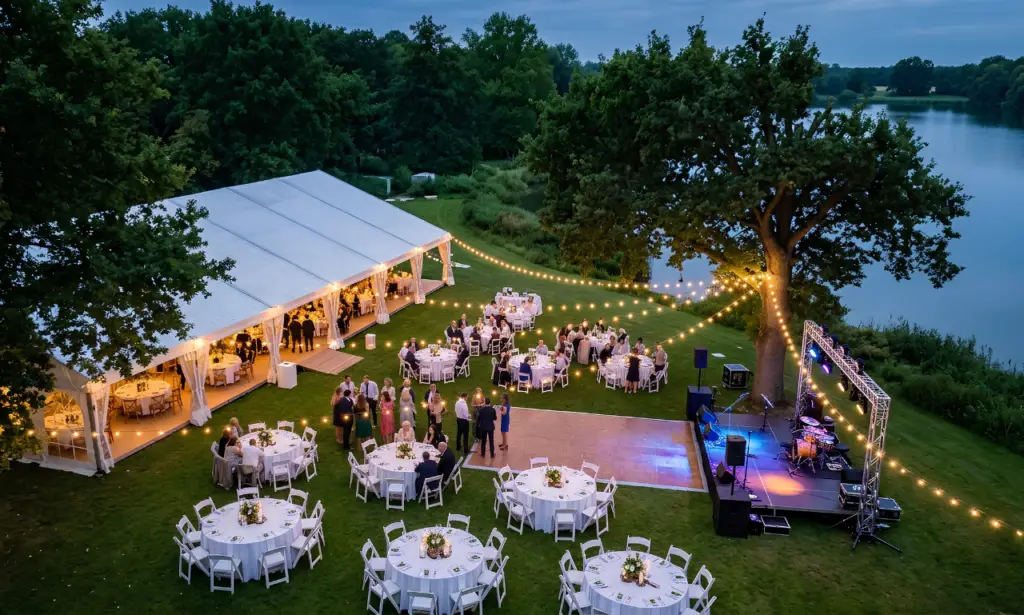
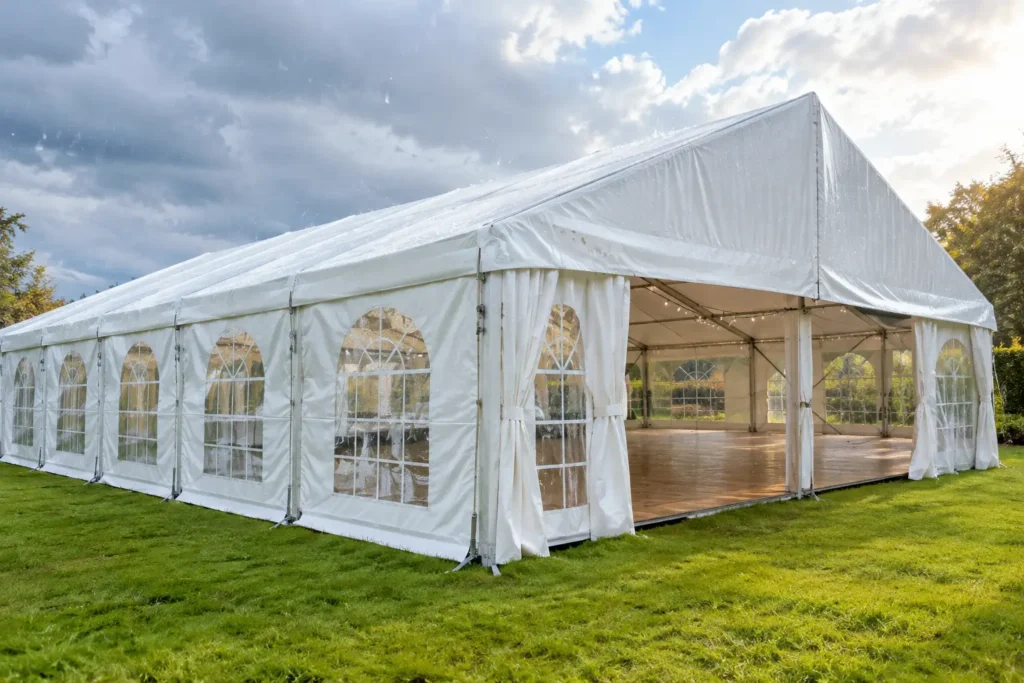
A clear-roof marquee can look perfect in the morning and face wind-driven rain by dinner. So, are event marquees weatherproof? A professionally installed marquee can provide strong protection from normal rain, sun, and moderate wind, but it is not an all-weather guarantee. The structure, site, anchoring method, sidewalls, drainage, and forecast all matter.
For an outdoor wedding, corporate function, festival, or backyard celebration, the right question is not simply whether a marquee is weatherproof. It is whether the marquee has been specified, installed, and managed for the conditions your event may face.
What “weatherproof” means for an event marquee
Most quality event marquees use waterproof PVC or coated fabric roofs designed to shed rain. When the roof is correctly tensioned and the panels are properly joined, guests and hired furniture should stay dry during ordinary rainfall. Sidewalls can close the structure against wind and rain, while flooring can keep a wet or uneven ground surface from becoming part of the guest experience.
That said, weatherproof does not mean invincible. Heavy rain can expose poor drainage. Strong gusts can make an otherwise suitable structure unsafe. Water can enter through an open doorway or under sidewalls if the ground is saturated. A marquee is a temporary structure, and its performance depends on the setup around it as much as the canopy itself.
This distinction matters because a basic pop-up tent and a commercial-grade marquee are not interchangeable. A small tent may be useful for a casual, fair-weather gathering. A larger framed marquee for a wedding reception, product launch, or public event needs an installation plan, appropriate anchoring, and clear operating limits.
Are event marquees weatherproof in heavy rain?
They can be, provided the roof is in good condition, the structure is correctly installed, and the site can drain water away. Rain is usually manageable. Standing water is the bigger problem.
A marquee should be placed on ground that is as level and firm as possible. On grass, the crew may need to consider slopes, soft patches, underground services, and where runoff will travel. A low point in the site can turn into a puddle during a downpour, even if the roof itself remains completely dry.
Roof tension is also critical. A loose roof can allow water to pool, adding unnecessary weight and increasing the chance of leaks or damage. Proper installation creates the pitch and tension needed for water to run off the canopy rather than collect overhead.
Sidewalls are useful when rain is expected, but they need to be planned carefully. Fully enclosing a marquee can reduce rain exposure, yet it can also restrict airflow and make the space feel warm or humid. For a summer event, partial walls, clear window walls, or walls installed only on the weather-facing side may be the more comfortable solution.
Entry points deserve attention too. Guests still need a way in and out, and an open entrance can admit rain when the wind changes direction. A covered entry, porch section, or connecting walkway can make a noticeable difference, particularly for weddings where formalwear, gifts, and catering need to stay dry.
Wind is the condition that changes the plan
Rain may inconvenience an event. Wind can change the safety decision entirely.
Every marquee system has specific engineering and manufacturer requirements for anchoring, ballast, layout, and wind loading. The applicable limit varies by structure type, size, ground condition, and installation method. It should never be guessed at or treated as a generic number.
On an open property, waterfront location, rooftop, sports field, or regional site, wind exposure can be greater than the forecast suggests. Buildings, trees, and nearby structures can also channel gusts into one section of the event area. That is why an experienced crew assesses the actual site rather than relying only on the event address.
Anchoring is a major part of that assessment. Stakes may be appropriate on suitable grass or soil, subject to underground-service checks and site approval. On concrete, asphalt, or locations where staking is not permitted, engineered ballast may be required. Ballast is not an optional add-on used at the last minute. It affects access, delivery requirements, footprint, and budget.
If strong winds are forecast, the right response may be to close selected walls, remove loose styling elements, secure signage, adjust furniture placement, or delay guest access to part of the structure. In severe conditions, evacuation or temporary closure may be necessary. A professional supplier should be prepared to make that call. Keeping people safe comes before keeping the run sheet unchanged.
Sidewalls are not a substitute for correct anchoring
It is easy to assume that adding walls makes a marquee safer in wind. In some conditions, sidewalls can increase the surface area catching the wind. They should be installed as part of the approved structure configuration, not added casually because rain appears on the forecast.
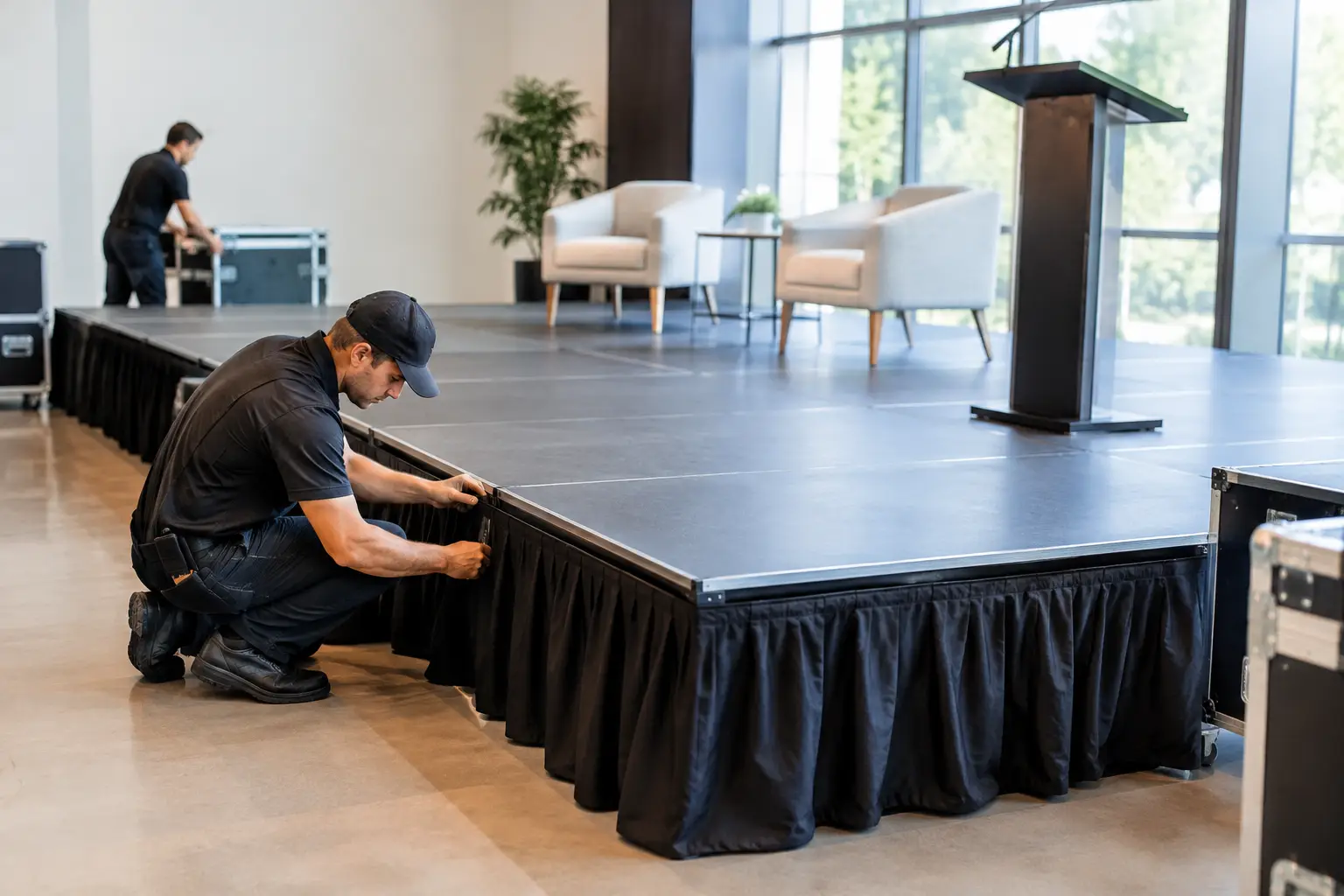
This is one reason coordinated planning matters. The marquee, walls, lighting, heaters, flooring, tables, staging, and power distribution all need to work together without creating new hazards.
The site determines how weatherproof your setup can be
A good marquee on a poor site still has limits. Before confirming a layout, consider ground conditions, vehicle access, overhead clearance, nearby trees, drainage, and available space for installation.
Tree branches can drip long after rain has stopped and may create a hazard in high winds. Soft ground may make access difficult for delivery vehicles and may not hold stakes as expected. Sloped sites can require a different layout, flooring system, or water-management plan. If the event is on a private property, a site visit or detailed photos with measurements can prevent surprises on installation day.
Power and lighting should be planned with the same care. Outdoor-rated connections, protected cable routes, raised distribution where needed, and correctly sized power systems help keep the event operating safely in wet weather. Extension cords running through puddles or across guest paths are not a weather plan.
For events with catering, entertainment, or presentations, think beyond the guest seating area. The band needs a dry performance space. Caterers need protected prep and service zones. AV equipment needs shelter and stable power. A ceremony space may need a separate wet-weather option rather than relying on a room designed only for dining.
Build a weather plan before the forecast changes
The best weather plan is made while there is still time to adjust the design. Waiting until the day before the event can limit equipment availability and force rushed decisions.
Start with the purpose of the structure. Is it the main guest venue, a backup ceremony location, a catering cover, or an arrival area? Then consider the number of guests, seating layout, event duration, season, and likely weather exposure. A cocktail event can often use a more open configuration than a seated dinner that must remain comfortable for several hours.
Allow enough room inside the marquee for guests to move away from open sides, particularly if rain arrives. If you are using heaters, ensure there is safe clearance, ventilation, and an appropriate power or fuel plan. If using clear walls or clear roofing, account for solar heat during daylight and temperature drop after sunset.
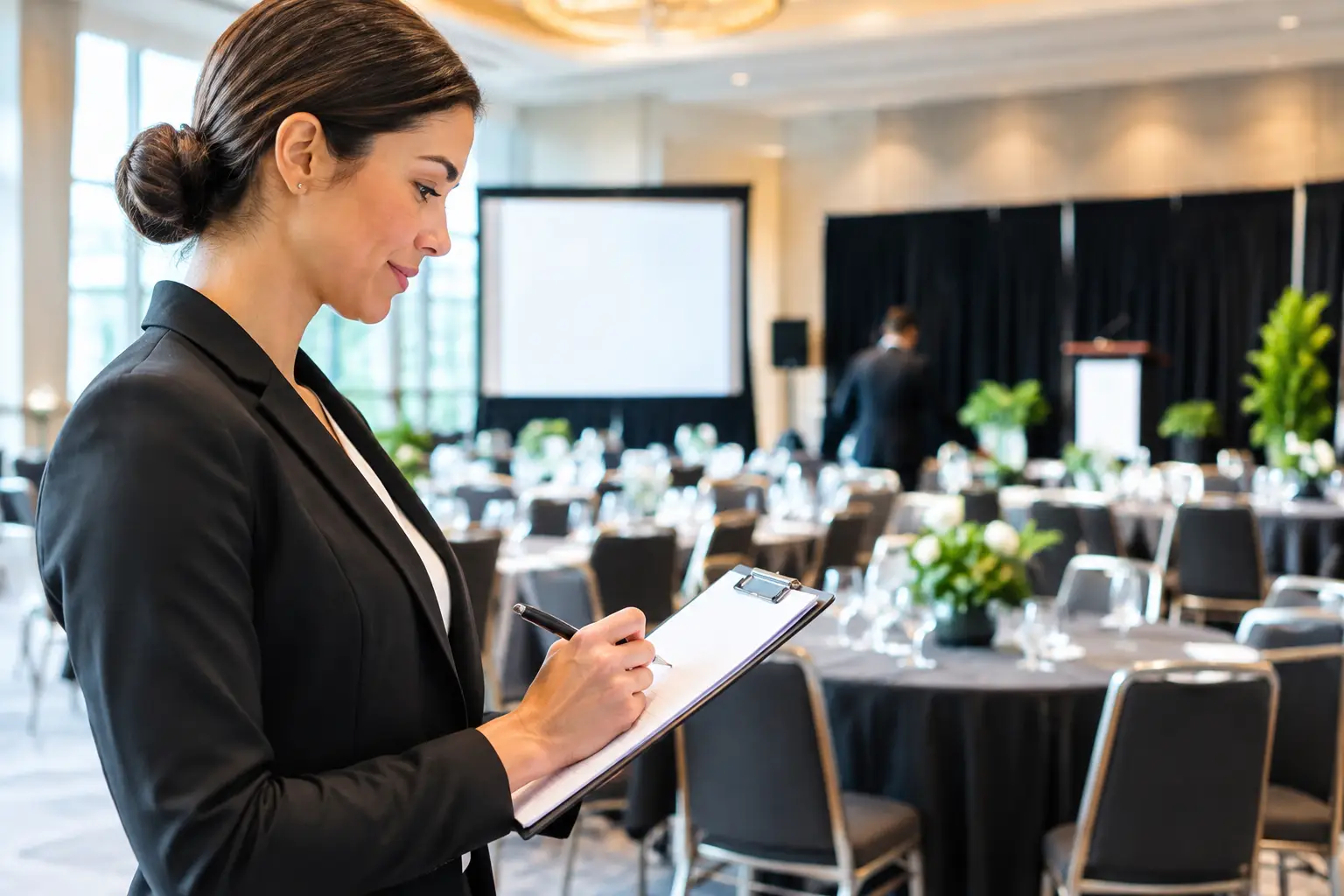
It also helps to appoint one decision-maker for show day. That person should know who can authorize wall changes, when guests should be moved, and how to contact the installation or production team. For larger events, this can be written into the event operations plan alongside emergency contacts, power procedures, and site access details.
Questions to ask before hiring a marquee
A supplier should be able to answer practical questions without vague promises. Ask whether the proposed marquee is suitable for your site and guest count, how it will be anchored, whether sidewalls and flooring are included or optional, and what access is required for delivery and installation.
You should also ask how weather monitoring and safety decisions are handled during the event, especially for larger public events or exposed sites. If you need lighting, heating, staging, generators, furniture, or sound, ask whether those elements can be coordinated under one installation schedule. Fewer handoffs generally mean fewer gaps between the marquee plan and the rest of the event infrastructure.
At Zero Three Party & Event Hire, this coordination is treated as part of the job. The structure is only one component. The setup needs to account for guest comfort, power, access, safety, and pack-down from the start.
A marquee gives an outdoor event flexibility, not immunity from the weather. Choose a structure suited to the site, give it the anchoring and drainage it requires, and make a practical call early when conditions change. That is how guests remember the celebration instead of the forecast.