A product can be excellent and still disappear in a bad photo. If the launch wall is too small, reflective, poorly lit, or set in the wrong place, every media shot, creator video, and guest selfie shows the problem. The best product launch backdrops do more than carry a logo. They frame the product, direct attention, support the run sheet, and hold up from the first guest arrival through the final pack-down.
For a launch event, the backdrop is part of the production plan, not a last-minute styling item. It needs to work with the venue dimensions, camera angles, lighting positions, guest flow, and the scale of the reveal. Start there, and the visual result is far easier to control.
Choosing the Best Product Launch Backdrops
The right backdrop depends on what needs to happen in front of it. A press call has different requirements from a cocktail launch, a retail activation, or a major live reveal. Before selecting materials or graphics, identify the backdrop’s main job.
Is it there for branded arrival photos? Does it sit behind a presenter on stage? Is it the visual set for a product demonstration? Will guests be photographed individually, or will media crews be shooting wide angles of a crowd? One backdrop can serve several purposes, but it should not be expected to do everything without careful planning.
A strong launch setup usually gives the product its own visual space. That may be a dedicated reveal wall, a stage set, or a styled display zone positioned away from the busier media wall. When logos, products, presenters, and guests are all fighting for the same background, the launch can look crowded even in a large venue.
Step-and-repeat media walls
A step-and-repeat wall is the practical choice when sponsor marks, brand logos, media photos, and guest content are priorities. The repeated graphic gives every image a recognizable branded context, even when the photographer crops tightly.
Keep the logo pattern simple. Marks should be large enough to read in a phone photo but spaced so they are not hidden behind heads and shoulders. Dark colors can look sharp under controlled lighting, while pale finishes may be easier to expose correctly in a mixed-light venue. The best choice depends on the brand palette and photographer’s needs.
For smaller launches, a media wall near the entrance can create an immediate arrival moment. For larger events, place it off the main access path so guests are not stopping traffic while they wait for photos. Allow room for a photographer to step back, a small queue to form, and guests to enter and exit without crossing the shot.
Scenic walls and dimensional sets
If the aim is to create a premium reveal rather than a press-line moment, a scenic backdrop often carries more impact. This can include freestanding flats, timber textures, painted panels, fabric draping, colored plinths, arches, or a custom-built environment that reflects the product’s category.
Dimensional sets create depth that printed walls cannot always deliver. They are particularly effective for beauty, fashion, hospitality, automotive, design, and technology launches where the product needs to feel like part of a world. The trade-off is that scenic pieces require more delivery access, installation time, and venue coordination than a simple printed wall.
Think about sightlines before approving the design. A beautiful set can lose its effect if a service door, exposed loading area, or ceiling grid sits directly behind it. Where the event is outdoors, the structure also needs to be appropriate for wind conditions, ground surface, and safe anchoring. Decorative panels still need proper support.
LED walls and digital backdrops
An LED wall gives a launch team flexibility. It can run branded motion graphics during arrival, switch to product video for the reveal, and change again for presentations or sponsor recognition. It is often the best option when one stage must perform several different jobs across the program.
It also demands technical planning. Screen size, pixel pitch, content format, playback equipment, power demand, cable paths, and viewing distance all affect the result. A screen that looks impressive on a site plan may be too bright for intimate photography or too low-resolution for close camera work.
Avoid treating an LED wall as a plug-and-play backdrop. Content should be tested on the actual screen before doors open, including animated logos, video playback, and presentation slides. Build in a fallback image in case a content change is delayed. For a scheduled reveal, that preparation protects the moment.
Fabric drape and soft backdrops
Pipe-and-drape systems, curtains, and fabric backdrops are useful when a venue needs a fast visual reset. They can hide unattractive walls, divide a large room, create a stage surround, or build a controlled photo area without major construction.
Fabric is also helpful when lighting needs to do more of the visual work. A neutral drape can shift from restrained to dramatic with uplighting, projected color, or carefully focused fixtures. It is not always the right choice for crisp logo reproduction, but it can be a strong foundation for a product display or live presentation.
Choose fabric height and fullness based on the room. A low, flat curtain in a high-ceiling venue can make the entire setup feel undersized. Conversely, a heavily draped backdrop in a compact space may reduce usable floor area and limit camera positions.
Plan the Backdrop Around the Camera, Not Just the Room
A launch backdrop is usually judged later, through photos and video. That is why camera planning matters as much as the guest view. Stand where the photographer will stand and check what appears around the edges of the frame. Emergency exits must remain clear, but service corridors, stacked chairs, cable runs, and venue signage should not become accidental parts of the campaign imagery.
Lighting deserves the same attention. Gloss vinyl, mirrored finishes, acrylic, and metallic graphics can produce glare. Matte materials are generally more forgiving for photography, while textured surfaces can create shadow and depth under directional light. If the product itself is reflective, test it against the proposed background rather than assuming the two will work together.
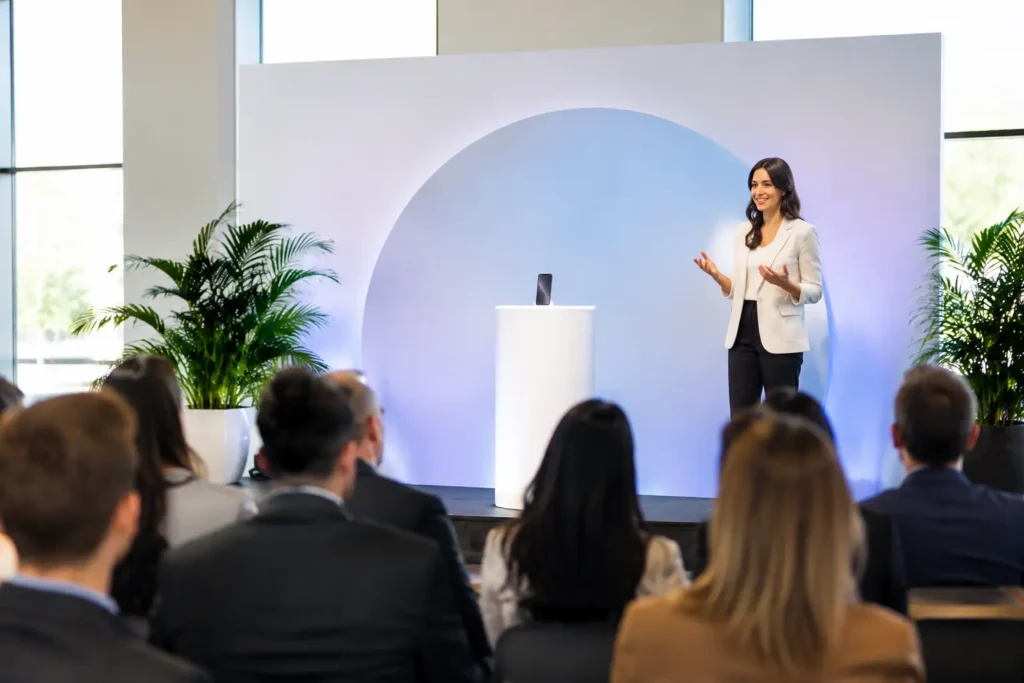
For stage launches, position the backdrop far enough behind presenters that it reads clearly on camera and allows lighting to separate people from the set. If presenters stand directly against the wall, they can cast hard shadows or obscure important branding. A little physical depth makes a major difference.
Size, Scale, and Placement Decisions
There is no universal backdrop size, but there are reliable questions to ask. How many people need to fit in the shot? Are cameras shooting vertical social content, landscape event photography, or both? Is the wall seen from across a ballroom or only close up at an activation station?
For a couple or a small product team, a compact media moment may be enough. For group photos, press lines, or high-volume guest content, go wider. Height matters too. A backdrop should extend above the tallest likely guest and avoid ending at head height, where its edges become obvious in photos.
Placement should support the event’s movement. Put the hero product moment where guests can gather safely without blocking food service, registration, or exits. Give technical teams access to power and control equipment without running cables through public walkways. If cable crossings cannot be avoided, they need proper protection and a clear plan for installation and removal.
Build the Reveal Into the Production Schedule
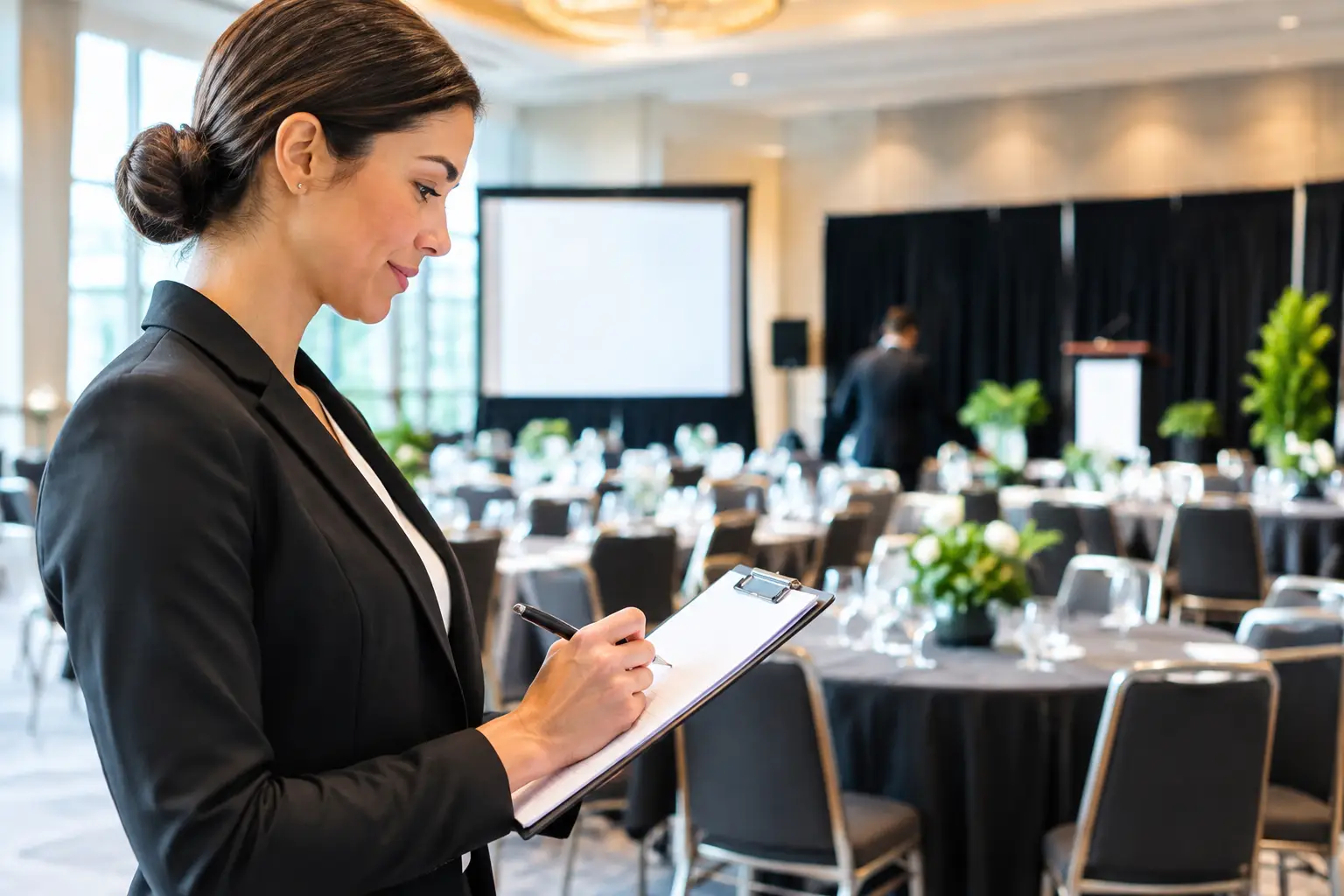
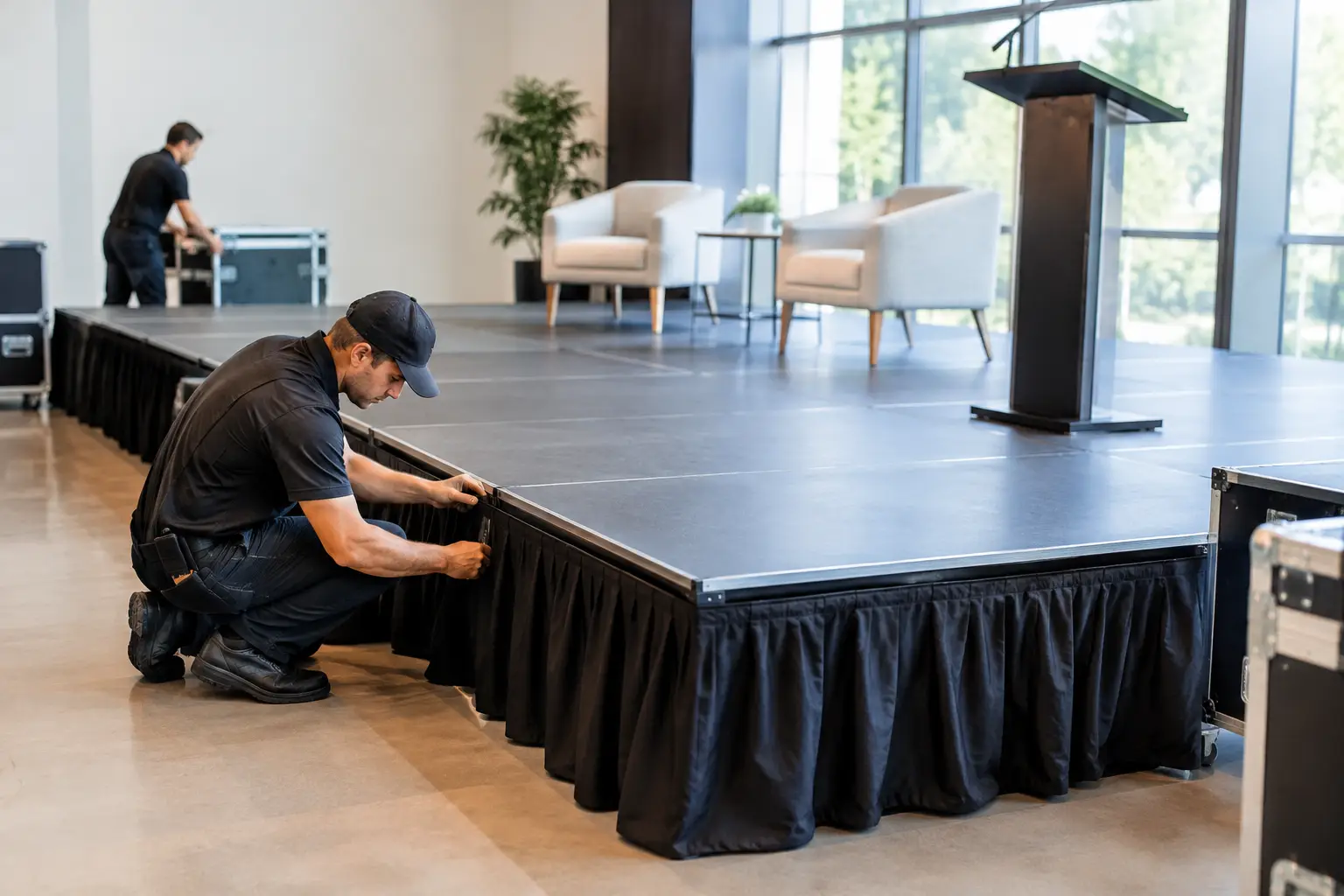
The best backdrop can still fail if it is installed too late or handed over without checks. Backdrop setup should be part of the production schedule alongside staging, sound, lighting, furniture placement, and signage.
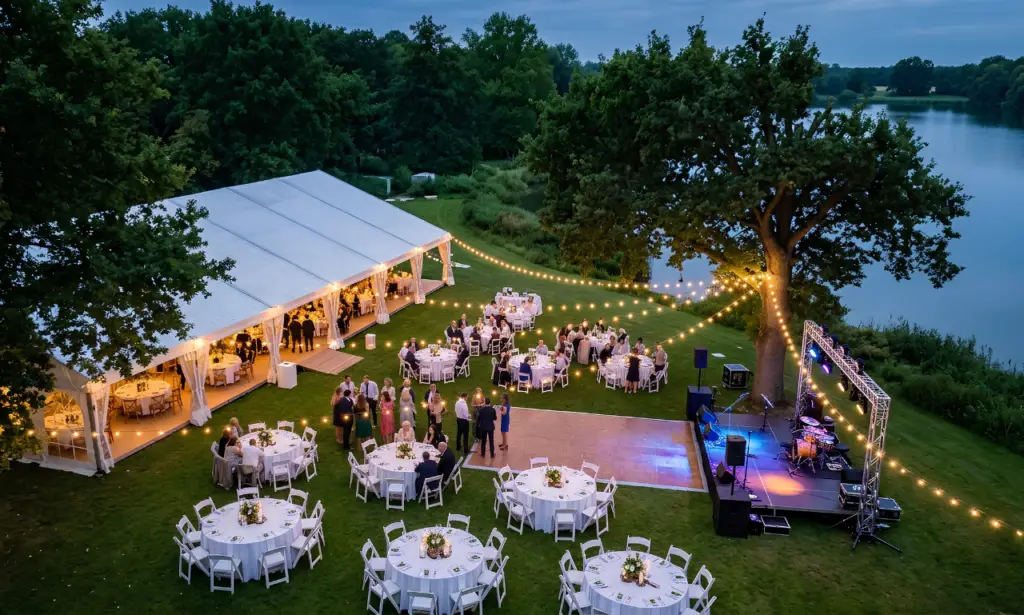
Confirm venue access times, loading dock restrictions, elevator dimensions, ceiling heights, and wall or floor protection requirements before equipment is dispatched. For outdoor events, have a weather plan that covers not only rain but also wind, heat, and changing ground conditions. Large-format graphics, drape, screens, and freestanding structures all respond differently to weather.
This is where a coordinated supplier team saves time. Zero Three Party & Event Hire can align staging, power, lighting, furniture, and guest-facing styling around the backdrop plan, so crews are not competing for the same access window or working around unplanned cables. Tell the team the date, venue, guest count, product dimensions, and key reveal time. The equipment plan can then be built around what has to work on show day.
Before doors open, inspect the setup from the guest entrance, the stage, and the main camera position. Check every visible edge, graphic alignment, surface finish, and light reflection. Run the reveal sequence once if there is one. A five-minute test can prevent a very public problem.
A product launch backdrop should make the product feel considered before anyone reads a single line of copy. Give it the right scale, a clear purpose, and enough production time, and it will keep doing its job long after the room is packed down.