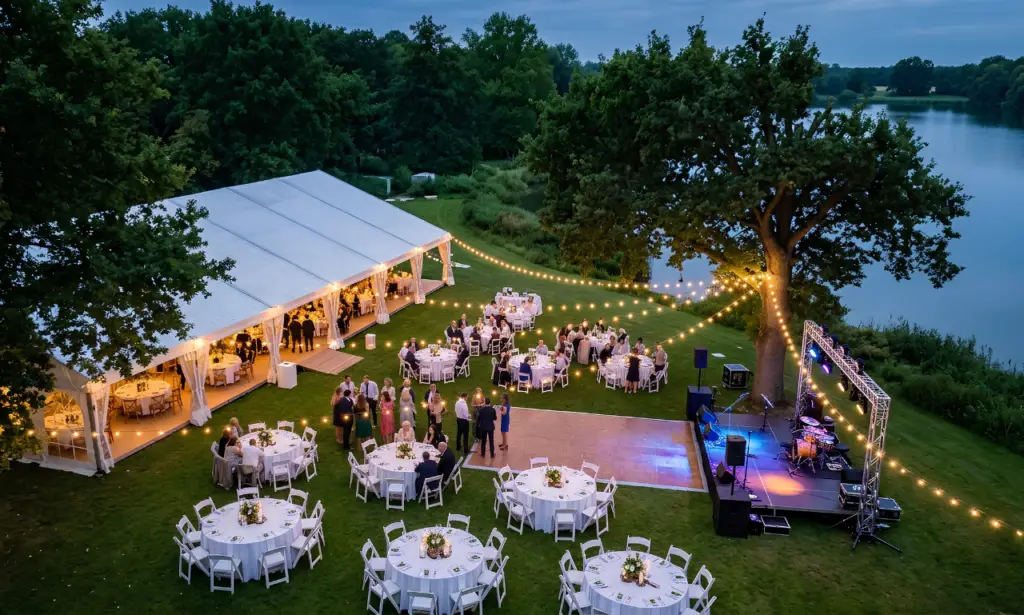
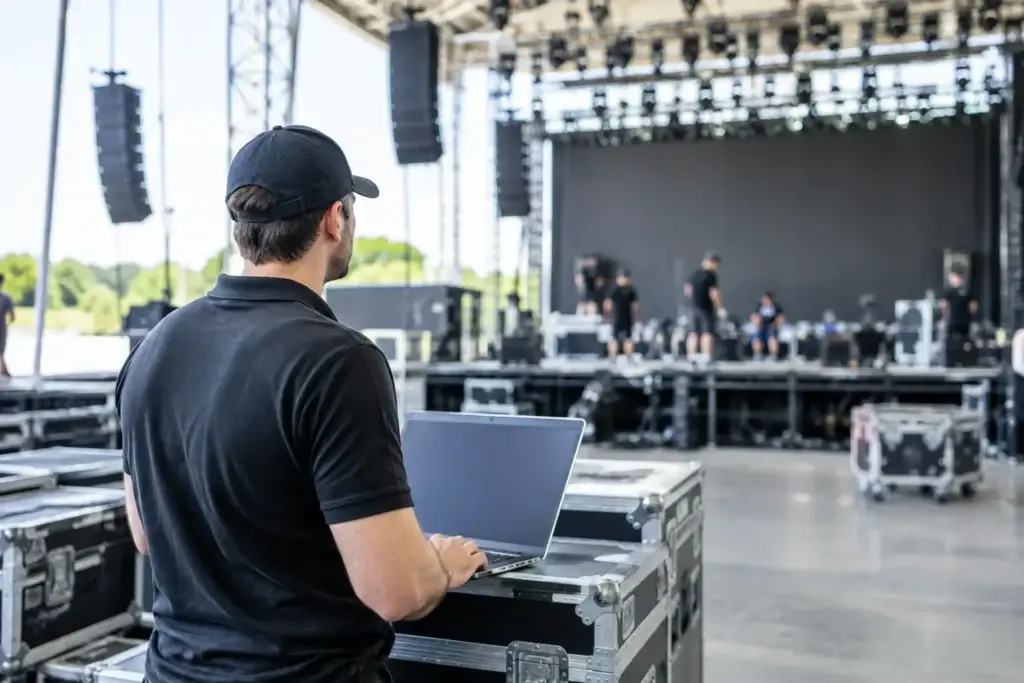
The guest may only notice the flowers, the food, and the music. The event team sees something else: whether the site can take delivery trucks, where the power is coming from, how the stage is secured, and what happens if the weather turns. That is event infrastructure. Get it right early, and the event has room to run. Leave it late, and small omissions become expensive show-day problems.
For a backyard birthday, infrastructure might be a tent, furniture, lighting, and safe cable routing. For a product launch, wedding, school formal, or festival, it can include staging, temporary power, rigging, sound, access plans, permits, and qualified technical support. The scale changes. The planning principle does not.
Event Infrastructure Starts With the Site
A site is never just an address. Before equipment is allocated, the practical questions need answers: Is there a clear delivery route? Can a truck turn around? Is the ground level enough for a stage or tent? Is there existing power, and is it suitable for the planned load? Where will guests enter, line up, eat, use restrooms, and leave?
Photos help, but they rarely tell the full story. A site visit is often worthwhile when the event involves structures, elevated staging, generators, significant AV, or a large guest count. It reveals slopes, overhead branches, narrow gates, low clearances, uneven surfaces, and access conflicts that can affect both the setup and pack-down.
The site also determines what can happen at what time. A downtown loading dock may only be available early in the morning. A residential street may require a quieter pack-down. A public park may restrict vehicle access, require permits, or limit where equipment can be placed. Those details should shape the event plan before invitations go out and before a supplier commits trucks and crew.
Build Around the Guest Journey
Good infrastructure is not only technical. It creates a usable environment for the people attending.
Think through the event from a guest’s point of view. They arrive from the parking area or drop-off point. They need to know where to go, where to place a coat or bag, and where to find food, drinks, seating, restrooms, and the main activity. If the weather changes, they need cover. If the program runs into the evening, they need enough lighting to move safely and comfortably.
This is where party hire and production planning should meet. The seating plan affects the size of the tent. The tent affects lighting placement. Lighting affects power requirements. The stage position affects sightlines, speaker coverage, cable routes, and the usable guest area. Planning each item in isolation often creates rework later.
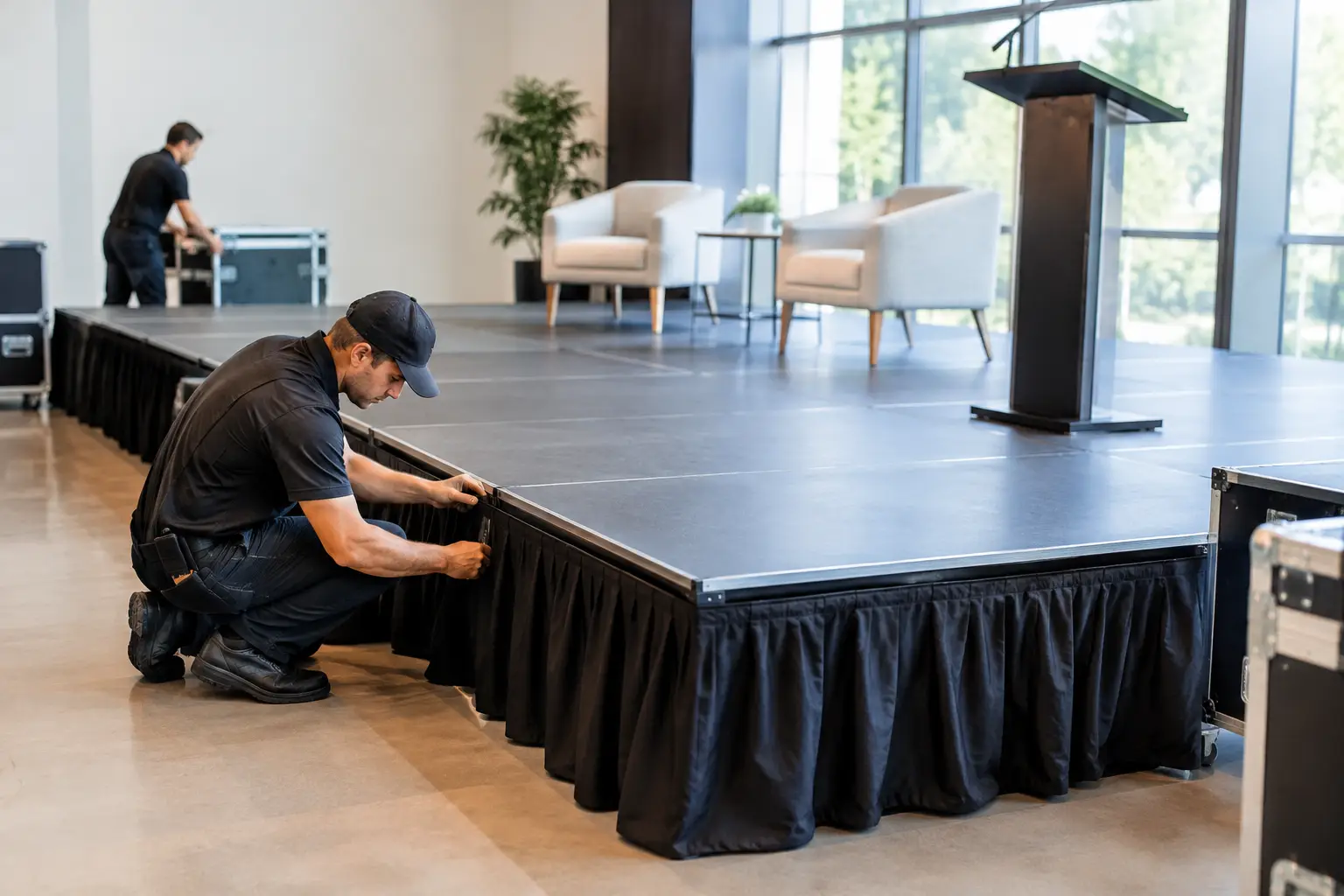
For example, a wedding ceremony may need only a simple raised platform and a compact sound system. But if the reception follows in the same location, the transition needs to be planned. Can chairs be moved quickly? Does the staging become a band platform? Will the power setup support catering, lighting, and entertainment at the same time? A clear run sheet turns those decisions into a workable sequence.
Power Is a Calculation, Not a Guess
Temporary power deserves careful planning because it affects nearly every part of an event. Caterers may need refrigeration, ovens, coffee equipment, and lighting. The production team may need power for audio, screens, stage lighting, and control equipment. Add heaters, charging stations, vendor stalls, or a bar, and the load can rise quickly.
Do not assume a standard outlet will cover it. A qualified team should identify each significant electrical item, allow for startup demand where relevant, separate critical circuits, and size the generator or distribution system accordingly. The goal is not simply to provide enough power. It is to provide it safely, with sensible cable routes and a plan for equipment that cannot lose power mid-event.
There is a trade-off here. A larger generator creates more capacity and flexibility, but it adds cost, space requirements, fuel planning, and noise. A smaller setup may be appropriate for a simple gathering with limited equipment. The right choice depends on the actual load, the duration, the site, and how much operational risk the event can accept.
Power cables also need to be part of the site layout, not an afterthought. Keep them out of guest walkways where possible. Where crossings are unavoidable, use appropriate protection and make sure the route does not interfere with wheelchairs, strollers, service staff, or emergency access.
Structures, Staging, and Weather Need One Plan
A marquee, tent, stage, or truss system changes the physical conditions of the event site. It may require a level surface, ballast, engineered anchoring, exclusion areas, wind monitoring, or specific clearances from buildings and power lines. These are not details to solve on setup day.
Weather is the point where many plans are tested. A tent gives shelter, but it does not automatically solve wind, water runoff, ground conditions, heating, or guest comfort. An outdoor stage may need side protection and a covered technical position. Furniture can be moved under cover, but only if there is enough covered space available.
The best weather plan is specific. It identifies the trigger for action, who makes the call, what equipment changes, and how guests will be communicated with. For a smaller private event, that might mean moving dinner inside if rain is forecast. For a large public event, it may involve formal procedures, site management, and communication with local authorities.
Compliance requirements vary by location and event type. Public events, temporary structures, amplified sound, road access, and large crowd areas can all involve permits or documentation. Start those conversations early. A permit application submitted late can affect the whole production schedule, even when the equipment itself is available.
One Coordinated Plan Reduces Handoffs
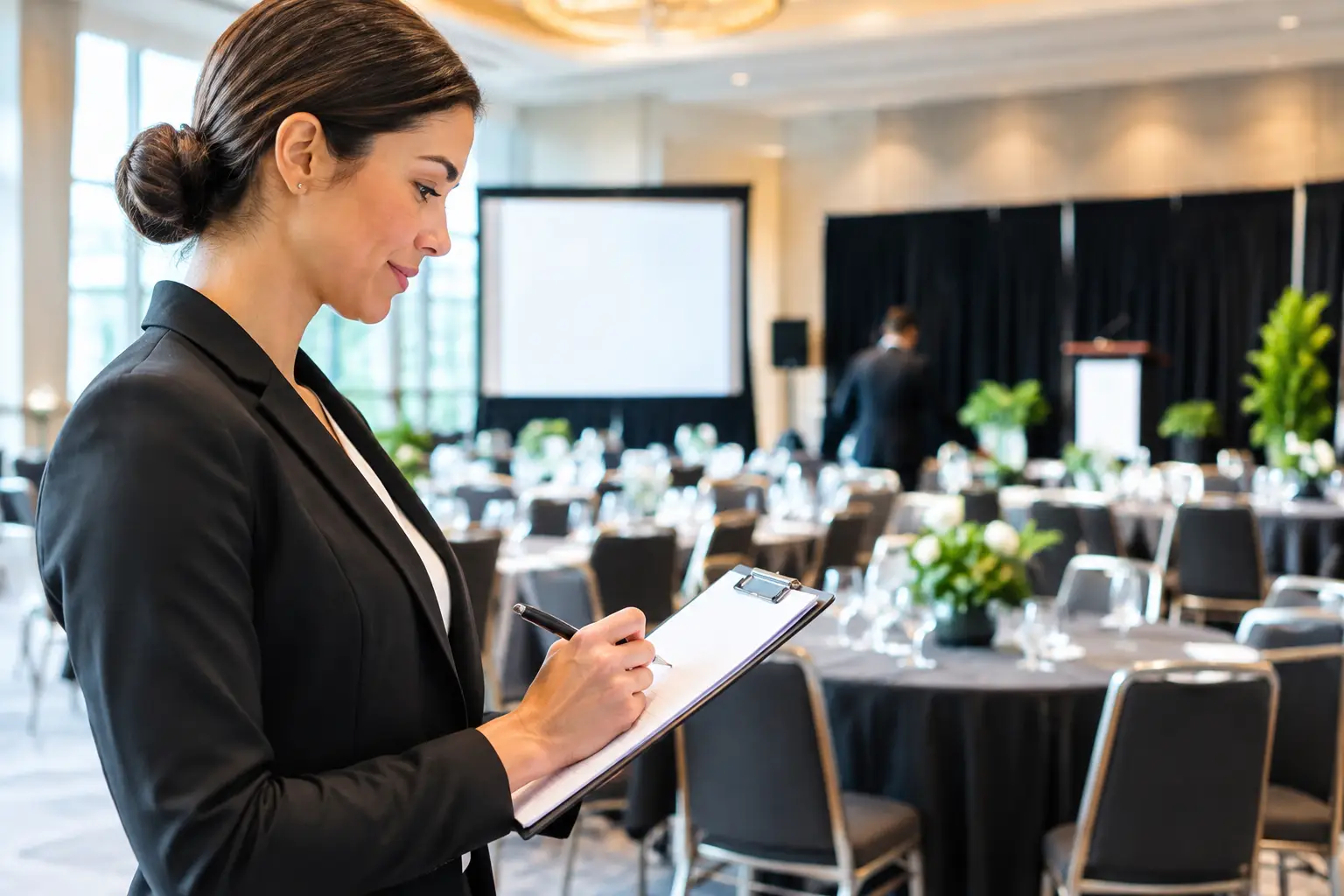
Events become harder when every supplier is working from a different version of the plan. The furniture supplier needs access before the AV crew. The caterer needs power before food preparation starts. The stage crew needs a clear work area before décor is installed. If nobody owns the order of work, people wait, equipment gets moved twice, and the schedule tightens.
A coordinated hire and production plan gives everyone the same essential information: equipment list, site map, delivery windows, setup order, power locations, contact names, and pack-down timing. It also makes accountability clearer. When a table layout changes, the people handling the tent, lighting, and cable routes can assess the impact before the change reaches the site.
This does not mean one supplier is always the best answer. A specialist may be necessary for a particular creative, structural, or technical requirement. But even then, the event needs a single practical point of coordination. Someone must check that the pieces can occupy the same site at the same time.
For organizers, a unified booking desk can remove a lot of friction. Furniture, tents, heating, staging, lighting, sound, and power can be quoted against the same site plan instead of being treated as unrelated orders. That helps prevent the familiar problem of discovering, two days before the event, that the generator is too far from the stage or the tent footprint does not allow enough space for seating.
Plan Delivery and Pack-Down Before You Confirm Hire
Setup is only half the job. Delivery access, crew call times, vehicle parking, storage of cases and packaging, and collection windows all need to work around the event itself.
Ask whether the site can receive equipment the day before. If it cannot, allow enough setup time on the event day. Ask whether hired items can remain overnight after the event, particularly if the function ends late. If they cannot, pack-down crew, vehicle access, and venue access must all be available when guests leave.
For private hosts, this is where clear guidance matters most. Tell the hire team the date, guest count, address, access conditions, and rough event timing. Share photos of gates, driveways, stairs, and the intended setup area. A few minutes of accurate information can prevent a delivery crew arriving with equipment that cannot safely reach the site.
For experienced producers, the same principle applies at a larger scale. Issue site plans early, confirm production windows, document power and rigging requirements, and make sure every department is working from the latest schedule. Change is normal. Uncommunicated change is what causes trouble.
The strongest events do not feel overproduced. They feel easy to attend because the work behind them has been properly organized. Start with the site, plan the guest journey, calculate the technical requirements, and give every supplier a clear sequence of work. Then when the first guest arrives, the infrastructure can do what it is meant to do: stay out of the way and keep the event moving.