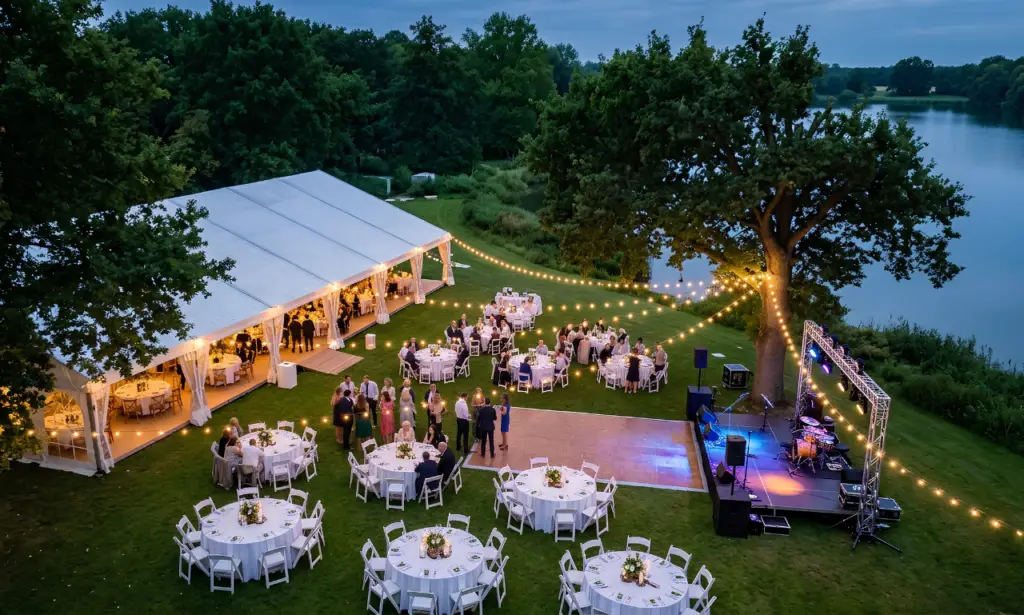
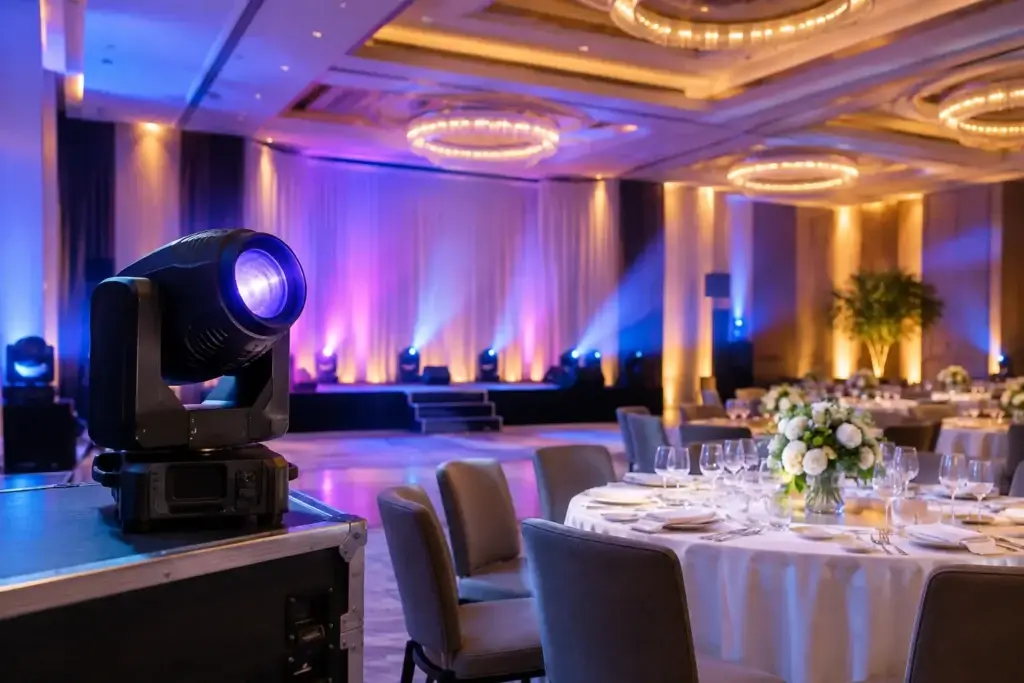
A string of festoon lights can make a backyard dinner feel intentional. The same approach can leave a corporate launch, wedding reception, or outdoor awards night looking underlit once the sun goes down. Event lighting hire packages work best when they are built around the venue, guest movement, power access, and the moments that need to be seen – not simply around a few attractive fixtures.
The right package does more than add color. It makes entrances clear, keeps paths usable, gives speeches a proper focal point, supports photography, and helps guests settle into the space. For larger sites, it also has to work alongside marquees, staging, audio, generators, rigging, and venue compliance requirements.
Start with what the lighting needs to do
Before choosing fittings, map the event from arrival through to pack-down. A good lighting plan usually has several jobs at once: practical light for access and service areas, ambient light for guest spaces, feature lighting for visual impact, and focused light for key moments such as speeches, presentations, performances, or a cake cutting.
A backyard birthday may only need warm festoon lighting across the dining area, a few uplights, and safe illumination at steps and gates. A wedding in a marquee may need separate coverage for the ceremony, bar, dining tables, dance floor, catering area, and external paths. A festival or public event can require site-wide access lighting, emergency considerations, compliant cable runs, and dedicated fixtures for stages and activation areas.
That difference matters when comparing event lighting hire packages. A package with a generous fixture count can still be the wrong fit if it does not cover the areas guests and crew actually use.
Ambient, functional, and feature lighting are different jobs
Ambient lighting sets the overall feel. This includes festoon strings, fairy lighting, lanterns, warm wash lights, and soft marquee lighting. It creates atmosphere, but it should not be relied on to light a staircase, service road, or equipment area.
Functional lighting handles visibility and safety. Think entry points, walkways, restrooms, parking access, catering work zones, loading areas, and exit routes. It often needs to be brighter and more controlled than the guest-facing lighting, even if the fixture itself is kept discreet.
Feature lighting gives the event its focal points. Uplights can add color to walls, trees, drape, or architectural details. Pin spots can pick out centerpieces. Moving lights, stage washes, and branded gobos can support a performance or product reveal. These are effective when they are placed with purpose, not scattered around the room because they were included in a bundle.
What should be included in an event lighting hire package?
A useful quote should make the scope clear. At minimum, it should identify the fixtures, quantities, stands or rigging hardware, cabling, power requirements, controls, installation, testing, and collection. If you are comparing two quotes, check that both suppliers are pricing the same level of service. A lower equipment-only rate may not include delivery, installation, cable protection, labor, or show-day support.
For simple private events, self-install lighting can be a practical option when the setup is low-risk, the layout is straightforward, and you have safe access to suitable power. It can save money, especially for a small indoor party or a familiar backyard space.
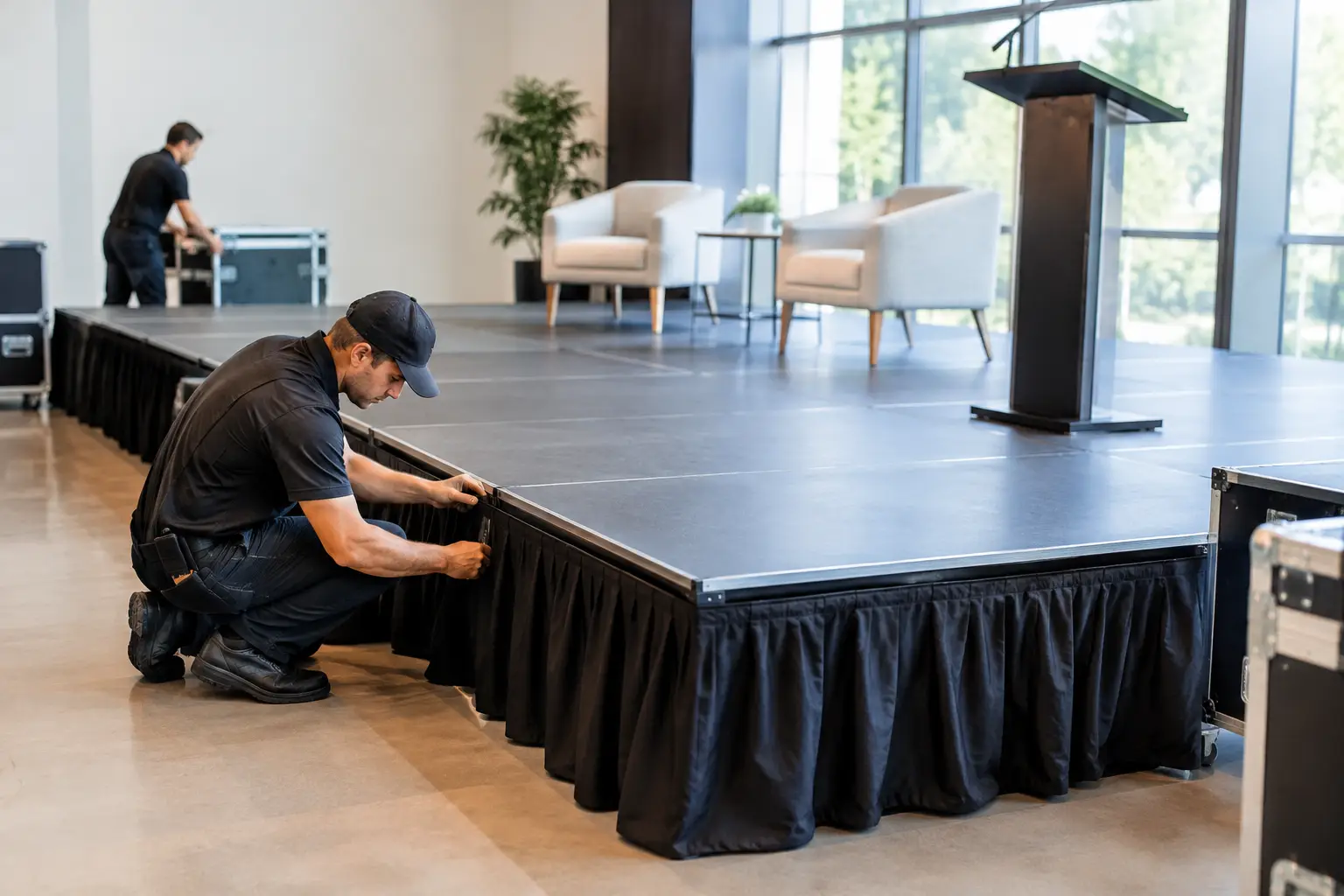
Installation is usually the better call when lighting is suspended overhead, mounted at height, run across public areas, connected to temporary power, or needed as part of a wider production setup. The crew can position fixtures correctly, secure cables, test circuits, and make sure the lighting works with the furniture plan, marquee footprint, staging, and guest flow.
For a production-heavy event, one coordinated provider has a real operational advantage. Lighting affects power demand. Power affects generator sizing and cable distribution. Rigging affects structure approvals and load calculations. Handling these pieces together reduces the risk of discovering a problem on setup day.
Match the package to the venue, not the guest count alone
Guest numbers help estimate the size of a dining or cocktail area, but venue conditions often drive the lighting plan more than attendance. A 100-person event in a polished indoor room may need a modest package. The same guest count on a rural property with no installed lighting can require much more equipment, labor, and power planning.
Indoor venues
Check what the venue already provides. House lights may be bright but unflattering, or they may be on a fixed circuit with limited control. Ask whether they can be dimmed, whether external suppliers can connect to available power, and where cables can be run without affecting access.
Uplighting is often a cost-effective way to change an indoor room. It can add warmth to a blank wall, reinforce event colors, or shift the feel from dinner to dance floor later in the night. The trade-off is that uplights are decorative. You may still need dedicated lighting for a lectern, stage, band, or buffet.
Marquees and outdoor spaces
Outdoor lighting needs to account for weather, ground conditions, wind, overhead attachment points, and distance from power. Festoon lighting can look effortless when installed well, but it needs properly rated supports, tidy tensioning, and cable routes that do not create trip hazards.
For a marquee, consider where the roof lighting will sit in relation to tables, floral installations, heaters, speakers, and the dance floor. Too much direct light over dining tables can flatten the atmosphere. Too little light at the bar, restrooms, or exits creates avoidable problems. A layered approach gives you both mood and visibility.
Properties, paddocks, and temporary event sites also need a realistic power review. Long cable runs and multiple high-draw items can change the generator and distribution requirements quickly. Lighting may be only one part of the load, but it must be included in the calculation alongside sound, catering, heating, AV, and site infrastructure.
Ask these questions before you approve a quote
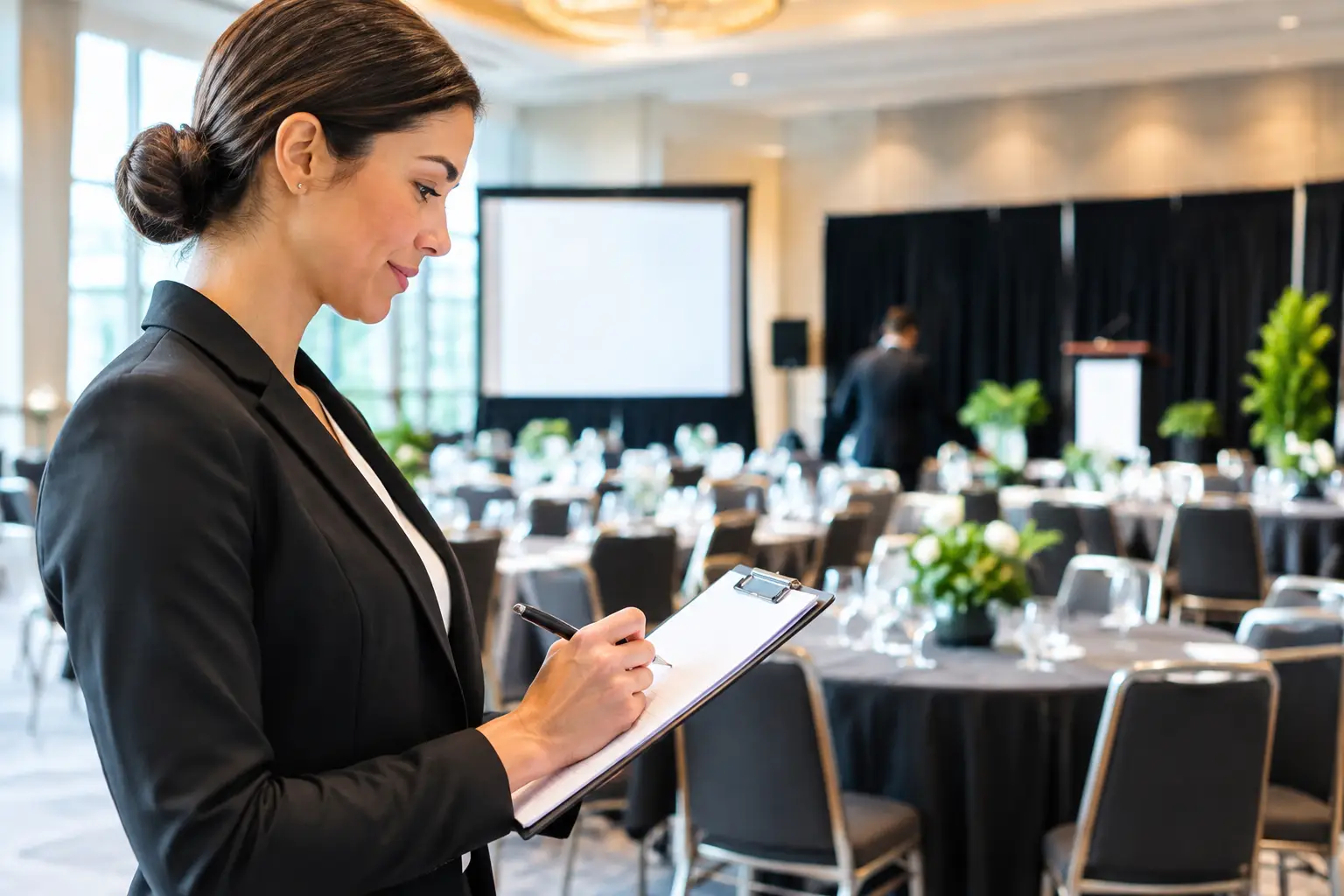
The most useful lighting conversations are specific. Tell the supplier the event date, venue address, guest count, access times, and when guests will arrive and leave. Share a floor plan or photos if you have them. If the event is outdoors, note whether the site has reliable mains power, level ground, vehicle access, and established structures for mounting lights.
Then confirm the practical details. Who installs the equipment? Who supplies power distribution? Are cable ramps or cable covers included where guests cross? Does the scope include a lighting technician or onsite contact if the event has programmed cues? What happens if rain, wind, or a late venue change affects the plan?
For a wedding or private party, you may not need a technician standing by all night. For a conference, live performance, awards night, or product launch, support can be worth the cost. If lighting cues are tied to walk-on music, presentations, performers, or a reveal, someone needs clear responsibility for running them.
Avoid the common lighting shortcuts
The first shortcut is treating lighting as the last item on the checklist. By then, the marquee location, stage position, catering tent, and furniture layout may already limit where fixtures and cables can go. Lighting works better when it is planned alongside the site layout.
The second is choosing only decorative lighting. Warm strings and table lamps can look great in photos, but guests still need to find the restroom, read signage, navigate steps, and see where they are going after dark.
The third is assuming household power will cover everything. A few LED fixtures may be fine. Add heaters, audio, catering equipment, refrigeration, and a larger lighting design, and the available circuits can become a constraint. This is where a proper power plan prevents nuisance trips and mid-event outages.
Finally, do not underestimate setup time. A small package can be placed quickly. A site with overhead lighting, truss, stage fixtures, cable protection, and temporary power needs an orderly build window and appropriate crew access. The best result rarely comes from rushing it in after every other supplier has arrived.
Build for the event you are actually hosting
Good event lighting hire packages are not defined by the longest equipment list. They are defined by coverage, control, safe installation, and the right level of support for the event. A family celebration may need a clean, warm setup that is ready before guests arrive. A formal or festival may need technical planning from the first site visit.
Start with the venue and the schedule, then identify the areas that must be practical, the spaces that should feel memorable, and the equipment that needs power. Give your hire team those details early. You will get a clearer quote, a better-looking event, and far fewer decisions to make in the final week.