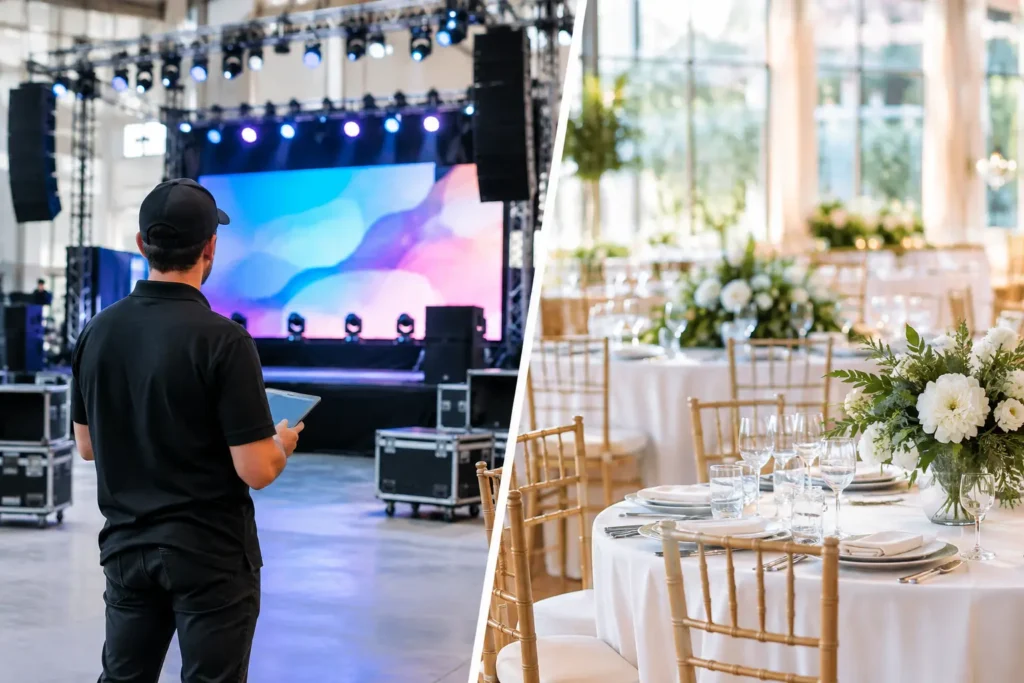
A great event can look simple from the guest side: chairs are in place, music is clear, lights come on, and the bar is ready. Behind that result, though, are two different jobs that are often confused. Event production vs party hire is not a choice between a professional event and a good-looking one. It is about knowing what needs to be managed behind the scenes, what guests need around them, and where those responsibilities overlap.
For a backyard birthday, party hire may be the whole answer. For a wedding with a ceremony stage, a corporate launch with presentations, or a festival with multiple vendors, production becomes part of the foundation. Getting the distinction right early prevents last-minute gaps in power, access, safety, staffing, and setup timing.
What party hire covers
Party hire creates the practical guest environment. It is the equipment people see, use, and remember: tables, chairs, cocktail furniture, linens, bars, marquees, tents, heaters, decorative lighting, and styling pieces. The brief is usually built around guest numbers, venue layout, weather, comfort, and the look you want to achieve.
If you are hosting 60 people at home, party hire might involve a marquee, dining tables, chairs, glassware, heaters, and a delivery window that works around your catering team. For a wedding, it may also include ceremony seating, a signing table, lounge furniture, and a wet-weather structure. These are major components of the event, but they do not automatically cover the technical work required to run a show.
Party hire can be straightforward, but it still benefits from good planning. A marquee needs a suitable footprint and safe anchoring. Furniture delivery needs a clear path from the truck to the setup area. Heaters need appropriate placement and fuel arrangements. The more specific the site information, the more accurate the equipment recommendation and quote will be.
What event production covers
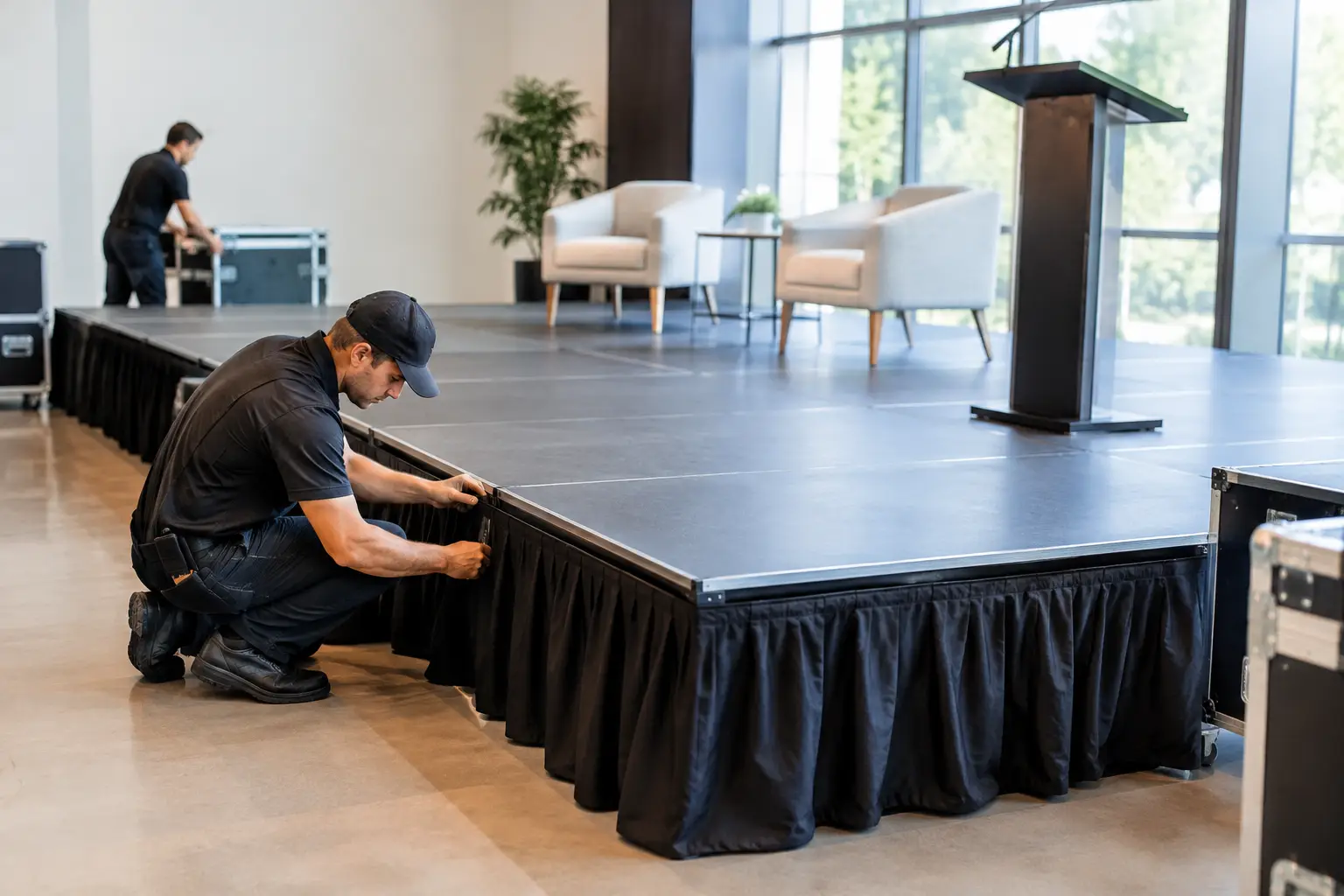
Event production manages the systems that make an event operate safely and reliably. This can include staging, sound, microphones, screens, AV, generators, power distribution, rigging, site plans, load calculations, compliance coordination, permits, and technical crew.
Production is less about adding equipment for the sake of it and more about solving real site and program requirements. A speaker needs to be heard at the back of the room. A band needs monitored power and a stable stage. Food vendors need enough electrical capacity without compromising the lighting or AV. A structure may need engineering review, permits, or a plan for wind and changing weather.
At a larger event, production is the work of connecting all those moving parts. It considers where cables run, how equipment is protected from public access, when suppliers can bump in, who has site authority, and what happens if the mains power is unavailable. These details are rarely visible in event photos, but they are often the reason the event runs on time.
Event production vs party hire: the practical difference
The quickest way to separate the two is to ask two questions. What do guests need to sit, eat, gather, and stay comfortable? That is party hire. What does the event need to operate, present content, manage risk, and support performers or suppliers? That is event production.
The distinction is not always clean-cut. Festoon lighting can be styling, but it also needs safe power and installation. A marquee is party hire, while its engineering, emergency access, and lighting plan may need production input. A stage may support a wedding ceremony in the afternoon and a band at night, so it sits directly between guest experience and technical delivery.
That is why separate suppliers can create friction. One team may supply a structure without knowing the power plan. Another may arrive to install AV without confirmed rigging points or a clear cable route. Neither problem is impossible to fix, but both can cost time and create avoidable pressure during setup.
When party hire is enough
For contained events with no formal program, party hire is often all you need. Think of a casual backyard lunch, a small engagement party, a children’s celebration, or a dinner where the venue already provides sound, lighting, power, and weather protection.
You may need furniture, a few tables, a canopy, heating, and some simple decorative lighting. The key is to be honest about the event conditions. An outdoor evening event with a caterer using electric equipment may not stay simple once guest comfort and power demand are considered.
Party hire also works well when a venue has an experienced in-house events team and fixed infrastructure. If the room already has suitable lighting, an installed PA, approved staging, and sufficient power, your hire requirements may be focused entirely on furniture and presentation.
When you need production support
Bring production into the conversation when your event includes a technical program, a temporary site, a large audience, or several suppliers working at once. It is particularly useful for outdoor sites, warehouses, parks, car parks, regional properties, and spaces that were not designed as event venues.
Production support is usually warranted if you need a stage, speeches or live music, projection or screens, generators, multiple food vendors, significant lighting, overhead rigging, or permits. The same applies when public safety, engineering documentation, noise restrictions, and access schedules need active coordination.
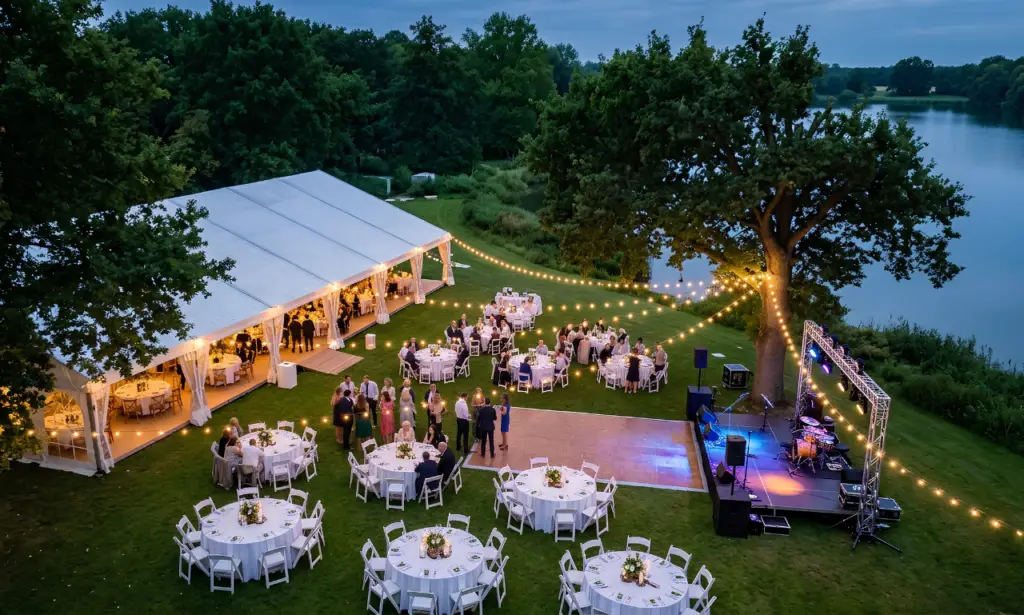
A festival is an obvious example, but corporate and private events can reach the same level of complexity. A product launch may need branded structures, AV, a presentation stage, catering power, and a tightly timed install. A wedding on a private property may need a marquee, toilets, lighting, a dance floor, a band stage, generators, and wet-weather contingencies. These are not just hire orders. They are operating plans.
Why one coordinated provider changes the process
Using one booking desk for party hire and production does not mean every event needs a huge crew or a complex package. It means the people quoting your chairs and marquee can also account for the stage, power, sound, delivery sequence, and pack-down requirements.
That coordination matters most where equipment connects. For example, a production team can calculate generator capacity based on the actual event load instead of guessing. Delivery and installation can be scheduled around venue access and other suppliers. The crew can test systems before guests arrive rather than leaving technical checks to the final hour.
At Zero Three Party & Event Hire, the practical aim is simple: one coordinated quote, one delivery plan, and clear accountability from setup through collection. You can hire a straightforward party package, add technical support where it is needed, or plan the full site with one team that understands both sides of the event.
Start with the site, not the shopping list
Clients often begin with a list of items they have seen at another event. That is useful, but the site should lead the plan. Share the date, location, guest count, event timing, access conditions, and what is happening during the program. If it is outdoors, include available power, surface type, nearby trees or overhead services, and a wet-weather plan.
Those details determine whether a standard package will work or whether the event needs additional infrastructure. They also help identify lead times. Some dates and high-demand periods require earlier booking, especially when custom staging, generators, marquees, permits, or technical crew are involved.
A good provider should ask direct questions, not make you decode technical language. You do not need to know the generator size or calculate electrical loads yourself. You do need to flag anything that could affect the plan: a narrow driveway, a second-floor venue, a live band, a council-managed site, or a ceremony that cannot be delayed.
Plan for the handoffs guests never see
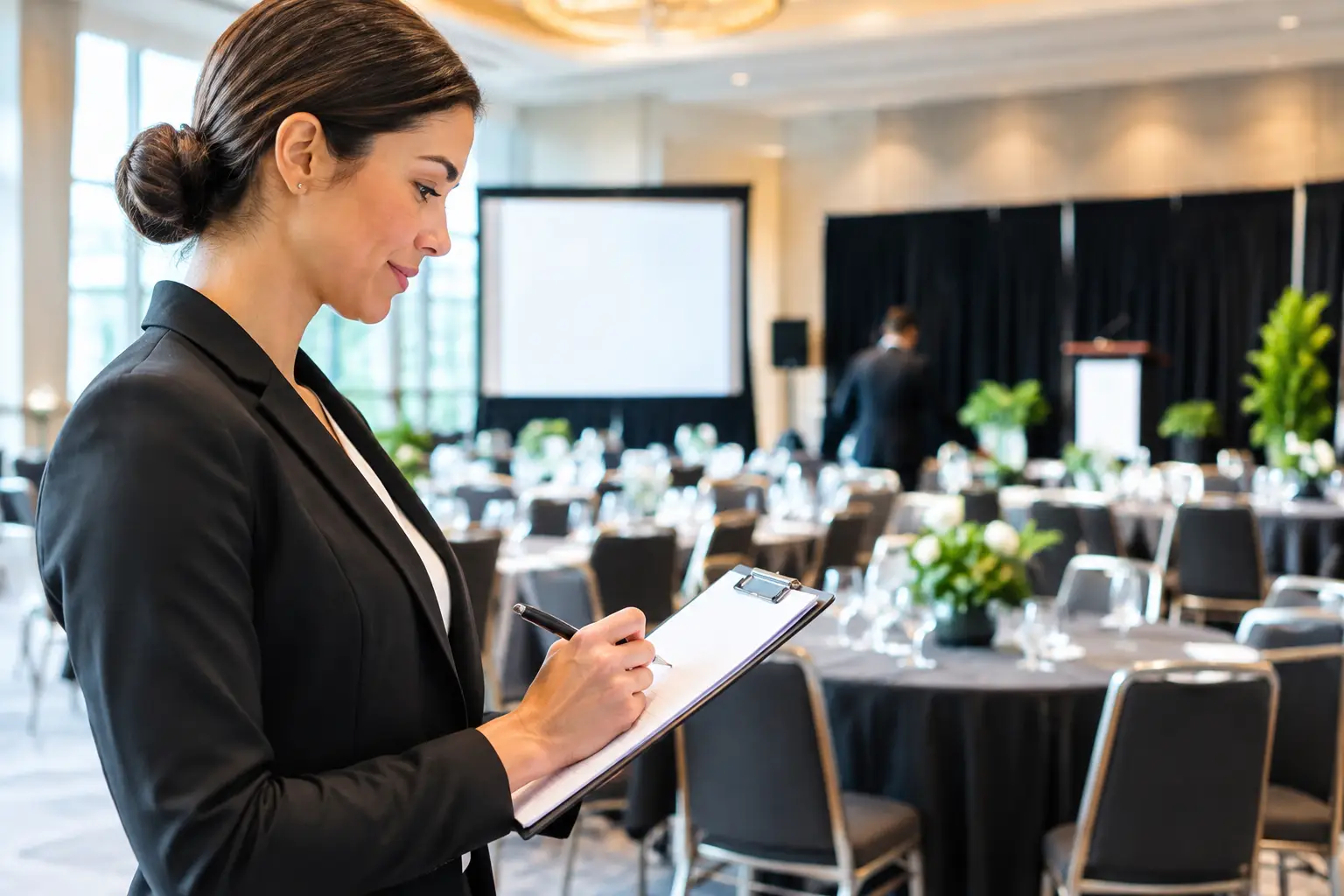
The most useful event plan is not the prettiest floor plan. It is the one that shows how equipment arrives, where it is installed, who signs off, and when each area is ready for the next supplier. Catering, florals, AV, furniture, entertainment, and security all need room to work.
Build in time for testing before doors open. Confirm who controls the venue power, where waste and pack-down equipment go, and whether equipment must be removed immediately after the event or can be collected the following day. Small answers early make show day calmer.
Tell your hire team the date, the site, and the kind of experience you want guests to have. From there, the right mix of party hire and production can be planned around the work that actually needs doing, so you can spend event day welcoming people instead of solving infrastructure problems.