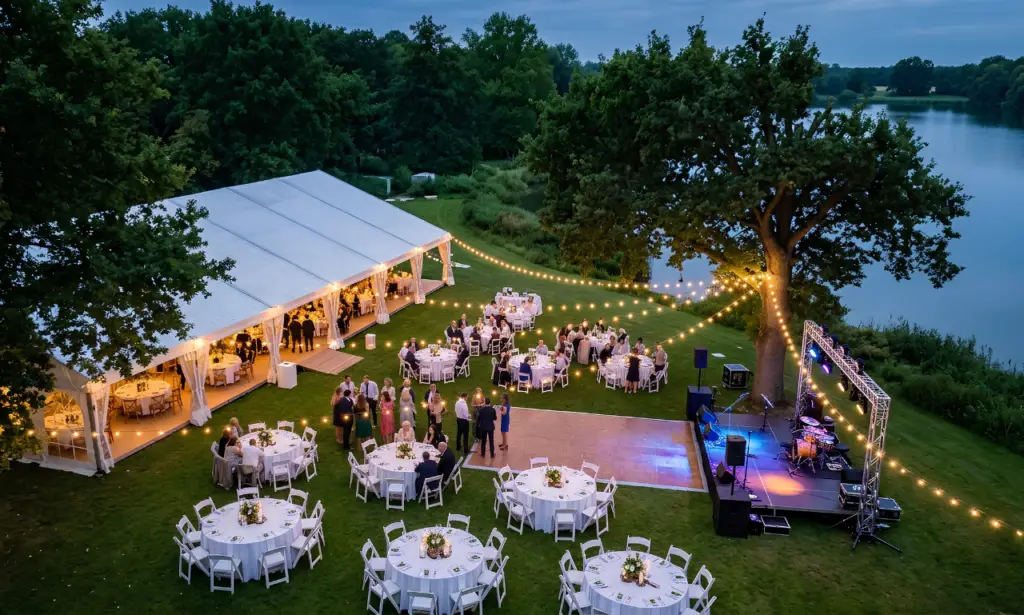
A festival site can look simple on a plan: a stage, food vendors, bars, tents, toilets, seating, and an entry gate. On the ground, every one of those elements needs access, power, safe placement, weather planning, and a clear path for people and vehicles. That is why festival site setup needs to begin with site conditions, not just a wish list.
The strongest sites feel easy to move through because the hard decisions were made before the first truck arrived. Guests find shade, staff can restock bars, performers reach the stage, and emergency access stays clear. That takes practical sequencing and one team that knows what is happening across the whole site.
Start With the Ground, Access, and Site Boundaries
Before allocating equipment, walk the venue with the event footprint in mind. Measure usable space rather than relying on an online map or a rough property boundary. A paddock, park, car park, or showground can change quickly once slopes, drainage lines, soft ground, trees, underground services, and vehicle routes are accounted for.
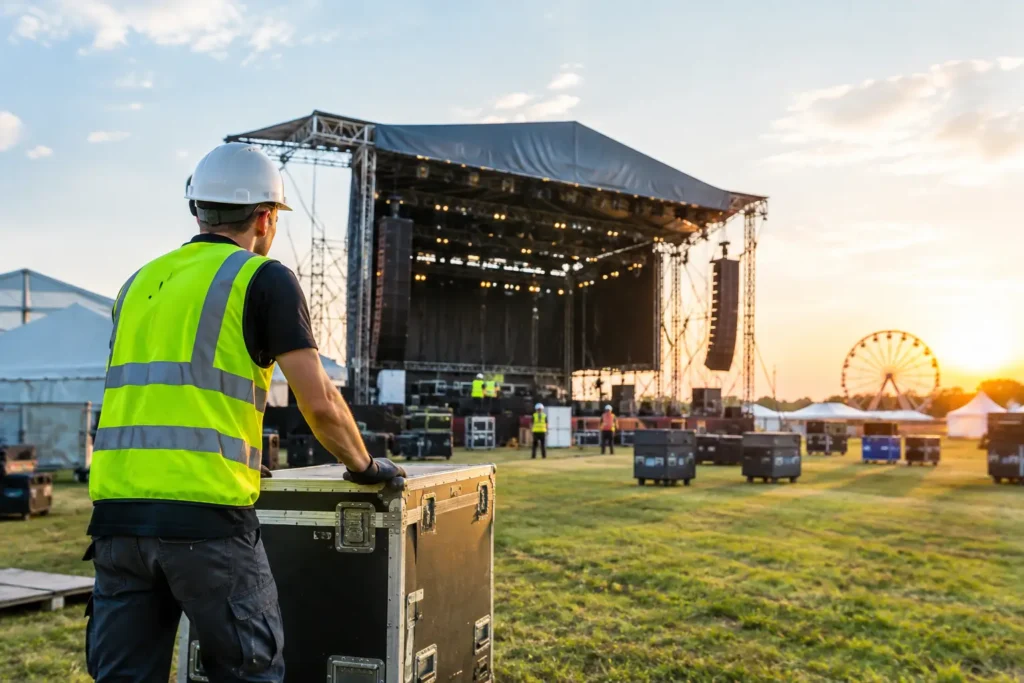
Identify where trucks enter, turn, unload, and leave. A 3-ton truck cannot be treated like a passenger car, and a narrow gate may dictate the order in which structures, staging, and equipment arrive. If a marquee needs to go up before the stage truck can reach its position, that needs to be known early. Delivery access is part of the build plan, not an afterthought.
Set the public boundary, back-of-house areas, crew parking, artist access, and emergency lanes before placing guest-facing equipment. It is much easier to preserve a fire lane on a drawing than to reopen one after food stalls, fencing, and tables are installed. For public events, confirm local requirements around permits, occupancy, noise, liquor service, sanitation, and traffic management while there is still time to adjust the plan.
Build the Festival Site Setup in the Right Order
A festival build works best when each crew has a clear handoff point. Trying to install every element at once creates blocked access, repeated moves, and avoidable damage. The exact sequence depends on the site and event size, but the principle stays the same: establish the infrastructure first, then build the experience around it.
Start with site marking, fencing, and vehicle routes. Then place major structures such as stages, large tents, marquees, and production compounds. These items define the usable footprint and usually require the most room for installation.
Once the main structures are in position, install power distribution, lighting, rigging, AV, and technical equipment. Cables need protected routes that do not cut across guest walkways or vendor service lanes. Generators need suitable locations for ventilation, noise management, fuel access, and weather protection. Do the power calculation before equipment is ordered, not when a caterer asks for another outlet on show morning.
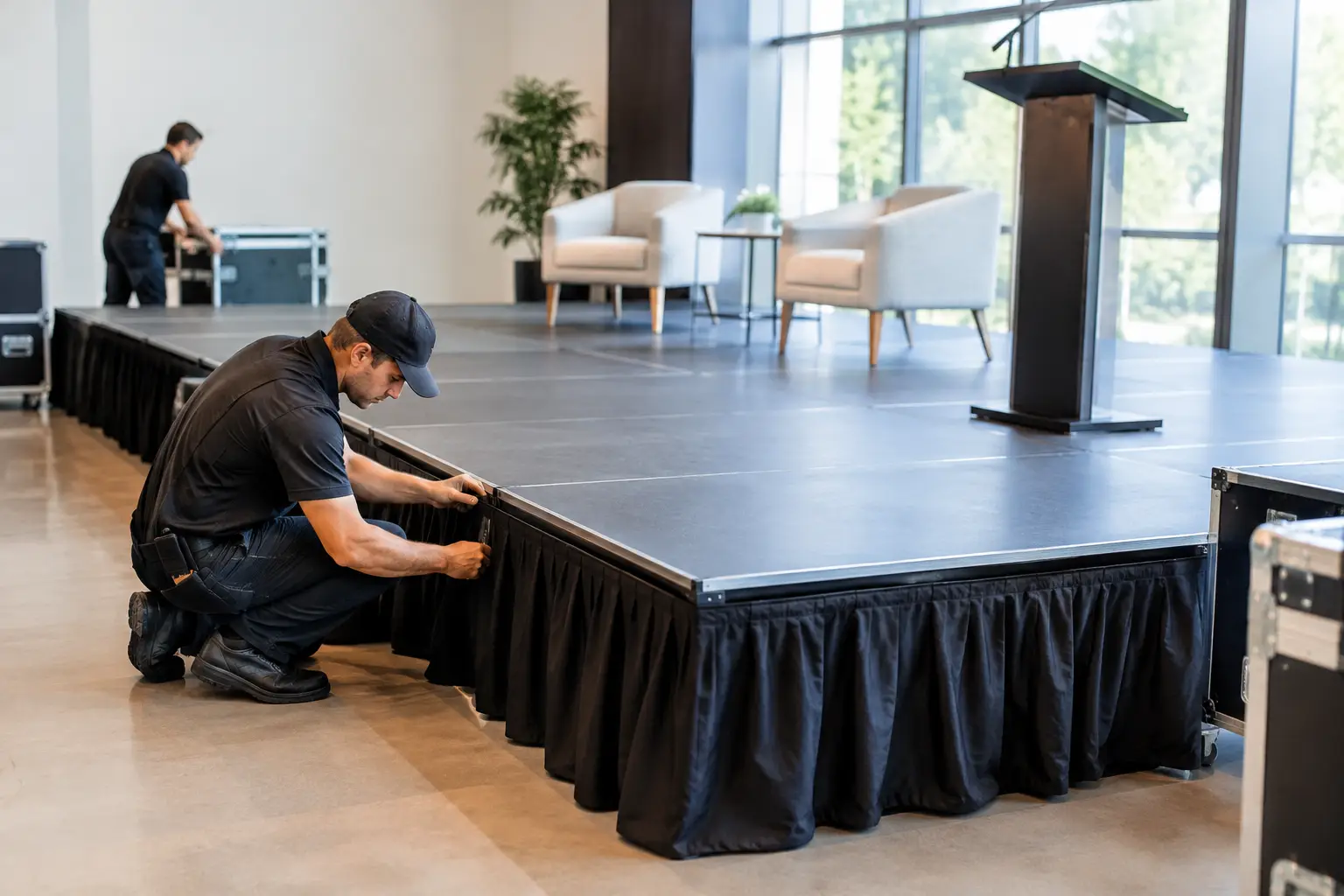
Guest furniture, styling, portable heating, signage, bins, and smaller tents can follow once the heavy work is complete. This order protects hire equipment, keeps pathways open, and gives the site a cleaner final finish. It also means the technical team can test systems without guests or vendors working around them.
Plan Power for Real Operating Loads
Power is one of the most common pressure points on a festival site. A generator may appear large enough, yet the site can still experience issues if loads are not calculated, circuits are poorly allocated, or high-demand equipment starts at the same time.
List every item that needs power, including stage audio, lighting, LED screens, refrigeration, cooking equipment, POS terminals, charging stations, vendor equipment, site offices, and toilet trailers. Ask vendors for their actual power draw and connection type. “Standard power” is not enough information when multiple food vendors are running refrigeration and cooking appliances throughout the day.
Separate critical production power from general vendor and guest services where possible. The main stage should not lose sound because a coffee machine trips a circuit elsewhere on site. Include capacity for late additions, but do not oversize blindly. The right solution depends on the load profile, running hours, cable distances, and whether the venue has reliable mains power available.
Every cable route should be planned for people as well as electricity. Use ramps where cables cross pedestrian areas, protect connections from weather, and keep distribution boards accessible to qualified crew. Test the system before gates open, then have a response plan for faults during the event.
Design for Weather Without Letting It Dictate the Experience
Outdoor festivals need a weather plan that covers heat, rain, wind, and cold conditions. A weather plan is not simply ordering a few extra tents. It is making sure structures are suitable for the location, correctly weighted or pegged, and installed in line with manufacturer requirements and site conditions.
Shade should be placed where people will actually need it: queue lines, dining zones, family areas, bars, first aid, and backstage spaces. In hot weather, guests will crowd any available cover, so allow enough room for circulation rather than putting one small shelter beside a large open lawn.
For rain, think about drainage and ground protection. Water will follow the lowest point on site, which may be directly through a vendor lane or in front of the stage. Raised flooring, matting, cable protection, and sensible placement can make a major difference. For wind, establish thresholds for umbrellas, temporary signage, lightweight furniture, and certain structures. The site manager should know who makes the call if conditions change.
Give Guests a Site They Can Read Instantly
A good festival layout reduces questions before they are asked. Entry should be visible and controlled. Ticketing, bag checks, wristbands, and security need enough room to operate without causing a queue across a public footpath or access road.
Once inside, guests should quickly understand where to find the stage, food, bars, toilets, water, first aid, and exits. Signage matters, but layout does more of the work. Place high-demand services where they are easy to find without creating one congested center point.
Keep food and beverage areas close enough to the action to feel connected, but far enough from stages that queues do not block viewing areas or sound control positions. Allow vendors a rear service path for stock deliveries and waste removal. A vendor who has to push supplies through a crowd will slow down service and create unnecessary risk.
Accessibility belongs in the first site drawing. Consider step-free paths, accessible toilets, viewing areas, seating, parking, and clear travel routes from arrival to key festival zones. These choices improve the experience for more than the guests who specifically require them. Parents with strollers, people carrying food, and older guests all benefit from a site that is easy to navigate.
Treat Safety Checks as Part of the Build
Safety is not a final walk-through after the site looks finished. It is built into every installation decision. Confirm that structures are secure, staging is stable, exits are open, fire equipment is in place, and emergency access has not been compromised by last-minute additions.
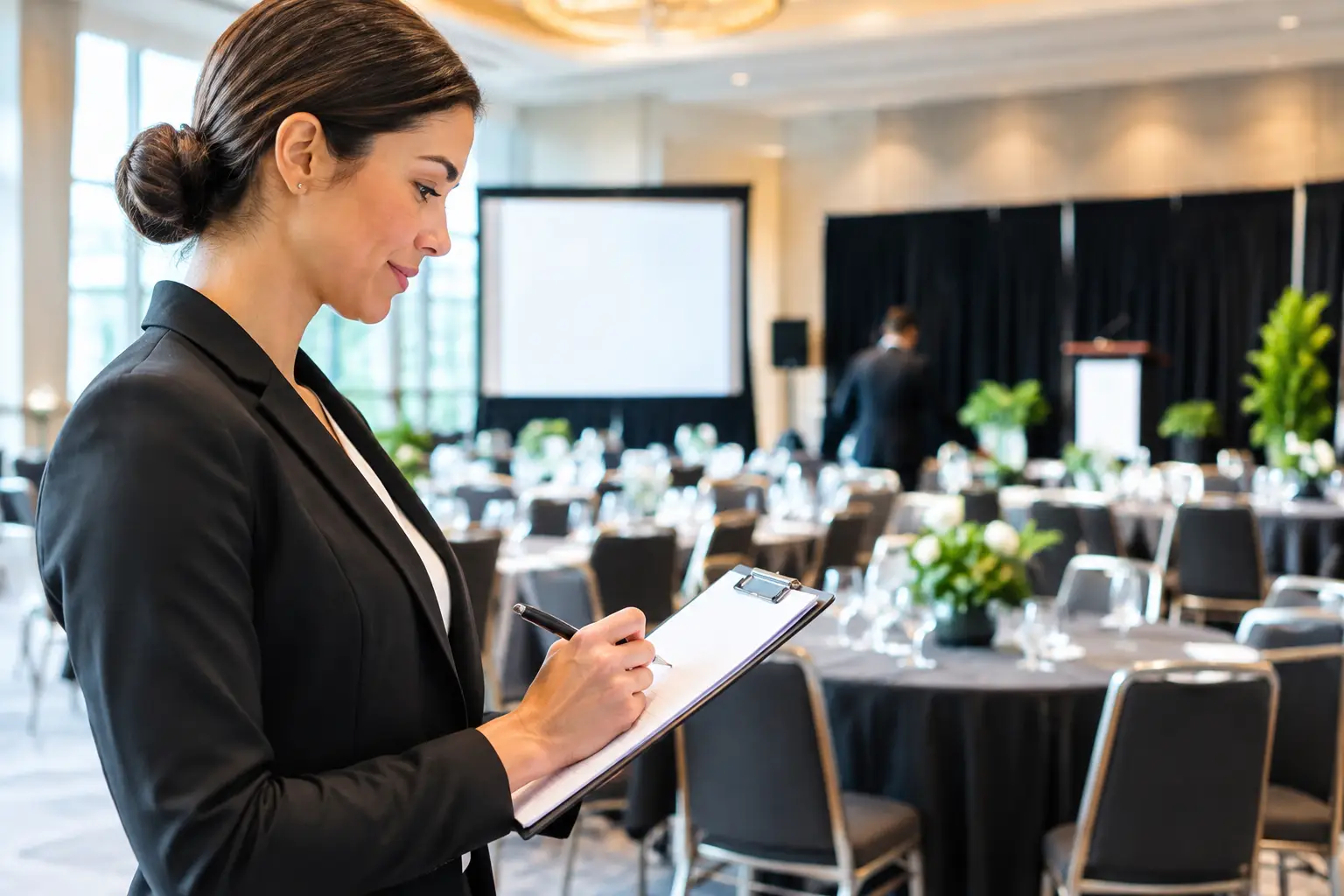
A practical pre-opening check should cover power, cable protection, lighting, fencing, signage, trip hazards, sanitation, waste areas, weather readiness, and communication between site management, security, medical staff, and technical crew. Keep a record of what was checked and who is responsible for any outstanding action.
The same discipline applies after gates open. Equipment shifts, queues grow, weather moves in, and vendors change their setup. Schedule site checks during the event rather than assuming the morning inspection will cover the full day.
Make Pack-Down Part of the Original Plan
Pack-down is easier when it has been designed into the setup. Confirm collection windows, vehicle access after the event, waste removal responsibilities, and what equipment must stay in place until guests have left. Rushing trucks onto site while people are still departing is a poor finish to a well-run day.
Equipment should be checked, cleared of waste, and grouped for collection where practical. If the site has multiple suppliers, appoint one person to coordinate departures so trucks are not competing for the same narrow access point. A single hire and production partner can simplify this, with one delivery schedule, one site contact, and one crew accountable for the equipment they install.
At Zero Three Party & Event Hire, that coordination can cover the guest environment and production infrastructure together, from marquees and furniture to staging, power, lighting, and pack-down. Tell the team the date, location, expected crowd, and site constraints early. The better the site information, the cleaner the build.
A festival is remembered for the crowd, the program, and the atmosphere. But those moments depend on a site that keeps working quietly in the background, right through the final collection truck.