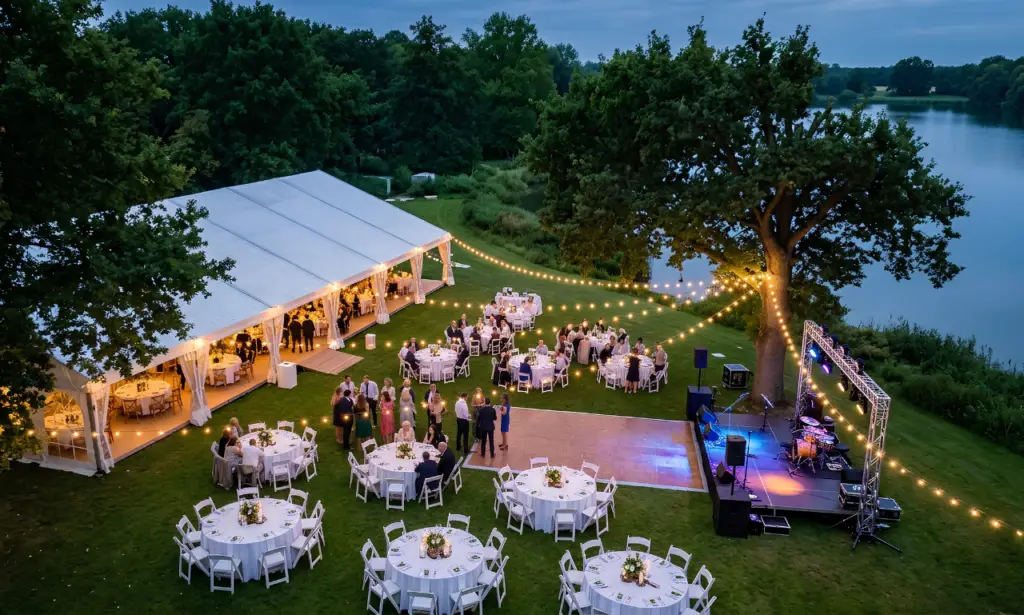
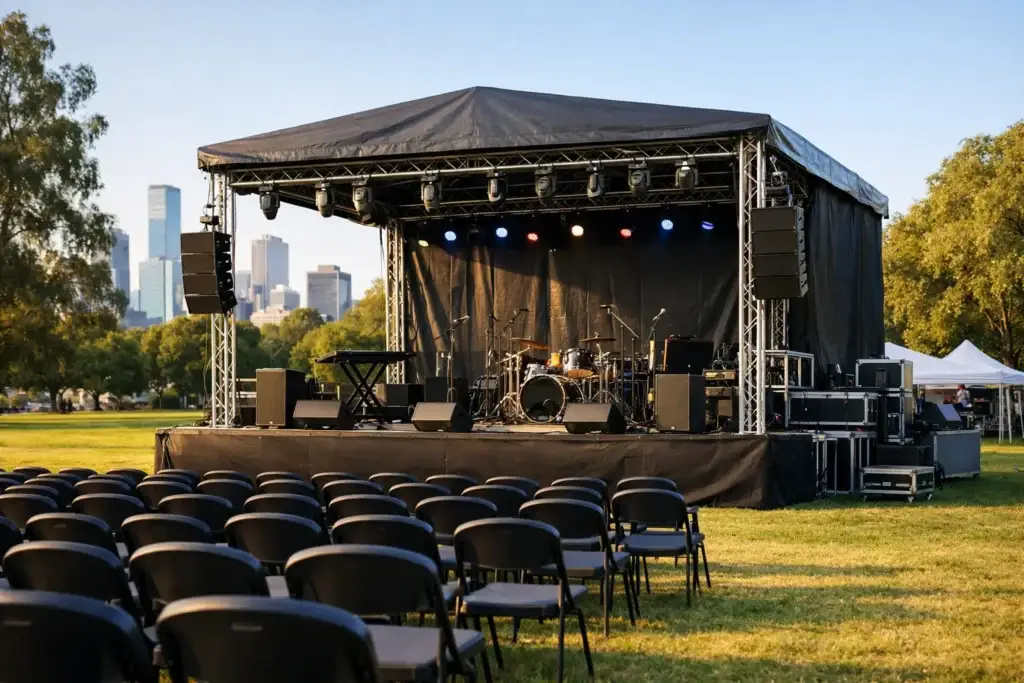
A stage can look straightforward on a site plan. On an open lawn, car park, school oval, winery, or foreshore, it becomes a production structure with real demands: ground conditions, wind exposure, vehicle access, audience flow, power, and safe working space for performers and crew. Getting outdoor stage hire Melbourne right starts with those details, not a photo of the stage you like.
For a backyard band, a small raised platform may be all that is needed. For a council event, festival, product launch, or wedding with live entertainment, the stage needs to work as part of a broader site system. That includes the roof, sound, lighting, generators, barricades, furniture, weather protection, and the people installing it all.
Start With What Needs to Happen on Stage
Stage size should follow the performance, not just the crowd number. A solo musician with a compact PA has very different space requirements than a six-piece band, DJ booth, lectern, dance group, or panel discussion. Allow for instruments, monitor speakers, cable runs, access steps, and crew movement as well as the people in front of the microphone.
Think about the moment that puts the most pressure on the stage. It may be a band changeover, an awards presentation with ten people on stage, or a keynote speaker who needs a clean sightline to a large audience. That moment usually determines the deck area, roof coverage, stairs, and backstage arrangement.
Stage height is a trade-off. A higher platform improves visibility over a seated or standing crowd, but it changes access requirements and can make an intimate event feel more formal. On sloping sites, the audience position and viewing angle matter as much as stage height. A site visit or detailed photos with measurements can prevent the wrong call early.
Build the Brief Before You Request a Quote
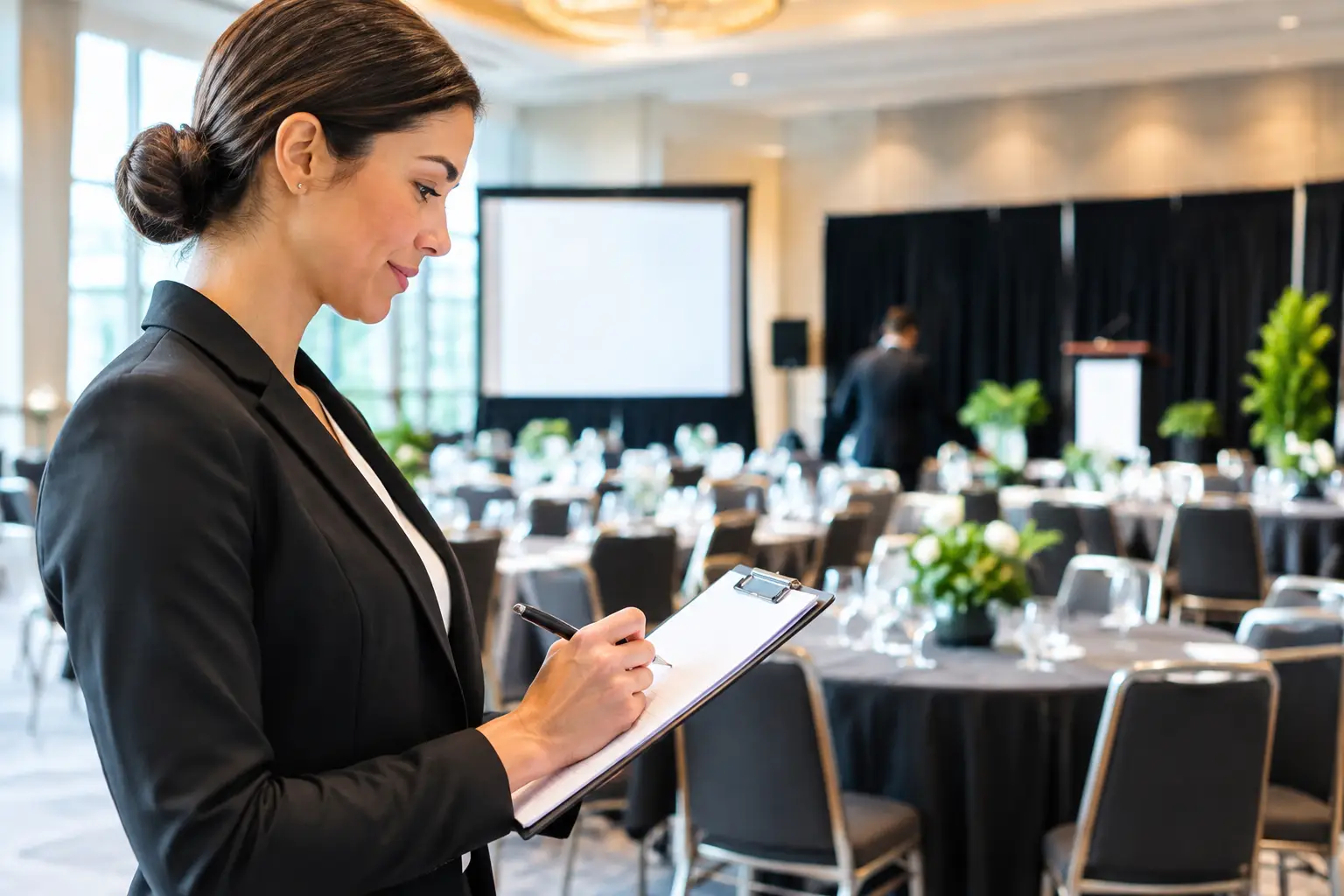
A useful hire brief includes the event date, bump-in and pack-down windows, site address, approximate audience size, performance schedule, and who is appearing on stage. Add site photos, especially the access route from the street or loading area to the proposed stage location.
Also identify what needs to be under the roof. If the stage is protecting musicians, instruments, audio equipment, and lighting, its covered footprint needs to reflect that. A roof that only covers the performers can leave speakers, control positions, or electronics exposed when Melbourne weather changes direction.
Outdoor Stage Hire in Melbourne Needs a Site Plan
Melbourne sites vary quickly. A central city activation may have limited truck access, strict delivery times, and a hard surface that needs protection. A regional festival site may have generous space but soft ground, uneven levels, limited mains power, and a long run between the loading zone and the audience area.
The site plan does not need to be complicated to be useful. It should show the stage location, public entry points, emergency access, toilets, food vendors if relevant, power source, audience area, and vehicle route. It also needs to account for where sound and lighting operators will work. A control position placed too far to one side can compromise both sound quality and the operator’s view of the show.
Ground conditions deserve an early conversation. Staging needs a stable, level foundation. Wet grass, loose gravel, steep gradients, tree roots, and underground services can all affect where a structure can safely sit and how it is installed. A last-minute relocation may also affect cable lengths, generator placement, and permit approvals.
Access is equally practical. Ask whether a truck can enter the site, where it can park, and whether there are gates, low branches, stairs, narrow paths, or weight restrictions. Equipment still has to travel from the truck to the stage. A beautiful lawn at the far end of a property can be workable, but the labor and timing need to be allowed for.
Weather Planning Is Part of the Production
Rain is the obvious issue, but wind is usually the operational concern that needs more attention. A covered outdoor stage catches wind differently from an open deck. Roof systems, scrims, banners, lighting, and signage all need to be selected and managed with the site exposure in mind.
There should be a clear weather response plan before show day. Decide who monitors conditions, what happens if wind limits are reached, where performers and equipment move during a storm, and how the audience receives updates. For smaller private events, this may mean having a nearby marquee or indoor fallback space. For public events, it can involve formal procedures, site management, and communication through event staff.
Do not treat a stage roof as an all-weather solution. It provides useful coverage, but heavy rain can still enter from the sides, and changing conditions may require pauses or alterations to the program. Heating, sidewalls, flooring, and protected technical positions can make a significant difference for shoulder-season events.
Power, Sound, and Lighting Need to Be Planned Together
A stage is only one part of the show. Power requirements depend on the audio system, lighting package, screens, catering equipment, vendors, and any other electrical load on site. Connecting everything to an existing outlet without checking available capacity is not a plan.
For events using generators, power calculations help determine the right unit and distribution setup. Generator placement should balance cable distance, noise, access for refueling where relevant, ventilation, and separation from guests. Cables need to be routed and protected so they do not create trip hazards or block access paths.
Sound requirements also change with the site. A speech-focused corporate event needs speech clarity and appropriate microphone coverage. A live band needs a different PA, monitoring arrangement, and potentially a larger stage footprint. In residential areas, sound limits and finish times may shape the whole program, not just the speaker volume.
Lighting is often underestimated for daytime events. Even when the main program starts before sunset, stage lighting may be needed for camera coverage, presentations under a roof, or a schedule that runs late. Build enough flexibility into the system that the event still looks intentional when daylight drops faster than expected.
Permits, Compliance, and Public Safety
Requirements depend on the venue, council area, event scale, expected attendance, structure type, and whether the event is public or private. Larger sites may require permits, public liability documentation, engineering information, traffic management, emergency planning, or coordination with venue and council teams.
The best approach is to identify those requirements early rather than trying to add them during the final week. Some approvals take time, and the structural or operational details may influence the equipment selection. This is especially true when the plan includes stage roofs, rigging, generators, road closures, large crowds, or temporary fencing.
Public safety is not limited to the stage itself. Consider stairs and handrails, backstage access, crowd barriers, cable protection, emergency egress, fire extinguisher locations, and the separation between performers, crew, vendors, and guests. A clean event site is easier to manage and feels more professional from the moment guests arrive.
One Coordination Point Reduces Show-Day Friction
Splitting staging, sound, power, marquees, furniture, and lighting across multiple suppliers can work. It also creates more handoffs, more delivery windows, and more opportunities for a gap between one supplier’s scope and another’s. The issue is rarely the equipment itself. It is who owns the coordination when the stage position changes, rain arrives, or a cable route conflicts with guest access.
Zero Three Party & Event Hire brings production equipment and guest-facing hire items through one coordinated booking process. That means the stage can be planned alongside generators, sound, lighting, marquees, seating, tables, heating, and site access from the beginning. You have clearer timing for delivery, installation, testing, and collection, without needing to reconcile separate plans on site.
For a simple celebration, that may mean a tidy stage, speakers, lighting, and chairs delivered to a backyard. For a larger event, it can mean detailed staging, power distribution, rigging, technical support, permit coordination, and a crew that understands the broader site plan.
Give the Crew Time to Do It Properly
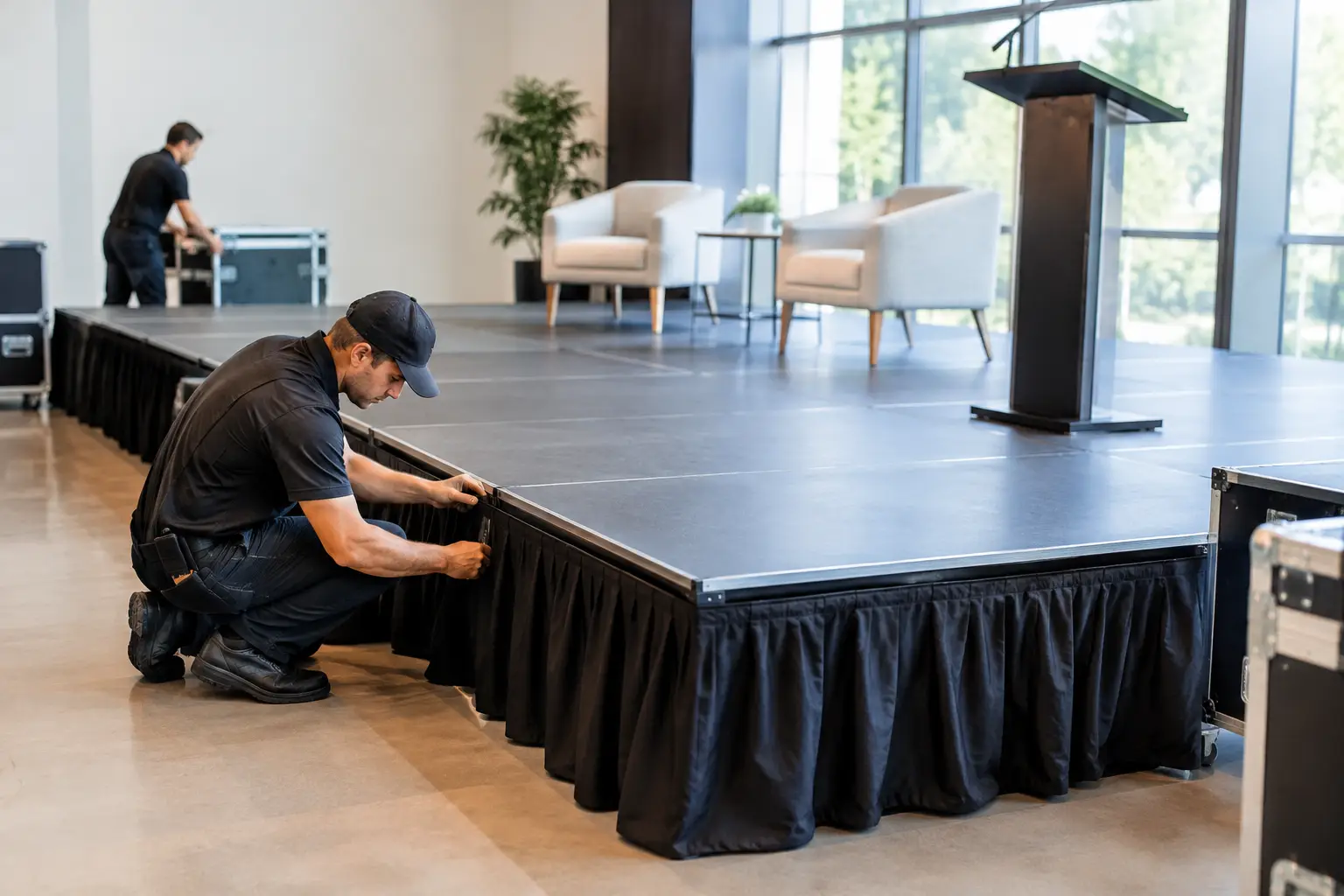
Outdoor events run better when installation is not squeezed into the hour before guests arrive. Bump-in time is needed to unload, build, level, test power, run audio checks, focus lighting, secure the site, and make adjustments before the program begins. Pack-down needs the same consideration, particularly where noise restrictions, venue curfews, or public access apply.
Tell the team the date, location, audience size, and what needs to happen on stage. Then share the constraints, not just the wish list. A realistic plan gives the crew room to solve problems before they become visible to your guests – which is exactly how an outdoor event should feel when the first person steps on stage.