A search for “sound system hire wedding” usually starts with one concern: will every guest hear the vows, speeches, and music without feedback, dropouts, or someone scrambling for a cable? That is the right concern. Wedding audio should feel invisible when it is working well, but getting there takes more than placing two speakers beside the dance floor.
A wedding often moves through several sound environments in one day. There may be a quiet outdoor ceremony, cocktail music in another area, a high-energy reception, and speeches from people who have never held a microphone. Plan for each moment, then build a system that fits the site, guest count, power access, and run sheet.
Start with the moments people need to hear
Before choosing speakers, list the parts of the wedding that need amplification. The ceremony and reception should not automatically share the same setup. They can, but only if the locations are close enough, the timing allows for a proper changeover, and the equipment is sized for both jobs.
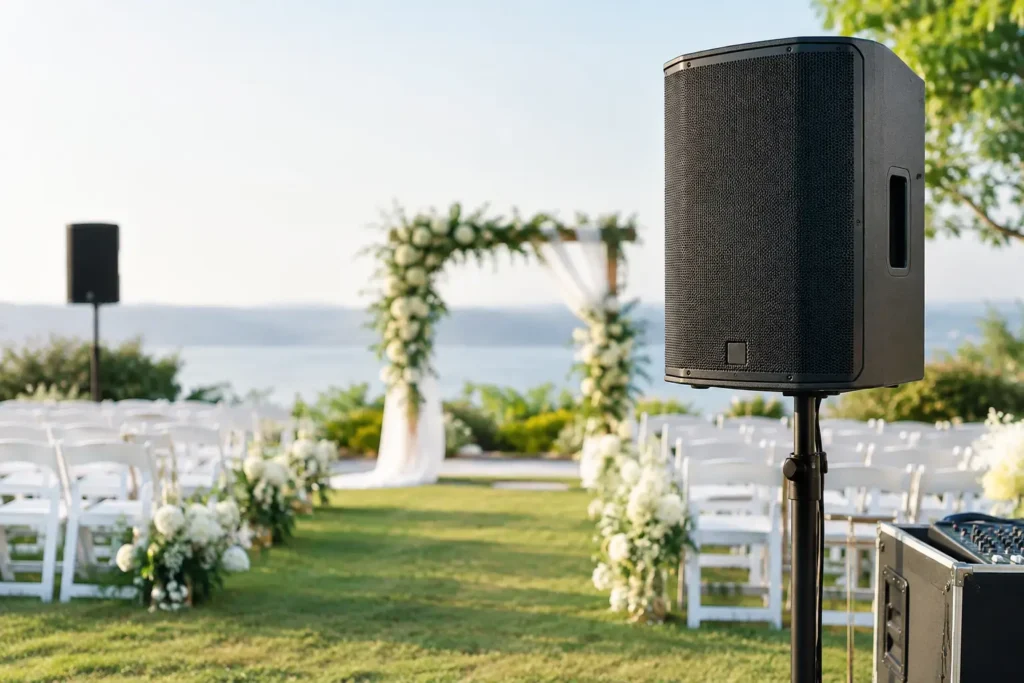
At the ceremony, the priority is speech clarity. Guests need to hear the celebrant, each partner, readings, and any live musicians. A compact PA system with a wireless microphone for the celebrant and a second microphone for readings is often enough for an intimate garden ceremony. For larger guest counts, open lawns, windy sites, or ceremonies near traffic, the system needs more coverage and more control.
At the reception, the priorities change. Background music during dinner needs even coverage at a comfortable volume. Speeches need a reliable handheld wireless microphone. Once the dance floor opens, the system must deliver more energy without making conversation impossible at the far end of the room. A DJ or band may bring their own performance equipment, but that does not always cover the microphone for speeches, ceremony audio, or music in a separate cocktail area.
Ask a simple question for every part of the day: who needs to hear what, and where will they be standing? That answer determines the equipment far better than a generic package name.
Sound system hire for a wedding depends on the room
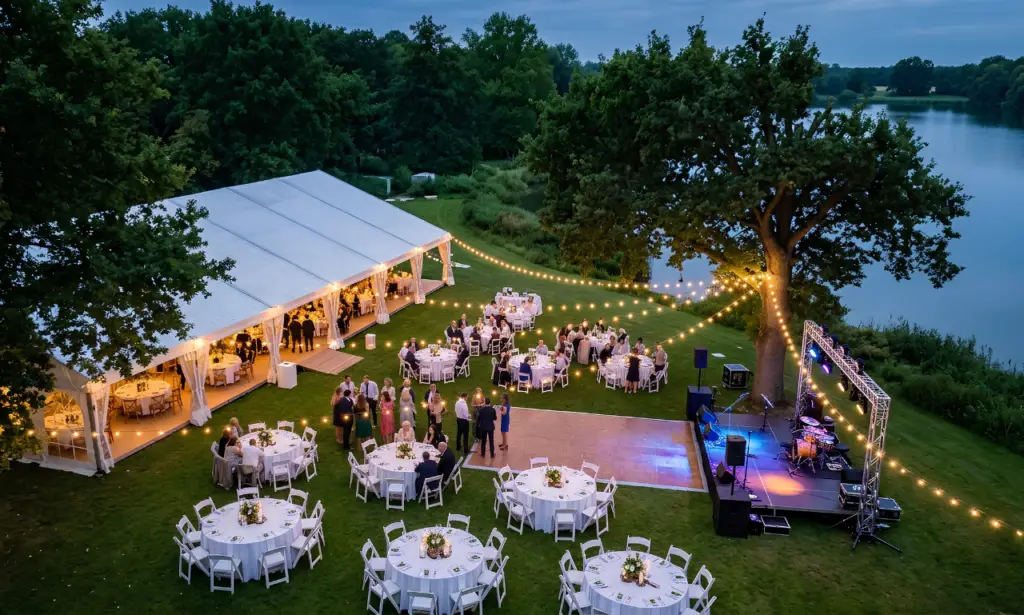
Guest count matters, but it is not the whole story. A 100-person wedding in a low-ceiling reception room needs a different approach from a 100-person wedding spread across a long marquee or a waterfront lawn. Room shape, ceiling height, surface materials, wind, traffic noise, and speaker placement all affect what guests hear.
A hard-surfaced room with glass, concrete, or exposed brick can create echo. More volume is rarely the fix. The better solution may be placing smaller speakers closer to guests and aiming them correctly. In a long marquee, delay speakers may be needed so guests at the back hear the speeches clearly without overwhelming the front tables.
Outdoor weddings bring their own trade-offs. Wind carries sound away, nearby roads add noise, and uneven ground limits where equipment can be placed safely. Speaker stands need stable positioning, cables need to be secured, and equipment needs weather protection. If rain is possible, plan a covered alternative before the crew arrives, not when the first drops fall.
Choose the right equipment, not the biggest package
More equipment does not automatically mean better audio. The right hire package is one that has enough headroom for the venue and program, while staying easy to operate and visually tidy.
For most weddings, the core equipment falls into four areas:
- Speakers suited to the guest area, with stands or ground-based placement where appropriate.
- Wireless microphones for the celebrant, speeches, and readings, plus a backup wired microphone where the event is high stakes.
- A mixer or control point for music playback, microphone levels, and quick adjustments during the program.
- Power distribution, tested leads, cable covers, and protection for outdoor or temporary setups.
A ceremony with 40 guests may only need two compact speakers, a small mixer, and two microphones. A reception for 180 people with a DJ, speeches, and a large dance floor could need main speakers, a subwoofer, monitors for performers, multiple wireless channels, and separate coverage for another guest area.
Be specific about what is providing the music. A phone playlist, laptop, DJ controller, live acoustic act, and five-piece band all connect differently. Confirm inputs in advance and allow time for a sound check. It is much easier to solve a missing adapter or faulty output before guests arrive.
Microphones are where weddings can go wrong
A clear microphone plan is one of the most valuable parts of wedding audio. Wireless handheld microphones are generally the safest choice for speeches because they can be passed easily between speakers. The person speaking should hold it close to their mouth, not at chest level. A technician can explain this in seconds before speeches begin.
Lapel microphones look discreet but are not always the best option. They can pick up clothing movement, wind, handling noise, and low voices. They work well for a prepared celebrant in a controlled setting, but a handheld microphone is usually more forgiving for readings and impromptu remarks.
For the ceremony, consider a dedicated microphone for the celebrant and a second option for readings. If the couple wants their vows amplified, that should be discussed early. Shared microphones can work, but they require confident handling and careful placement. There is no benefit in putting a microphone in front of the couple if it will be more distracting than useful.
Battery management also matters. Professional wireless systems should arrive tested, with fresh batteries or charged packs and a clear plan for spares. This is one area where a low-cost, untested setup can create unnecessary risk.
Do not treat power as an afterthought
A sound system is only as reliable as its power supply. Venue outlets may be limited, shared with catering, or located far from the ceremony area. In a marquee, private property, or remote outdoor site, power needs to be mapped before equipment is selected.
Audio equipment should not be sharing a questionable circuit with heaters, catering appliances, or decorative lighting. Those loads can trip breakers or introduce noise into the system. For larger weddings, a proper power plan may include dedicated circuits, distribution boards, protected cable runs, and a generator sized for the combined load.
This is especially relevant when sound is being coordinated with lighting, staging, a bar setup, or marquee power. One provider that understands the whole site can identify conflicts before delivery day. Zero Three Party & Event Hire can coordinate sound alongside structures, furniture, lighting, staging, and event power, so the layout is considered as one working plan.
Decide whether you need technician support
A simple indoor setup with background music may be suitable for dry hire if someone responsible is comfortable connecting a playlist device, turning on the system, and following clear instructions. That person should not be the couple, the maid of honor, or anyone expected to enjoy the day.
For ceremonies, large receptions, outdoor locations, live performers, multiple audio zones, or tightly timed run sheets, on-site technical support is often the better call. A technician can complete testing, set microphone levels, manage cues, respond to feedback, and handle changeovers between ceremony and reception. They also know when not to turn the volume up.
It depends on the complexity of the wedding and the cost of disruption. If the event includes one microphone and a dinner playlist, a straightforward hire setup may be enough. If a failed microphone would mean guests miss the vows or a room of 150 people cannot hear the speeches, professional support offers useful insurance.
Give your supplier the details early
A good quote starts with practical information, not guesswork. Share the date, venue, guest count, ceremony and reception locations, access times, event schedule, and whether a DJ or band is involved. Photos, floor plans, and a rough site map are useful, particularly for outdoor properties and marquees.
Also flag venue rules. Some venues have sound limits, fixed speaker positions, limited load-in access, or restrictions on cable paths. A supplier needs to know if there are stairs, long distances from parking, soft ground, or a ceremony location that is a five-minute walk from the nearest outlet.
Book early if your wedding falls in a peak season or includes specialist equipment, a technician, marquee infrastructure, or regional delivery. The more moving parts involved, the more value there is in locking in the production plan before the final weeks.
The best wedding sound setup is not the loudest one. It is the one that lets grandparents hear the vows, gives every speaker confidence at the microphone, and keeps the dance floor moving after dinner. Tell your hire team the plan for the day, give them the site details, and let the technical work be handled before the first guest takes a seat.