A speech that cannot be heard, a playlist that drops out during dinner, or a DJ booth with nowhere safe to connect power can change the whole feel of an event. Sound systems are not just about making things louder. They are about making every announcement, performance, and song clear for the people who need to hear it.
For a backyard birthday, that may mean two compact speakers and a microphone. For a wedding, conference, school formal, or festival, it can mean a planned audio system with speaker zoning, staging, power distribution, cabling, and a technician on site. The right setup depends on the event, not the biggest speaker available.
Start With What People Need to Hear
The first question is not, “How many speakers do we need?” It is, “What is happening on the day?” A ceremony with spoken vows needs clear vocal coverage. A corporate presentation needs intelligible speech at the back of the room. A dance floor needs controlled low end without overwhelming guests at the bar or dining tables.
Think about every audio source early: microphones for speeches, a DJ controller, live musicians, video playback, background music, MC announcements, and any venue audio feed. Each source needs the right connection and enough inputs on the mixer. Leaving this until setup day often leads to avoidable compromises.
Guest numbers matter, but they are only part of the calculation. A group of 80 people spread across a long outdoor lawn can require more coverage than 150 people in a contained function room. The shape of the space, ceiling height, hard surfaces, wind, ambient noise, and where guests will actually stand all affect the result.
Sound Systems Need Coverage, Not Just Volume
A good event audio plan creates even coverage across the areas that matter. Guests close to a speaker should not be wincing while guests farther away struggle to hear. That balance comes from speaker selection, placement, aiming, and system tuning.
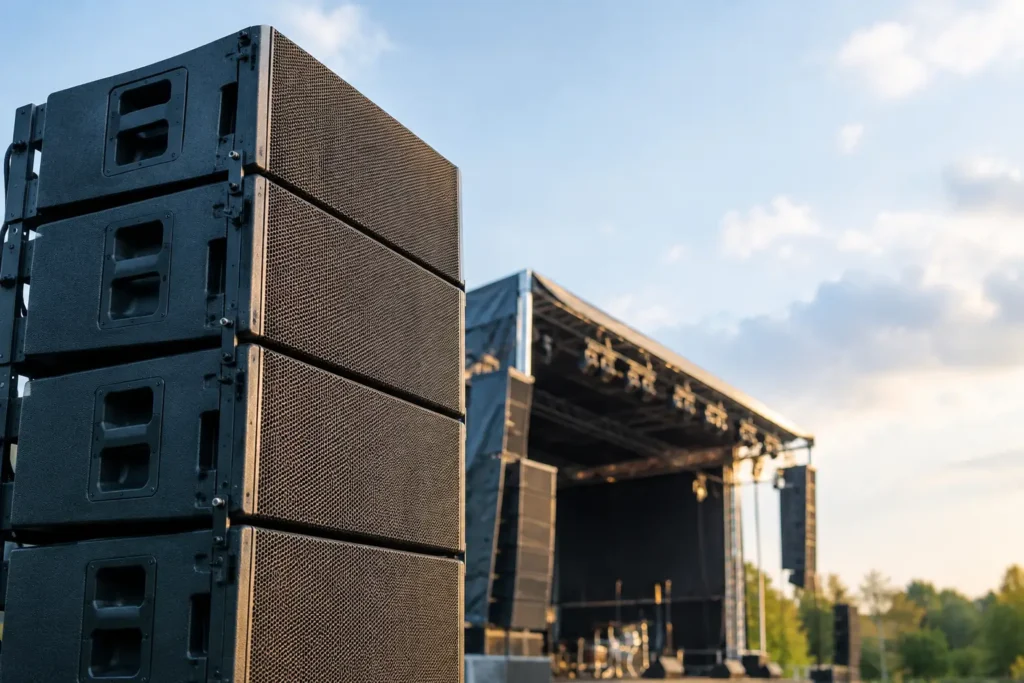
For smaller gatherings, a pair of powered speakers on stands may be enough. They should be positioned above head height, aimed toward the audience, and kept clear of walkways. Placing them on the ground or behind guests wastes sound and creates uneven levels.
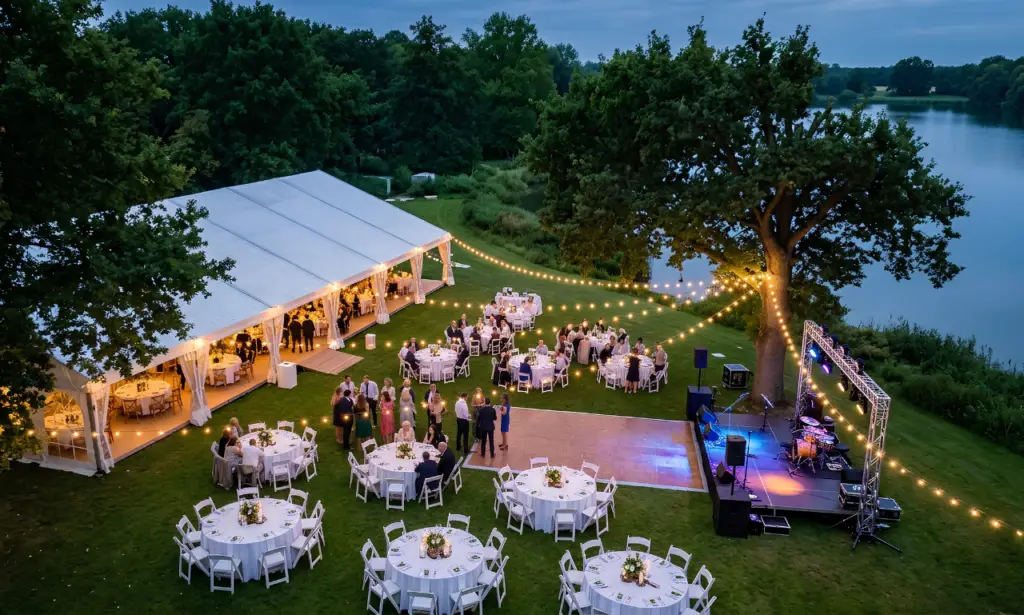
Larger events often need separate zones. The ceremony area, cocktail space, seated dining area, stage, and dance floor may all need different sound levels at different times. Zoning lets the team keep background music comfortable during arrivals, bring up speech reinforcement for formalities, then build energy where it belongs once the dance floor opens.
Outdoor events need extra attention. Sound disperses differently in open air, and wind can carry audio away from the audience. Nearby roads, generators, crowds, and other stages also add background noise. More volume is not always the answer. Better speaker positions, delayed speakers for long sites, and clear stage orientation can make a bigger difference.
Speech Is Less Forgiving Than Music
Music can still feel acceptable when it is slightly uneven. Speech cannot. If guests miss a name, a safety instruction, a wedding vow, or an award announcement, the moment is gone.
Wireless microphones are useful for MCs, presenters, and ceremonies, but they need planning. Radio frequency conditions, battery changes, microphone handling, and range all matter. A handheld microphone may suit a confident MC, while a lapel or headset microphone can suit a presenter who needs both hands free. Live vocalists may require dedicated microphones and foldback monitoring so they can hear themselves perform.
Never assume a microphone alone solves speech coverage. It still needs a suitable speaker system, a mixer, correct gain settings, and a soundcheck with someone speaking at a normal event volume.
Match the System to the Venue and Event Format
Indoor venues can introduce echoes and reflections, especially in halls with concrete, glass, or high ceilings. Clear speech in these spaces may require carefully aimed speakers at moderate levels rather than one loud system pointed across the room. A site visit or venue plan helps identify where sound will travel and where it may become muddy.
At private homes, access can be the deciding factor. Crews may need to move equipment through side gates, up stairs, across lawns, or around pools. Outdoor setups also need weather protection and a safe plan for cable runs. A polished setup should not leave extension cords crossing guest paths or speakers perched on unstable furniture.
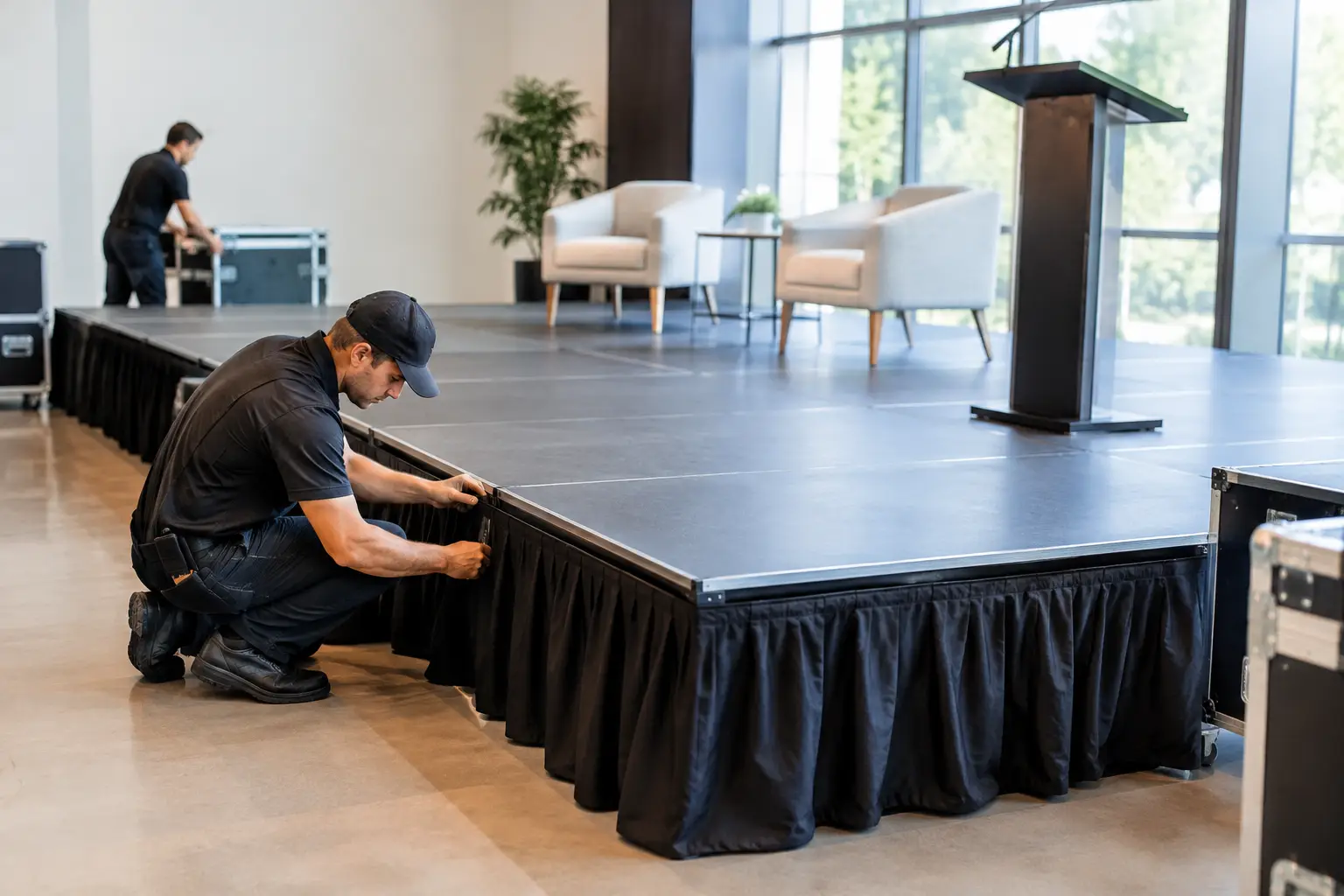
For public events and festivals, audio becomes part of a wider production plan. Stage size, roof structure, lighting, generators, cable paths, crowd barriers, emergency access, noise limits, and permits all connect. This is where using one coordinated provider can remove a lot of back-and-forth between separate vendors.
Zero Three Party & Event Hire can coordinate sound alongside staging, power, lighting, marquees, furniture, and site infrastructure, so the physical layout and technical plan are working from the same event brief.
Power Is Part of the Audio Plan
Every sound system needs reliable power. That sounds obvious, but power issues are one of the most common causes of audio problems on temporary event sites. A speaker, mixer, DJ equipment, lighting, catering equipment, heaters, and refrigeration can quickly place more demand on a circuit than expected.
Household outlets may be suitable for a small system, provided the circuit is known and not carrying heavy appliances. Bigger setups may need dedicated circuits, tested distribution, or generator power. Audio equipment should be kept away from electrical loads that can create interference or sudden voltage changes.
Cables need to be protected where they cross walkways, vehicle areas, and public spaces. Cable ramps, matting, and deliberate routing are not finishing touches. They are part of safe event delivery. The same applies to speaker stands, rigging points, and any equipment installed overhead.
Do Not Treat Testing as Optional
A system should be assembled and tested before guests arrive. That includes checking every speaker, microphone, playback device, cable, and power connection. It also means listening from different parts of the venue, not just standing at the mixing position.
A proper soundcheck identifies feedback risks, weak signal levels, incorrect device settings, and noisy connections while there is time to fix them. For events with a run sheet, the technician should know when music starts, who is speaking, when video plays, and when the room or site changes over.
Decide When You Need an Audio Technician
For a simple playlist at a small party, a self-operated speaker package can be a practical choice. You connect a phone or laptop, keep the volume sensible, and focus on your guests. It works best when there are no formal speeches, live performers, or complicated schedule changes.
As soon as the event includes multiple microphones, a DJ, a band, video audio, a large guest count, or an outdoor site, technical support is worth considering. A technician manages levels in real time, responds to feedback, handles changeovers, and gives the organizer one less job during the event.
There is a cost difference between basic dry hire and a fully supported system, so it depends on the risk of failure and the importance of the program. If the audio is central to the experience, plan for support. A product launch presentation or wedding ceremony is not the place to troubleshoot a missing adapter five minutes before start time.
Book Early and Share the Full Brief
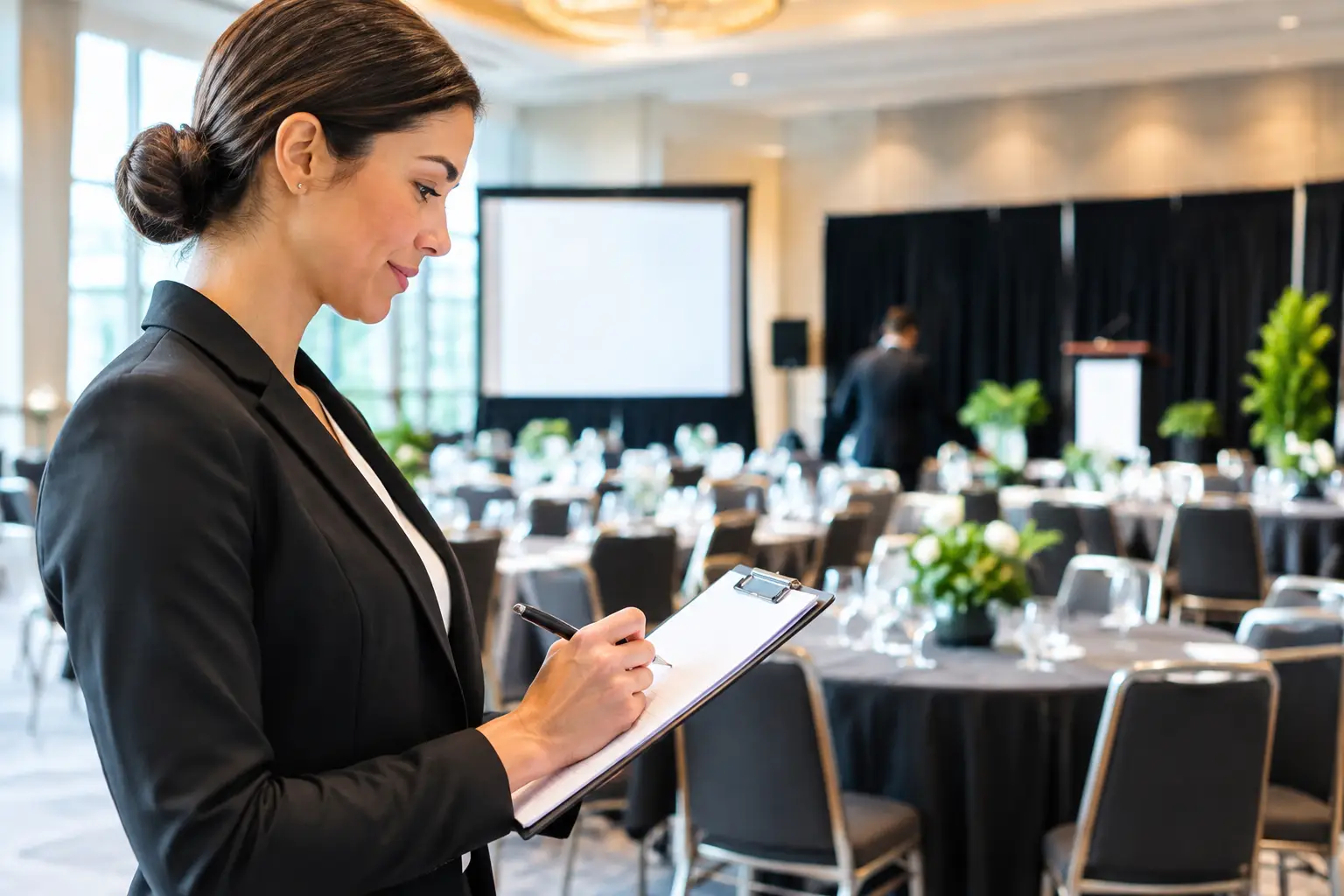
The fastest way to get the right quote is to provide the date, location, guest count, event type, venue access details, and a simple run sheet. Include what needs to be heard, where it needs to be heard, and whether the event is indoors, outdoors, or moving between spaces.
Also flag venue restrictions early. Some sites have sound curfews, decibel limits, preferred load-in times, or rules around generators and cable runs. These details shape the system before equipment reaches the site.
A clear brief gives your audio team room to plan properly. Tell them the moment you need people to hear, and let the system be built around it.