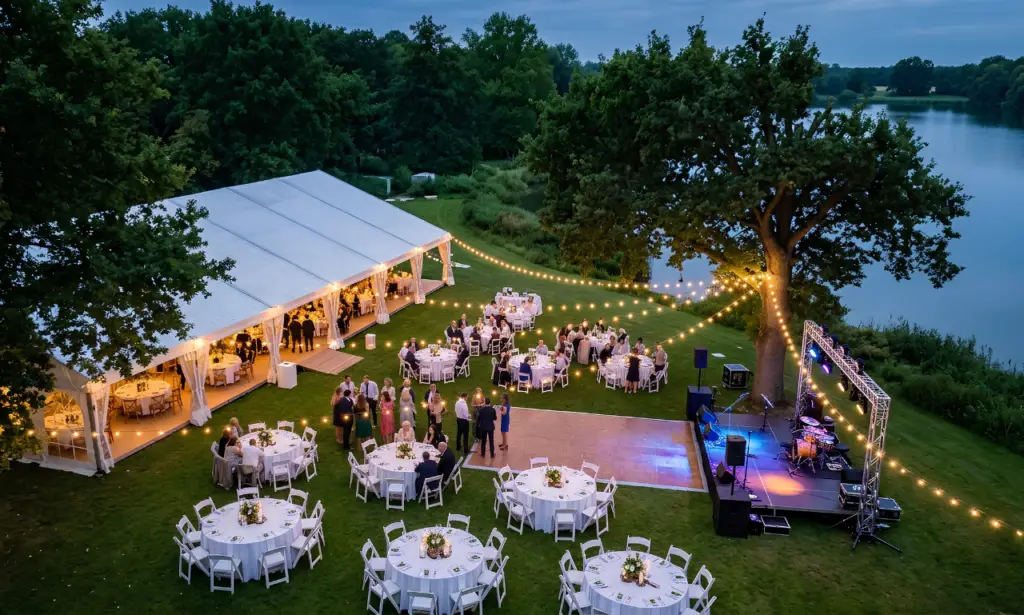
A tent that looks perfect at 10 a.m. can become a wind-management problem by 3 p.m. A stage that feels solid during setup can develop movement once speakers, lighting, performers, and a crowd are added. Temporary event infrastructure is safe when it is treated as a working system, not a collection of rental items.
This temporary structures safety guide covers the decisions that protect guests, crews, performers, and your event schedule. The right plan starts before equipment arrives, continues through installation, and stays active until the final guest leaves.
Start With the Site, Not the Equipment
The first question is not, “What size tent do we need?” It is, “What can this site safely support?” Ground conditions, access, slopes, overhead services, drainage, nearby buildings, and emergency vehicle access all affect the structure you can use.
A level-looking lawn may have soft areas that will not hold anchors. A paved courtyard may require weighted ballast instead of stakes. A rooftop, loading dock, or heritage venue may have strict limits on point loads, access routes, or what can be fixed to the surface. Each condition changes the installation method, labor required, and sometimes the equipment selection.
Measure the usable area, not just the total property. Account for entrances, catering access, restrooms, fire lanes, existing landscaping, and the space needed to safely install and remove equipment. A clear delivery path matters too. If a truck cannot get close to the setup area, crews may need extra time and equipment to move flooring, tent sections, staging, or ballast by hand.
For larger events, request site plans early and walk the location with your structure, staging, and power providers. One coordinated site review can prevent the common problem of discovering that the stage blocks an exit, the generator sits too close to guests, or the tent layout leaves no room for service vehicles.
Match the Structure to the Real Event Load
Temporary structures are designed around more than their footprint. They must safely carry the loads placed on them and withstand the conditions expected during use.
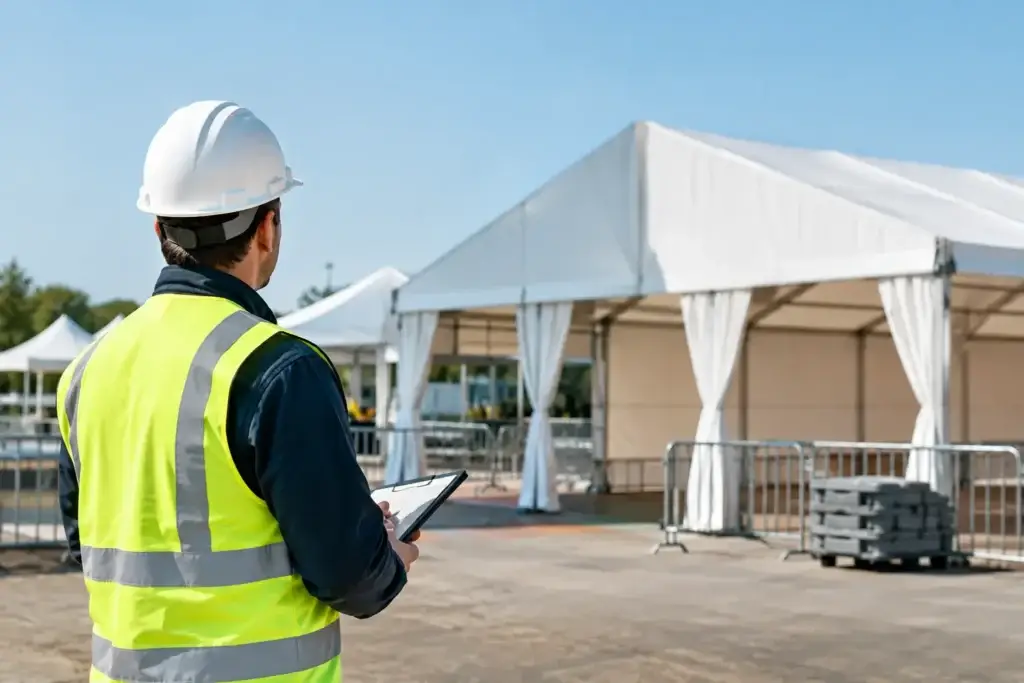
For tents and canopies, that means selecting a structure rated for the site and securing it with the correct anchors or ballast. The right approach depends on soil, pavement, wind exposure, tent size, sidewalls, and local requirements. Sidewalls are useful for rain and cold, but they can also increase wind pressure. A fully enclosed tent needs a different wind plan than an open-sided canopy.
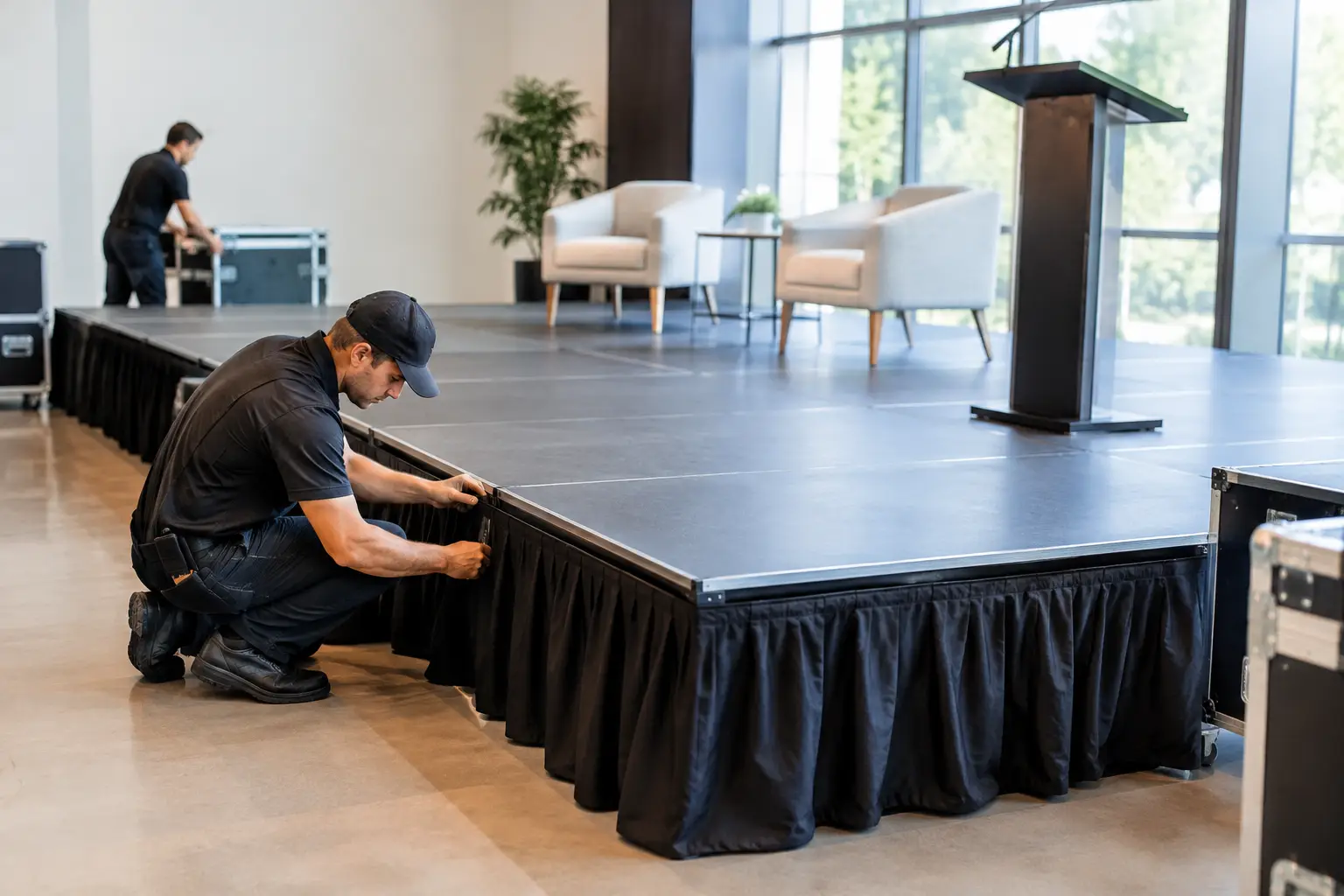
For stages, platforms, risers, and decks, load planning is just as critical. A small speech platform has very different requirements from a performance stage carrying a band, drum kit, video wall, roof system, lighting, and multiple technicians. Do not assume that equipment will fit because it fits physically. Its weight, point loading, distribution, and movement must be considered.
Rigging and overhead equipment deserve their own level of caution. Speakers, lighting fixtures, banners, and scenic elements should only be attached to structures designed and approved for those loads. A tent frame is not automatically a rigging point. If a load calculation, engineering review, or certified rigger is required, build that into the plan rather than trying to solve it during setup.
The Temporary Structures Safety Guide: Weather Comes First
Weather is not an afterthought for outdoor events. It is an operating condition that can change quickly, particularly in exposed parks, fields, waterfronts, and open parking areas.
Before event day, establish who monitors forecasts, who receives weather updates, and who has authority to pause service, clear an area, or close a structure. That decision-maker should be identified in the event plan, not negotiated while wind is building.
Wind is usually the key concern. Tents, shade structures, signage, flags, drape, and temporary fencing all create surfaces that catch air. As wind increases, loose fabric, unsecured furniture, and temporary décor can become hazards. The structure supplier should provide the operating guidance for the equipment, including any wind limits and actions required when conditions change.
Rain brings different problems. Water can soften ground, create slippery paths, pool beside flooring, and affect electrical connections. Plan drainage around tents and walkways, especially if the event runs over several days. Flooring may improve guest comfort and protect the lawn, but it must be installed with stable transitions and edges that do not create trip hazards.
Lightning requires a clear response. Do not use a tent, stage roof, or marquee as a lightning shelter. Have an identified substantial building or enclosed vehicle option where appropriate, communicate the trigger for suspending outdoor activity, and make sure staff know how to direct guests calmly.
Keep Exits, Aisles, and Crowd Flow Clear
A well-dressed event space can still be poorly planned if guests cannot move through it safely. Tables, bars, photo moments, dance floors, heaters, cable ramps, and décor all compete for floor space. The usable guest route needs to win.
Keep designated exits visible and free of furniture, storage, and equipment cases. Do not drape over exit signs, stack chairs near doors, or place a popular bar queue across an emergency path. If the structure includes sidewalls, confirm how they open and who is responsible for keeping exit areas clear throughout the event.
Crowd behavior changes layouts. A corporate presentation creates concentrated traffic before and after sessions. A wedding creates peaks around the bar, dance floor, and food service. A festival creates sustained movement through entry, merchandise, and viewing areas. Plan for the busiest 15 minutes, not the quietest hour.
Temporary ramps, cable covers, and floor transitions should be secure, visible, and suitable for guests using wheelchairs, strollers, heels, or mobility aids. Accessibility is part of practical event planning, not an add-on after the layout is finalized.
Treat Temporary Power as a Managed System
Power problems rarely stay small. An overloaded circuit can interrupt a presentation, shut down catering equipment, create a dark pathway, or damage connected gear. The solution is a power plan based on actual demand.
List every powered item: lighting, sound, video, heaters, refrigeration, catering appliances, pumps, point-of-sale devices, chargers, and specialty equipment. Confirm starting loads as well as running loads, particularly for motors, refrigeration, and heating. Then allocate circuits and distribution so critical equipment is protected from unpredictable demand.
Generators should be sized, positioned, and managed by competent operators. They need safe ventilation, fuel controls, cable protection, and separation from guest areas. Cables should follow planned routes, be secured where required, and cross pedestrian paths only with suitable cable ramps. Never run power leads through standing water or use damaged cords and improvised connections.
A small backyard celebration may need only a few carefully planned circuits. A formal, product launch, or live event may need distribution boards, backup capacity, testing, and an on-site technician. The scale changes, but the principle does not: calculate first, then install.
Installation Is Only Half the Job
A structure is not ready because the crew has finished building it. It needs a final check before guests enter, followed by active monitoring during the event.
Before opening, inspect anchors or ballast, frame connections, flooring, stair rails, stage legs, handrails, exits, lighting, cable protection, and fire safety equipment. Check that tent fabric is tensioned correctly and that sidewalls, doors, and emergency openings operate as intended. Confirm that loose packaging, tools, spare parts, and trip hazards have been removed from guest areas.
During the event, assign someone to notice changes. That might include rising wind, water pooling, an overloaded stage, a shifted cable ramp, guests moving furniture into aisles, or a heater placed too close to fabric. Small corrections made early are usually straightforward. Left alone, they become show-day disruptions.
For complex installations, keep a simple operating record: weather checks, inspections, changes made, incidents, and the contact details for the responsible supplier or site manager. This is especially useful for multiday events, public events, and sites where multiple crews share responsibility.
Know When Permits and Engineering Apply
Permit and inspection requirements vary by city, venue, structure type, occupancy, and event duration. Larger tents, temporary stages, public assemblies, generators, fencing, road closures, and alcohol service may trigger approvals or additional safety conditions. Your venue may also have its own rules that go beyond local requirements.
Do not leave these questions until the week of the event. Permit timelines can affect site access, final layouts, engineering documentation, fire extinguishers, exit signage, and attendance limits. If the event requires structural drawings, load calculations, or compliance coordination, allow time for review and revisions.
This is where a supplier that understands both guest-facing hire equipment and production infrastructure can reduce friction. Zero Three Party & Event Hire plans the tent, staging, power, furniture, delivery, and onsite setup as connected parts of the same event, so practical conflicts are identified earlier.
Give Every Person a Clear Responsibility
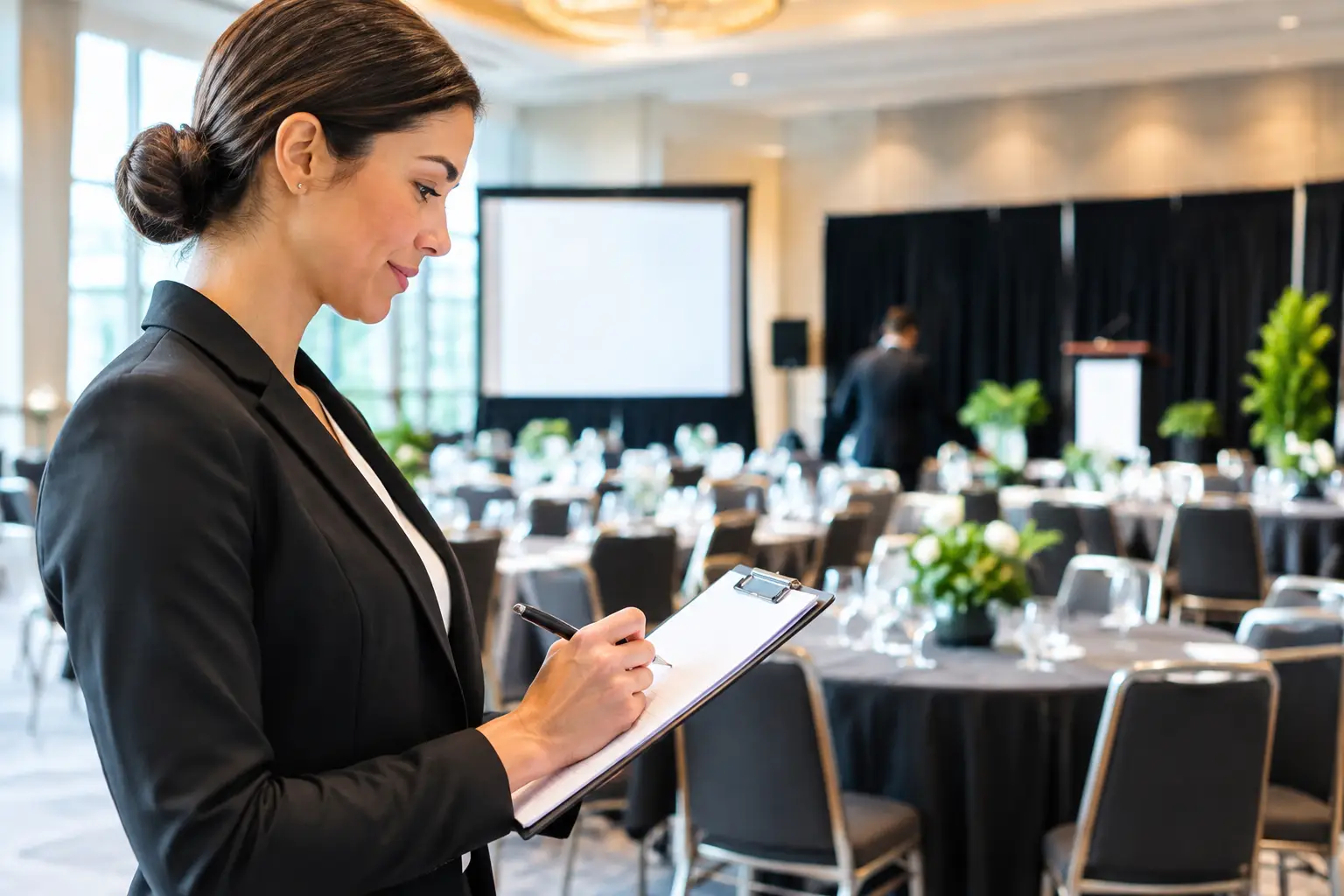
Safety falls apart when everyone assumes somebody else is handling it. The organizer should know who owns the site plan, weather calls, permit coordination, power management, emergency communication, and the decision to stop using a structure.
Brief staff and vendors before doors open. They do not need a long manual, but they should know where exits are, what areas must remain clear, who to call if equipment shifts, and what to do if weather changes. Make sure the same information reaches security, catering, performers, and venue staff where relevant.
The best temporary event setups feel effortless because the planning happened well before guests arrived. Choose equipment that suits the site, respect weather limits, protect exits and power routes, and keep qualified people responsible for the systems they install. Then your guests can focus on the occasion, while the structure does the quiet work of keeping it safe.