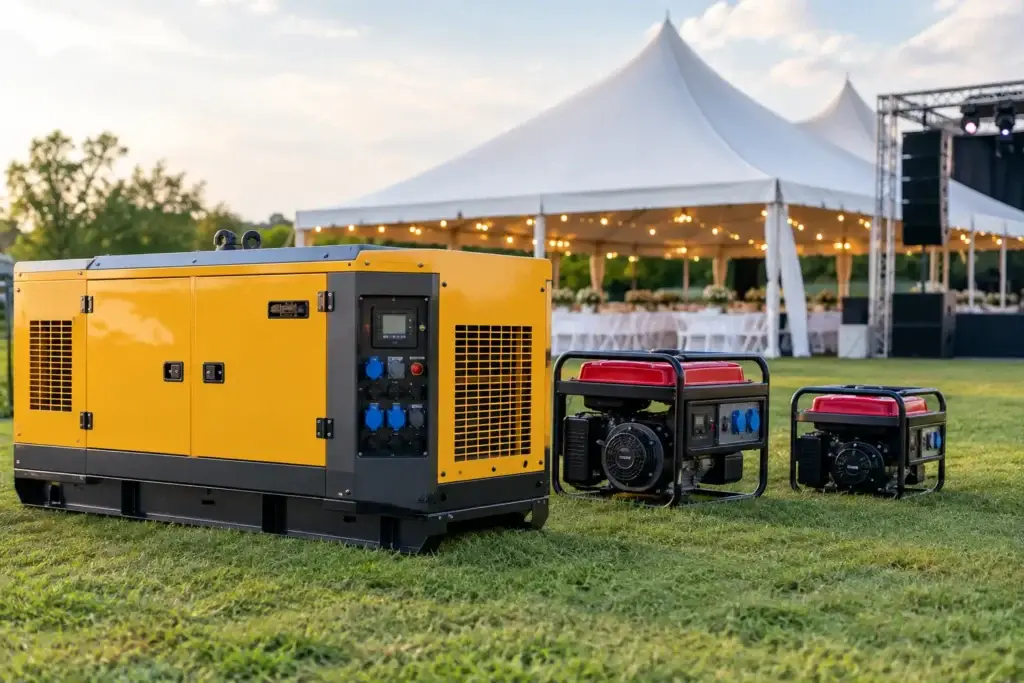
A generator that is too small rarely fails quietly. Lights may dim when catering starts, audio can crackle, refrigeration can cycle off, and a perfectly planned event suddenly has a power problem. If you are asking, “what size generator needed for my event?”, the answer starts with a proper load calculation, not a guess based on guest numbers alone.
The right generator must cover everything that will run at the same time, allow for equipment that needs extra power to start, and leave enough capacity for the unexpected. That applies to a backyard party with a few heaters as much as it does to a wedding marquee, corporate launch, or outdoor festival.
What Size Generator Is Needed? Start With Watts
Every powered item has a running wattage, sometimes called rated watts. This is the power it needs while operating normally. Some equipment also has a startup wattage, also called surge or starting watts. Motors and compressors draw a larger amount of power for a short period when they turn on.
Add the running watts for every item expected to operate simultaneously. Then account for the largest startup loads. Finally, add a safety margin of at least 20 to 25 percent. Generators run best when they are not pushed to their absolute limit for hours at a time.
The basic calculation looks like this:
Total running watts + startup watts + 20 to 25% reserve = minimum generator size
For example, a small event may have 1,500 watts of lighting, 1,200 watts of AV equipment, 2,000 watts of catering equipment, and a refrigerator using 800 running watts with a 2,000-watt startup load. The running total is 5,500 watts. Allowing for the refrigerator startup and a 25 percent reserve brings the required capacity closer to 9,500 watts. A 10 kW generator would be the sensible starting point, assuming the circuits and distribution are planned correctly.
Do not rely only on the wattage printed on a single appliance. Check whether it is the running figure or maximum draw. If a label lists amps rather than watts, use this formula:
Volts x amps = watts
On a standard 120V circuit, a 10-amp device uses approximately 1,200 watts. For 240V equipment, multiply 240 by the amps listed. Some commercial kitchen equipment, HVAC units, pumps, and production equipment need 240V service, so generator size is only part of the conversation.
What Size Generator Needed for Common Event Setups
Generator requirements vary widely because the equipment mix matters more than the event category. A 40-person dinner with electric heaters can need more power than a 150-person daytime cocktail event with battery-operated lighting.
A simple backyard gathering with a sound system, basic LED lighting, a refrigerator, and charging points may be comfortable on a 3 to 5 kW generator. That changes quickly if you add electric urns, warming trays, a slushie machine, or patio heaters.
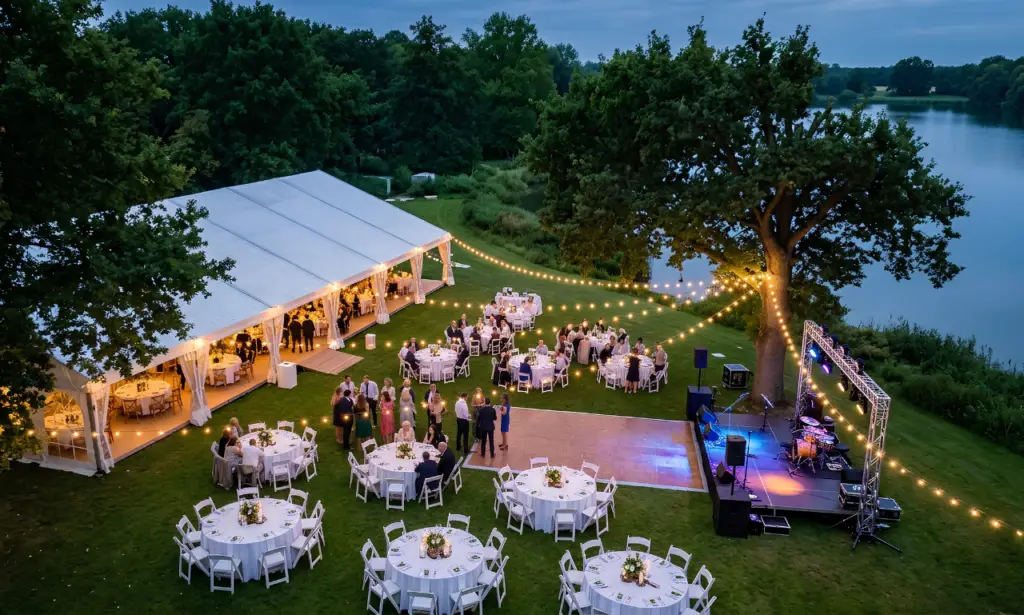
A wedding or marquee event often needs 10 to 20 kW, particularly where catering, bar refrigeration, festoon lighting, PA equipment, and temporary lighting are all supplied from one source. If the kitchen includes electric ovens, fryers, coffee machines, or commercial refrigeration, the requirement can climb well beyond that range.
Corporate activations and outdoor presentations often need 20 to 40 kW when they include LED screens, professional audio, staging, lighting, refrigeration, and catering. Clean power quality matters here. Sensitive AV equipment does not respond well to voltage fluctuations caused by an overloaded or poorly matched generator.
Festival sites, large public events, and multi-zone programs may require 60 kW, 100 kW, or larger systems. These are rarely single-generator decisions. Production power may be separated from food vendors, site lighting, amenities, and emergency systems so one problem does not take down the entire event.
These ranges are planning references, not final specifications. The equipment list, service voltage, operating schedule, cable run, site access, and local permit requirements all affect the final selection.
Watch the Loads That Cause Problems
Heating and cooling are common sources of underestimation. Electric patio heaters, portable air conditioners, cool rooms, and refrigerated trailers can use significant power and may cycle on at the same time. A generator that seemed adequate during setup can become overloaded once the temperature changes and every cooling unit starts working harder.
Catering is another pressure point. Kettles, coffee machines, microwaves, hot-water urns, and food warmers draw more power than many hosts expect. One commercial coffee machine can use several thousand watts. Add a dishwasher, refrigeration, and cooking appliances, and the catering load may deserve its own generator or dedicated circuit plan.
Motors also need careful treatment. Refrigerators, freezers, pumps, air compressors, and some lighting systems create startup surges. You do not simply add every surge rating together if the equipment will not start at the same moment, but you do need to understand what can cycle on concurrently.
Audio, lighting, and video equipment have different priorities. Their total wattage may be modest compared with catering, but they are less forgiving of unstable power. A generator with appropriate regulation, correctly sized distribution, and separate circuits can protect the show from heavy equipment switching on nearby.
Generator Capacity Is Not the Whole Power Plan
A 20 kW generator does not automatically provide a usable 20 kW to every outlet. The generator needs the correct voltage and outlet configuration for the equipment being connected. It also needs safe distribution boards, circuit protection, suitable cable sizes, and balanced loads across available circuits or phases.
Long cable runs can create voltage drop, especially with undersized cables. A generator positioned far from the marquee, stage, or catering area may need heavier cable than a simple backyard setup. Routing also matters. Cables must be protected from vehicles, kept clear of trip paths, and covered where guests or staff need to cross them.
Fuel planning is equally practical. Check the generator’s fuel consumption at the expected operating load, not only its maximum runtime at low load. A generator running a full-day event may need refueling arrangements that do not interrupt power or compromise site safety.
Noise should be considered early. A conventional open-frame generator might be acceptable for construction work but not beside a ceremony, seated dinner, or keynote presentation. A silenced generator positioned thoughtfully, with cable runs planned in advance, gives guests a better experience without compromising access for delivery, fueling, or collection.
Build a Load Schedule Before You Book
The simplest way to avoid an undersized generator is to make a load schedule. List every electrical item, its running watts or amps, its startup requirement if applicable, and when it will operate. Include items brought by caterers, entertainers, vendors, and the venue. The equipment people forget is usually the equipment that creates the problem.
Your schedule should include stage and decorative lighting, sound consoles, speakers, screens, refrigeration, catering appliances, mobile bars, heaters, air conditioning, site lighting, ticketing equipment, charging stations, pumps, and vendor outlets. Also identify what must stay live during the event. A refrigerator may tolerate a brief interruption. A live sound system in the middle of speeches may not.
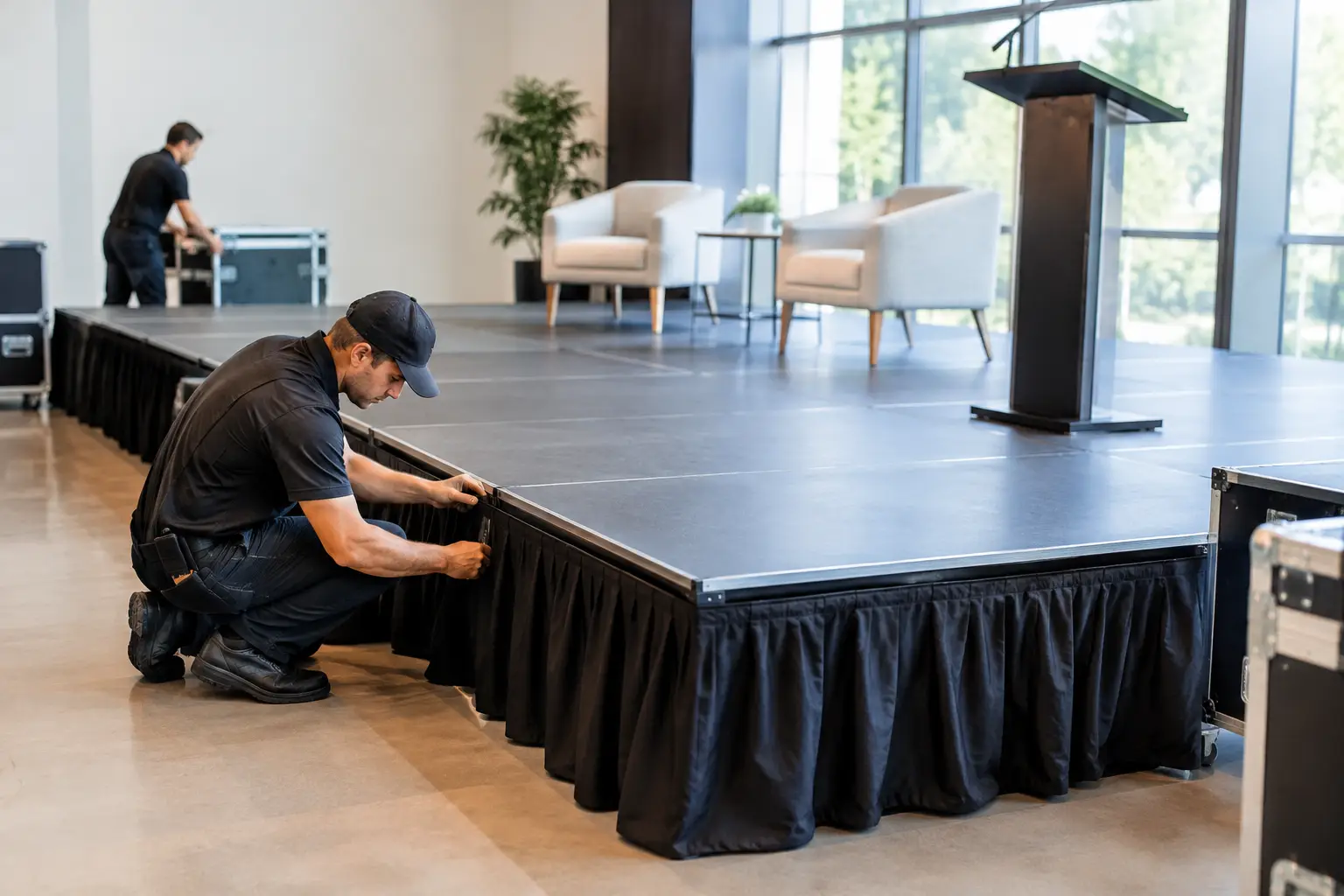
At Zero Three Party & Event Hire, power planning is treated as part of the event build, alongside staging, marquees, furniture, lighting, and site access. That means confirming the actual equipment list before delivery, rather than arriving with a generator sized from a rough estimate.
When to Use Separate Generators
One large generator can be efficient, but separate generators can be the better operational choice. This is particularly true when catering has high and unpredictable loads, while a stage, AV system, or ceremony area needs steady, clean power.
Separating critical production power from general catering or vendor power reduces the chance that a coffee machine, fryer, or overloaded outlet affects the program. It can also make cable routing cleaner across a large site and provide practical redundancy for events where downtime is not acceptable.
For public events, festivals, or complex builds, involve a qualified power technician early. They can assess load balance, distribution, grounding requirements, fuel storage, emergency access, and the approvals that may apply at the venue or local jurisdiction.
Leave Room for the Event You Are Actually Running
The best generator choice is not the smallest unit that can theoretically carry the listed load. It is the unit that can run the event comfortably, safely, and without every circuit being one appliance away from trouble. Tell your hire team the date, site, schedule, and full equipment list early. A clear load plan gives you quieter operations, cleaner setup, and power that stays where it belongs: in the background.